Control Resonant Review Roundup: Positive, but Eurogamer Isn't Sold
This piece discusses the game's setup, protagonist, and general plot direction, but not specific late-game twists or the ending.
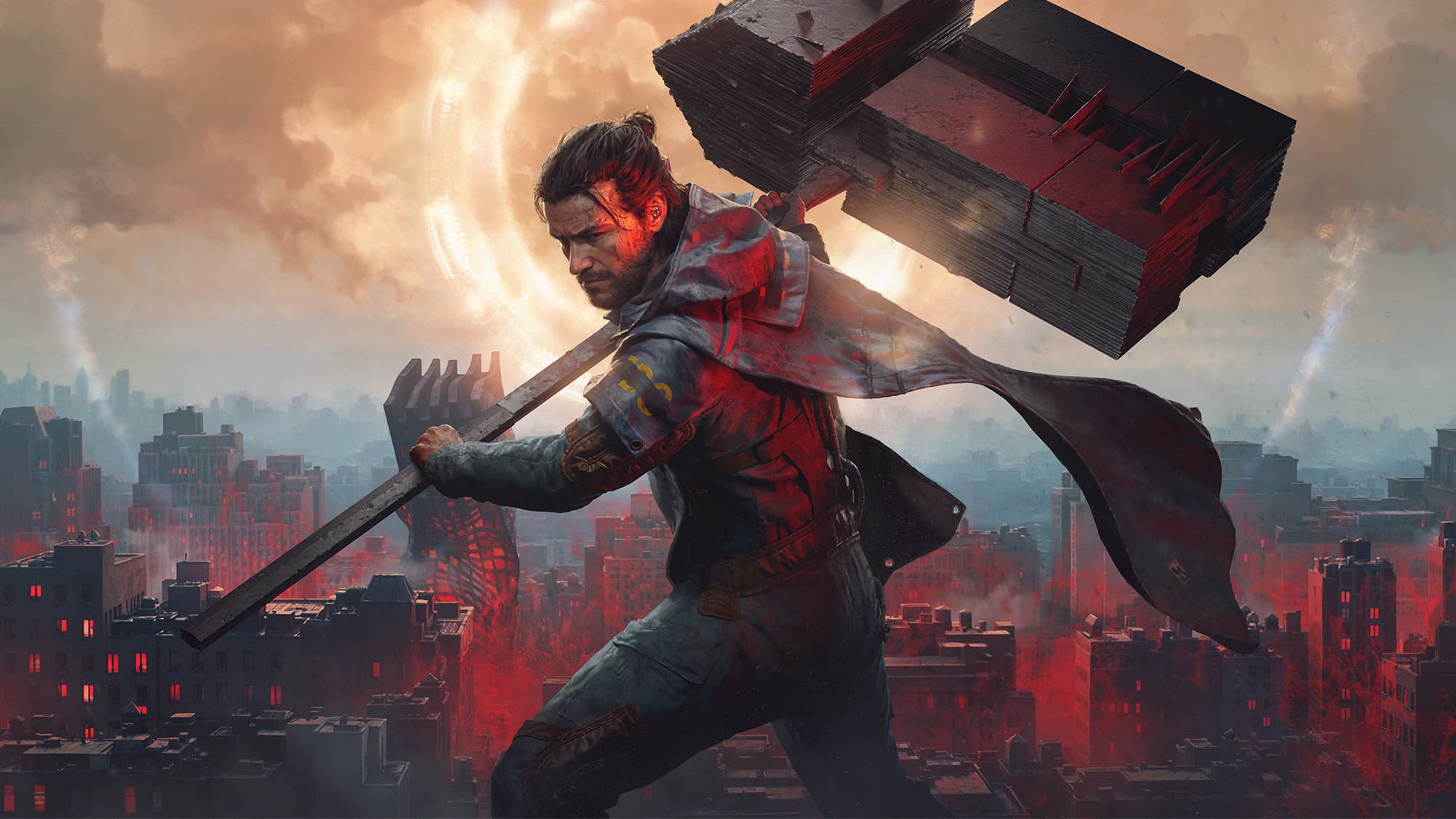
Control Resonant released September 24, 2026, on PS5, Windows, and Xbox Series X/S, with a Mac version still to come later this year and physical copies arriving October 15. We covered the pre-release picture in detail last month — the new protagonist, the shift out of the Oldest House, the combat overhaul — and that piece is worth reading first if you want the full mechanical rundown. This one is about what actually happened once the game shipped and reviewers got their hands on the finished build: a reception that's positive on balance, but with real disagreement about whether Remedy's biggest swings actually paid off.
The scores
Metacritic has Control Resonant sitting at 83 out of 100 on PC and PS5, with the Xbox Series X/S version landing slightly lower at 81. Both numbers put the game comfortably in "Generally Favorable" territory. OpenCritic's aggregate tells a similar story, with roughly 86% of critics recommending it — a strong showing, though not the kind of near-universal acclaim that turns a launch into an instant classic.
Individual scores spread out from there in a pattern that should look familiar to anyone who followed the Silent Hill: Townfall roundup on this site a few weeks back: a cluster of strong scores, one clear outlier dragging the average down. GameSpot went highest among the outlets covered here at 9/10. IGN landed at 8/10. Eurogamer, notably, came in well below both at 3 out of 5 — a score that reads less like a rounding difference and more like a genuinely different read on what the game is trying to do.
What's working: the combat overhaul actually landed
The single biggest question hanging over Control Resonant going into launch was whether trading Jesse Faden's telekinetic shooter combat for Dylan Faden's melee-driven action system would actually work, or whether it would just feel like Remedy abandoning what made the original distinct. IGN's review comes down clearly on the side of it working — per aggregated coverage of the review, the outlet praised the combat as responsive and stylish, language that suggests the shapeshifting Aberrant weapon and its dodge-heavy rhythm deliver on the Devil May Cry and Platinum Games comparisons Remedy invited before launch.
GameSpot's 9/10 points in the same direction, and it's worth noting that's the highest score among the reviews covered here — a strong vote of confidence in a genre pivot that could easily have gone the other way. Between the two, it's reasonable to say the core bet Remedy made — that Control's identity could survive a transplant from third-person shooter to melee action RPG — mostly paid off on a mechanical level. Dodging into an enemy, chaining Aberrant forms between its two states, and burning through the Power resource on Combat Abilities apparently feels good enough in practice to win over outlets that could have easily treated the whole pivot with skepticism.

IGN also singled out Remedy's world-building specifically as a strength, which tracks with what the pre-release coverage already suggested about the studio's track record — Alan Wake 2 and the original Control both built reputations on environmental storytelling and atmosphere as much as combat, and that apparently carried over even with the setting shift to Manhattan.
What's not working: RPG systems that don't hold up, and a game that overstays its welcome
IGN's 8/10 comes with two specific caveats worth sitting with. First, the outlet reportedly said Control Resonant's RPG systems aren't as deep as they appear — a notable gap between the marketing pitch (talent trees, character stats, customizable builds, six base Aberrant loadouts) and what IGN experienced in practice. That's a meaningful complaint for a studio that reportedly assembled its largest development team ever partly to build out those systems in the first place; if the stat sheet and skill trees are mostly surface dressing over a simpler combat loop, that's the kind of gap between ambition and execution that tends to define a game's second wave of criticism once the initial hype cycle passes.
Second, and maybe more concerning for a game built around melee combat as its main hook — per aggregated coverage of the review — IGN reportedly flagged that Control Resonant gets tedious in the later hours. Combat-driven action games live or die on whether their core loop still feels good after ten, twenty, thirty hours of repetition, and a review calling out fatigue in the back half suggests Remedy's combo system and enemy variety didn't scale as gracefully as the opening hours probably do. That's a fairly common failure mode for action RPGs chasing both depth and length at once — packing in enough content to justify the RPG trappings can stretch a combat system past the point where it stays interesting, and IGN's review reads like Control Resonant ran into exactly that wall.
Eurogamer's dissent: leaving the Oldest House cost something real
Eurogamer's 3/5 is the clearest outlier in this roundup, and its core argument is worth engaging with directly rather than dismissing as one outlet just not vibing with the game. According to aggregated coverage of Eurogamer's review, moving the story out of the Oldest House and into Manhattan also leaves behind some of what gave the original its magic — a criticism that goes after the exact structural decision Remedy made earliest and most deliberately in developing this sequel.
That's a fair point to raise, even hedged. The original Control's reputation rests heavily on the Oldest House as a setting — a shape-shifting brutalist building that functioned as a character in its own right, generating dread through claustrophobia, bureaucratic horror, and architecture that actively worked against the player's sense of spatial control. Trading that for a warped, Inception-like version of Manhattan that folds in on itself is a bigger swing than most sequels take with their setting, and Eurogamer's score suggests that swing came at a real cost rather than being a clean lateral move. Where IGN and GameSpot seem to have judged Resonant mostly on its own terms as a new game in a new genre, Eurogamer's review reads like it's holding the sequel more directly accountable to what the original built its identity around — and finding the replacement wanting by comparison.

It's worth being upfront here that the IGN and Eurogamer material referenced in this roundup came through aggregated review coverage rather than a direct read of either outlet's full published review, so treat these as reported scores and paraphrased critical stances rather than verbatim-quoted takes. The throughline is clear enough regardless: reviews are positive-but-mixed, with Eurogamer notably more critical than the rest of the pack.
The Resonants: the game's namesake boss fights
One area where the reviews covered here don't offer much specific detail is the Resonants themselves — the surreal, unpredictable boss encounters the game takes its name from. Given how central boss design tends to be to whether a melee-focused action game earns its combat systems' keep, it's a little surprising that IGN and GameSpot's headline takeaways lean more on general combat feel and world-building than on singling out specific set-piece fights.

That's not necessarily a red flag — reviews that spend their limited word count on systemic strengths and weaknesses rather than moment-to-moment highlight reels are common enough — but it does mean the Resonants themselves remain something of an open question for anyone deciding whether to buy in based on this roundup alone. Anyone weighing that decision might want to seek out gameplay footage of a Resonant encounter directly before committing, rather than relying on review copy that didn't dwell on them.
Story: Dylan, the Patterning, and a missing Jesse
The reviews referenced here spend most of their word count on mechanics rather than story specifics, which makes sense for a roundup written this close to launch — outlets tend to hold detailed narrative analysis for follow-up pieces once spoiler concerns matter less. What's clear from the pre-release setup, confirmed by launch, is the shape of the plot: Control Resonant is set seven years after the original, with Dylan Faden — Jesse's younger brother, previously a supporting character locked away in FBC custody — awakened by Jesse herself to deal with paranatural entities escaping containment.
The central mystery driving the campaign is something called the Patterning, a reality-warping phenomenon Dylan investigates while also searching for Jesse, who has gone missing by the time the story picks up. That search eventually leads to a confrontation with a transdimensional entity behind the broader chaos — the kind of cosmic-horror escalation that tracks with where the original Control's Board and Hiss lore was always gesturing.
Whether that story lands as effectively as the original's slow-burn documentary-style storytelling is, again, not something the reviews referenced here dig deeply into. But the broad strokes — a sibling relationship as emotional throughline, a missing protagonist functioning as mystery rather than absence, and a new large-scale supernatural threat — give Remedy a reasonably solid narrative skeleton to build on, consistent with what the studio signaled well before launch.
Traversal and the RPG systems, revisited
The pre-release coverage flagged Dylan's traversal kit as a notable departure from Jesse's levitation-based movement in the original: a double jump, an air dash that leaves afterimage trails when double-tapped, and a grappling hook locked behind optional side content. None of the reviews referenced here call out traversal as a specific pain point, which by omission suggests it's functioning well enough not to draw complaints — a reasonably good sign, since clunky movement in an action game built around dodge-heavy melee combat would be a much bigger problem than clunky movement in a slower, cover-based shooter.
The RPG systems are the more contested area, and IGN's not-as-deep-as-they-appear critique deserves to be read alongside the game's stated scope: six base Aberrant loadouts, multiple skill trees, and full stat-driven progression. That's a lot of systems for a studio whose prior decade of output — Alan Wake 2, Quantum Break, the original Control — stayed mostly in the narrative-action lane rather than anything build-focused. IGN's review suggests Remedy's reach on the systems side exceeded its grasp somewhat, even if the moment-to-moment combat those systems feed into still holds up.
The budget question, hedged
Wikipedia reports a development budget of roughly €50 million for Control Resonant, with a break-even target in the range of 3-4 million copies sold — figures that line up with the pre-release reporting on Remedy's Annapurna Pictures financing partnership, which reportedly covered half the game's development costs. Worth flagging clearly: those specific numbers are single-sourced to Wikipedia and haven't been independently corroborated elsewhere for this roundup, so treat them as a rough frame for the game's commercial stakes rather than confirmed figures. If they're accurate, an 83 on Metacritic and an 86% recommend rate on OpenCritic are a solid foundation for hitting that kind of sales target, though critical reception and commercial performance don't always move in lockstep, especially for a sequel this far removed from its predecessor's combat identity.
How this compares to the original Control
The original 2019 Control built a devoted following on the strength of its setting, its telekinetic combat, and a slow-burn mystery structure that rewarded players who dug into found documents and side content. Control Resonant keeps the found-document DNA and the supernatural-bureaucracy lore intact, per the story beats described above, while changing almost everything else: new protagonist, new city, new combat genre, new progression systems layered on top.
That's an unusually aggressive set of changes for a direct sequel, and the review spread here reflects exactly the tension you'd expect from a bet that big. IGN and GameSpot's higher scores suggest Resonant succeeds on its own terms as a new kind of Control game. Eurogamer's lower score suggests that succeeding on new terms doesn't fully compensate for what got left behind. Both readings can be true at once, and that's probably the most honest way to describe where this game landed critically — a genuine reinvention that mostly works, judged harshly by at least one major outlet precisely because it is a reinvention rather than more of the same.
Should you play it
Based on the reviews covered here, Control Resonant is a clear recommendation for players who came away from the pre-release coverage excited about the melee combat pivot specifically — GameSpot's 9/10 and IGN's praise for how responsive and stylish the Aberrant system feels suggest Remedy nailed the thing it was riskiest about. Players who valued the original Control specifically for the Oldest House as a setting should temper expectations somewhat; Eurogamer's review is a direct, credible signal that something real was lost in the move to Manhattan, even if most of the field didn't weight that loss as heavily.
The clearest actionable note across the coverage: don't expect the RPG systems to be the main draw. IGN's critique that they aren't as deep as they appear, paired with a reported tedium problem in the later hours, suggests Control Resonant is stronger as a moment-to-moment combat and atmosphere experience than as the deep, build-driven action RPG its marketing sometimes suggested. An 83 on Metacritic with an 86% recommend rate is a genuinely good outcome for a sequel that changed this much about itself — not a clean sweep, but a real, mostly successful swing that landed closer to its target than it missed.
Expect Remedy to track sales against that reported 3-4 million break-even target, with a physical release following October 15 and a Mac port still to come later this year.