Ace Combat 8: Wings of Theve Review Roundup: The Series' Return Lands Mighty on OpenCritic
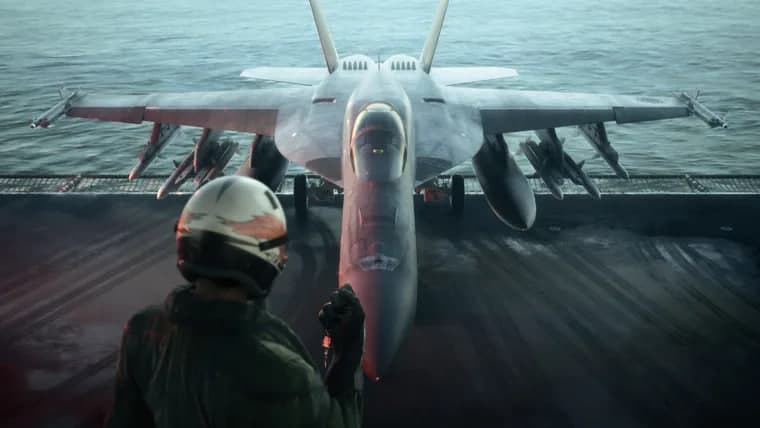
Ace Combat 8: Wings of Theve is out today, October 2, 2026, on PS5, Xbox Series X|S, and PC — the first mainline entry in the series since Ace Combat 7: Skies Unknown launched back in 2019. Seven years is a long gap for a franchise that built its identity on being the arcade-flight alternative to hardcore sims, and Project Aces spent that time building toward something reviewers are describing as both a return to form and, in places, a genuinely bigger swing than the series has taken before. Deluxe Edition buyers got three days of early access starting September 28, and according to Bandai Namco and the PlayStation Blog, the standard release lands today across all three platforms.
The reception so far is the kind of launch a dormant franchise hopes for rather than the kind it usually gets. Aggregate scores are strong, several outlets are calling it among the best entries the series has ever produced, and the criticisms that do show up are remarkably consistent across otherwise very different reviews — mostly centered on how the game paces its story beats against its mission structure, rather than anything wrong with the flying itself.
The scores
OpenCritic has Wings of Theve sitting at 88 out of 100, a "Mighty" rating that places it in the 98th percentile of all games tracked on the platform — a tier reserved for releases that aren't just well-reviewed but well-reviewed with unusual consistency across outlets. TheOuterHaven's review landed at 4.5 out of 5, among the more detailed write-ups so far, and GameSpot's review carries the headline "Ace Combat 8 is utterly absurd and better off for it," which reads as a clearly positive take even though the outlet's full review text wasn't accessible for this roundup. Taken together, the early picture is a game that's cleared the bar critics set for it by a comfortable margin, not just scraped over it.
It's worth being careful about exactly how many reviews are baked into that 88, since OpenCritic's critic count for a same-day launch tends to shift hour by hour as more outlets publish. Treat the 88/Mighty/98th-percentile figures as the real signal and the underlying review count as still settling rather than fixed.
What critics are praising: it doesn't just look like Ace Combat, it feels like it
TheOuterHaven's review is particularly effusive about the presentation side of things, praising "spectacular visuals and detailed aircraft," strong lighting work, and cockpit detail that holds up under scrutiny in a genre where players spend enormous stretches of playtime staring at the same cockpit frame. The soundtrack gets singled out too — a mix the review describes as "adrenaline-pumping," swinging between orchestral bombast and rock tracks in a way longtime fans of the series' score work will recognize immediately.

On PC specifically, TheOuterHaven calls out excellent optimization and proper 21:9 ultrawide support, a detail that matters more than it sounds for a flight combat series where peripheral vision and screen real estate genuinely affect how readable a dogfight is. That review does flag two absences worth knowing about before buying: there's no FOV slider and no VR support, both of which some PC flight-sim players will consider real omissions even in a game that's always positioned itself closer to arcade than simulation.
Elsewhere, the critic quotes aggregated on OpenCritic paint a consistent picture of reviewers who came in as series fans and left satisfied. Jordan Andow at Analog Stick Gaming wrote that the game is "incredibly easy to pick up while providing enough depth to make mastering its aircraft and dogfights immensely satisfying" — a neat summary of the accessibility-versus-depth balance Ace Combat has always tried to strike. Jaime Tugayev at DualShockers called it "a love letter to combat aviation in its entirety," and Luis Guilherme Machado Camargo at PSX Brasil went further still, describing it as "one of the best games not only of the year, but of the generation." TheOuterHaven's own write-up echoes that enthusiasm directly, calling Wings of Theve "one of the best games in the series" outright.
The one consistent complaint: pacing
For as strong as the aggregate numbers are, there's a specific critique that keeps resurfacing across reviews, and it's notable precisely because it's the same complaint showing up in write-ups that otherwise disagree on plenty of smaller details. Kotaku's roundup of critical reaction describes reviewers broadly praising how the game balances arcade combat thrills with real narrative depth, while simultaneously flagging recurring pacing issues — cutscenes that clash against mission tempo, particularly in the early campaign, along with redundant quick-time-event prompts that add friction without adding much tension. Kotaku's consensus also notes that the story loses some steam by the time the campaign reaches its endgame, even as the moment-to-moment flying stays sharp throughout.
TheOuterHaven's review adds a related, more mechanical wrinkle: later missions increasingly demand trial-and-error loadout adjustments, meaning players will sometimes fail an encounter not because they flew badly but because they brought the wrong aircraft or weapon loadout into a fight whose demands weren't obvious going in. That's a different flavor of friction than the cutscene-pacing complaint, but it lands in the same general territory — a game whose structure occasionally gets in the way of its own momentum, even when the underlying combat and presentation are firing on all cylinders.
None of this reads as a game in crisis. It reads like critics who are genuinely impressed overall but keeping their praise honest rather than uncritical, which tracks with an 88 that's high without being a clean sweep.
A quick note on dates — don't trust the September 25 figure
One wrinkle worth clearing up: Kotaku's review roundup cited a release date of September 25, 2026, which conflicts directly with the October 2 date Bandai Namco and the PlayStation Blog have both confirmed as the retail launch. The most likely explanation is that September 25 was the date review embargoes lifted, not the date the game actually went on sale — a common gap for big releases, where critics get access and are cleared to publish days or weeks before the storefronts open. If you're trying to figure out when you can actually buy and play Wings of Theve, October 2 is the date that matters, with the Deluxe Edition's early-access window starting September 28.
Strangereal returns, with a new war and a new hook
Wings of Theve is set in July 2029 within Strangereal, the fictional world the Ace Combat series has used as its backdrop across most of its mainline entries. The story centers on the Federation of Central Usea, invaded by the neighboring Republic of Sotoa, which captures Usea's capital city — Theve itself, the city the title refers to. Players command Joker Squadron, flying out of the aging aircraft carrier Endurance, on a campaign to retake the captured capital.
The title's emotional hook ties back to Jan "Rex" Cope, an ace pilot lost at sea before the events of the game begin, whose disembodied voice accompanies the player throughout the campaign — less a ghost story than a framing device about legacy and the weight of living up to a predecessor's reputation, a theme Ace Combat has toyed with before but is apparently leaning into more directly here. Sunao Katabuchi wrote the story, and if his name sounds familiar outside gaming circles, that's likely because of his work in animation — a pedigree that may explain why critics are responding so positively to the narrative side of a series not historically known for its writing.
Squadron members accompanying the player include Tasha Seversky, William "Noise" Coster, and Kate "Little Bee" Evans, flying alongside the player through Joker Squadron's campaign to retake Theve. One of the campaign's standout set pieces is a roughly 450-meter "Land Battleship," a scale of enemy that gives a sense of just how far Project Aces pushed the series' long-running love of absurdly oversized superweapons — a tradition GameSpot's headline seems to be referencing directly when it calls the game "utterly absurd and better off for it."
Thirty missions, thirty aircraft, and a new cloud system

The campaign runs 30 missions, with roughly 30 playable aircraft spread across four distinct roles: fighters, attack aircraft, multi-role jets, and electronic warfare planes. Mission variety spans standard air-to-air dogfights, ground-attack runs, anti-ship missions, and the series' signature "giant weapon battles" against the kind of oversized set-piece targets the Land Battleship represents. A squadron command system lets players direct wingmen mid-mission, adding a light tactical layer on top of the core flying.

The headline new mechanic is "Cloudly," a new cloud engine built around layered, interactive sky systems — clouds aren't just visual dressing here, they're functional cover, since hiding inside one breaks enemy radar lock-on. That's a meaningful addition to a genre where positioning and visibility have always mattered, and it's the kind of system-level change that explains some of the enthusiasm in reviews praising the game's depth without sacrificing accessibility. First-person cockpit sequences are a new storytelling device layered into the campaign as well, used to deliver narrative beats from inside the plane rather than cutting away to a separate cutscene camera — though per the pacing complaints above, that blending of cockpit storytelling and mission tempo isn't universally seamless yet.
Progression runs through an MRP currency system that unlocks aircraft and weapons via a tech tree, giving the campaign a persistent sense of escalation as players earn access to better hardware. The flight model itself stays arcade-style, prioritizing accessibility over hardcore simulation — consistent with where the series has always positioned itself relative to dedicated flight sims, and consistent with Jordan Andow's description of a game that's easy to pick up but rewarding to master.
The pre-order bonus is a genuine callback
Series veterans have one more reason to care about this launch specifically: the pre-order bonus includes a PS5 port of Ace Combat Zero: The Belkan War, one of the most beloved entries in the franchise's history, bundled alongside an F-14A Tomcat aircraft for use in Wings of Theve itself. For a series whose fanbase has spent years hoping for remasters of its older PlayStation-era entries, folding a genuine Belkan War port into a mainline launch's pre-order incentive is a bigger deal than a typical cosmetic bonus — it's Bandai Namco using nostalgia as a real selling point rather than an afterthought.
Where this leaves the series
Seven years is long enough that a franchise can either fade from relevance or come back to find the ground has shifted under it, and Ace Combat 8 appears to have avoided both outcomes. An 88 on OpenCritic with a 98th-percentile "Mighty" rating, critic quotes calling it one of the best entries in series history, and a specific, narrow pacing complaint rather than a fundamental structural problem — that's about as good a landing as a long-dormant mainline sequel can hope for. The flying, the presentation, and the scale of its set pieces all seem to have cleared the bar critics set after Skies Unknown. What's left to sort out is whether Project Aces tightens the cutscene-to-mission rhythm and trims the redundant QTE prompts in a post-launch patch, or whether that friction simply becomes a known, accepted quirk of an otherwise excellent return.
Either way, Wings of Theve looks like the rare long-gap sequel that justified the wait rather than just surviving it — and for a series that's spent most of the last decade as a niche favorite rather than a mainstream juggernaut, that's a genuinely strong place to relaunch from.
Expect a day-one balance patch touching mission pacing and QTE frequency, plus DLC aircraft packs building on the pre-order F-14A Tomcat and Belkan War port.