Silent Hill: Townfall Review Roundup: Great Atmosphere, One Big Stealth Problem
This piece discusses the game's setup, structure, and the general shape of critical reaction, but not specific plot twists or the ending.
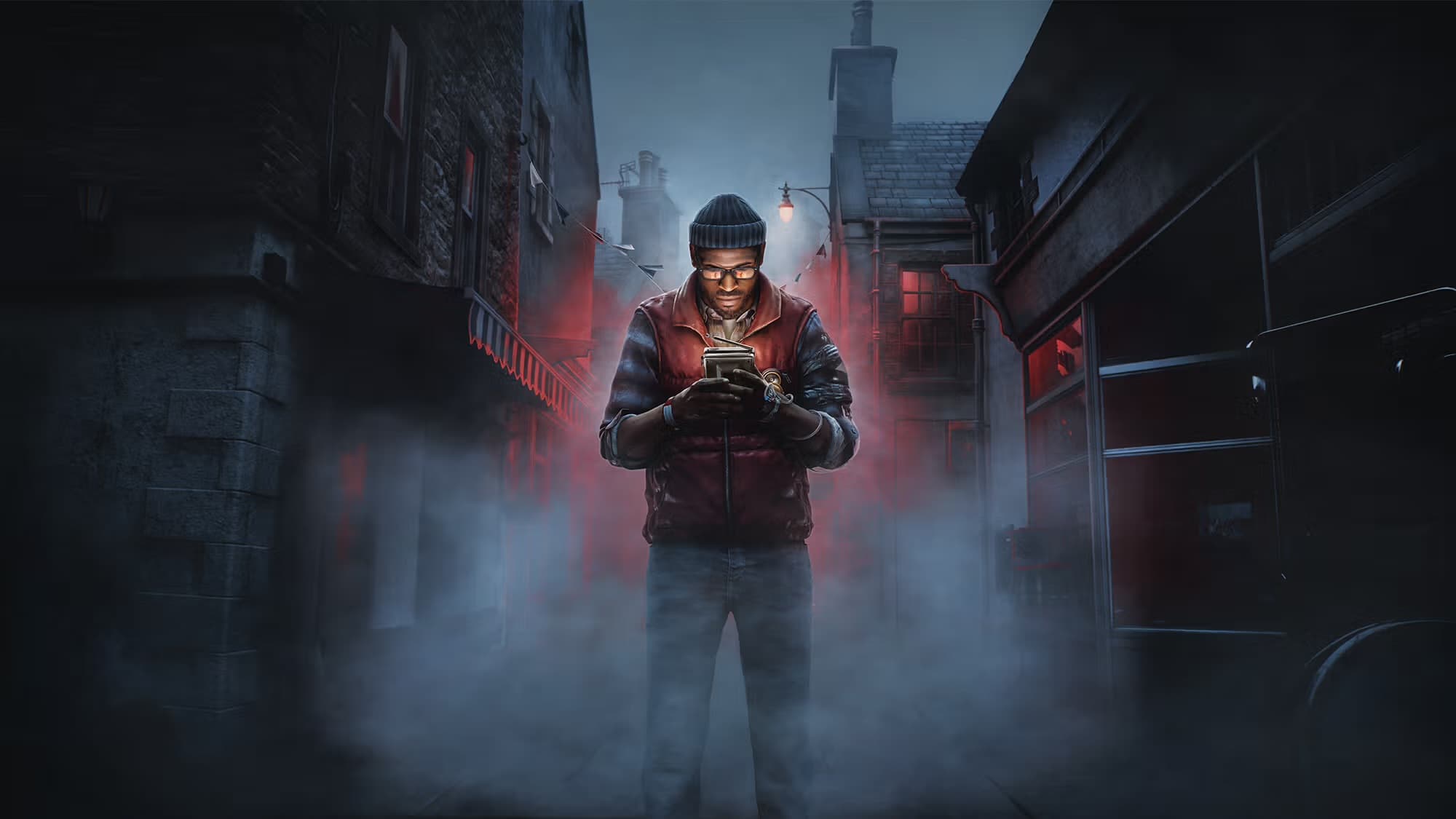
Silent Hill: Townfall released September 24, 2026, on PS5 and PC, with Deluxe Edition buyers getting 48 hours of early access ahead of the wide launch. We covered the game's Gamescom reveal back in August, when Konami gave it nearly 20 minutes of stage time and a first real look at its cast and setting. Now that reviews are in, the verdict has a shape most horror sequels would recognize: positive, but not unanimous, with one specific complaint showing up in almost every single review.
The scores
Metacritic has Townfall sitting at 81 out of 100, landing it in "Generally Favorable" territory. OpenCritic's aggregate lands in the same neighborhood at 81, with 83% of critics recommending it — a "Strong" rating on their scale. Individual scores spread out from there in a familiar pattern: IGN gave it an 8/10, Eurogamer scored it 4 out of 5, DualShockers went highest at 9/10, The Games Machine landed at 7.5/10, and Wccftech came in lowest of the outlets with concrete numbers at 6.5/10. That spread clusters in the "good, with real reservations" range rather than splitting into hard camps.
That's a meaningfully different outcome than a flat, unremarkable average would suggest. An 81 doesn't mean critics shrugged. It means critics largely agree on what works and what doesn't, and are docking points for the same reasons across outlet after outlet — which is arguably more useful information for a prospective buyer than a wider, more contradictory spread would be.
What critics loved: the camera change actually worked
The biggest swing Screen Burn Interactive took with Townfall was ditching Silent Hill's classic third-person camera for a first-person perspective, and reviewers largely credit that decision with making the game feel genuinely unsettling rather than just familiar. IGN called Townfall "a welcome shot in the arm for the long-running series," and singled out the restricted first-person view as a big part of why — you can't see around corners, you can't track a threat's exact position relative to your character model, and that loss of spatial information does a lot of the game's dread-building for it without needing constant jump scares to do the work.
The CRTV, Townfall's handheld device that detects nearby threats and plot-relevant signals through walls and obstacles, comes in for similar praise. It's the game's answer to the static-and-flashlight tricks earlier Silent Hill entries used, and critics generally describe it as a smart, diegetic way to feed players just enough information to feel like they have a tool, without giving away so much that tension evaporates. DualShockers, in particular, credited Townfall's "exceptional atmosphere for keeping players hooked" — praise that lines up with what a lot of outlets flagged about the sound design specifically. Fog has always been Silent Hill's signature visual gimmick, going back to the original 1999 game, and reviewers broadly agree that pairing it with a first-person camera and a limited-information detection tool gives that fog more teeth than it's had in years.

What nearly every critic flagged: the stealth
Here's where the reviews start to rhyme with each other in a way that's hard to ignore. Across outlets that otherwise landed on very different final scores, the same specific complaint shows up: Townfall's cat-and-mouse stealth-evasion mechanics are tense for the first few hours and repetitive well before the credits roll.
Wccftech's 6.5/10 review put it most bluntly, describing "clunky stealth and design missteps" that "make it frustrating" — language pointed enough that it reads less like a general gripe about difficulty and more like a specific complaint about how the evasion encounters are built and paced. The Games Machine, which still landed at a respectable 7.5/10, flagged "unconvincing mission design and repeated backtracking" as the game's clearest weak point, a complaint that overlaps with — but isn't identical to — the stealth fatigue other outlets zeroed in on. VGC's review headline summed its take up as "outstanding horror marred by infuriating stealth," and RogerEbert.com's review ran under the headline "fogged in by frustrating gameplay" — two more data points pointing at the same mechanical friction, even from outlets whose full write-ups weren't independently available for this roundup.
What's notable is that this complaint doesn't track cleanly with score. DualShockers gave the game a 9/10, its highest score among reviews with confirmed numbers, and still generally falls into the camp of outlets acknowledging the evasion sequences get repetitive in the back half — they just weighted it as a smaller deduction against everything else the game does well. Wccftech weighted the same basic issue as disqualifying enough to knock the score down to 6.5. That's the throughline across this entire roundup: nobody disputes that the stealth wears thin. Critics just disagree on how much that should matter against atmosphere this strong.
Why the stealth problem specifically stings here
It's worth sitting with why this particular complaint keeps surfacing, because it's not just "the mechanic is clunky" in isolation — it's clunky in a game that leans on it constantly. Townfall's core gameplay loop pairs melee options like planks and pipes and ranged tools like a pistol, shotgun, and flare gun with stealth-evasion as a primary mechanic, not an occasional detour. Throwable objects exist mainly to create distractions that let players slip past enemies rather than fight them, which means a meaningful chunk of Townfall's runtime is built around players repeating variations on the same hide-distract-move pattern.
That's a defensible design choice for a horror game trying to make players feel vulnerable rather than powerful — Silent Hill has never been an action franchise in the way Resident Evil eventually became one, and forcing evasion over combat is consistent with that identity. But per the critical consensus here, tense the first handful of times becomes rote the twentieth time, especially once players have learned the shape of an encounter and the surprise is gone. A stealth system built for early-game dread doesn't automatically scale into a satisfying mechanic across a full campaign, and reviewers across the score spectrum are converging on the idea that Screen Burn didn't fully solve that scaling problem, even if they solved almost everything else around it.

The story and structure critics are working with
Setting the mechanical debate aside, there's less disagreement about what Townfall's story actually is. Protagonist Simon Ordell wakes up with no memory on the shore of St. Amelia, a fog-shrouded Scottish coastal town frozen in 1996 and emptied of everyone except monsters. He's not alone in that purgatory-like space — a man named Richard, contacted through the CRTV device, and a nurse named Zoe Ellis are both trapped there too, each reliving guilt tied to a catastrophic oil rig disaster that killed 95 workers. Six chapters split time across the three characters, letting the story circle the same disaster from multiple angles rather than staying locked to one perspective the whole way through.

That structure — three unreliable, guilt-bound perspectives circling one shared trauma — is a recognizably Silent Hill move, in the tradition of games that treat their monsters as externalized psychology rather than random threats. It's also a smart way to justify why the game keeps returning players to similar spaces and situations from different characters' vantage points, even if that repetition occasionally overlaps with the stealth fatigue critics are separately flagging.
A small studio's biggest swing
Some context helps explain how a studio with no prior Silent Hill pedigree landed this close to the mark. Screen Burn Interactive is the rebranded name of No Code, the Edinburgh studio behind Stories Untold and Observation — the rebrand happened in July 2025, specifically as a nod to this project. Development began back in 2022, built by a team of roughly 30 people on Unreal Engine 5, which is a genuinely small crew for a game carrying this much franchise weight. Silent Hill producer Motoi Okamoto reportedly chose No Code for the job after playing the studio's earlier games — a bet on a team known for tense, restrained, perspective-driven horror rather than one with any prior survival-horror or open-world action credits.
Konami and Annapurna Interactive co-published the release, pairing Konami's ownership of the Silent Hill name with Annapurna's reputation for narrative-driven, prestige-leaning games. That pairing tracks with what actually shipped: a game critics agree is stronger on mood, sound, and restraint than on moment-to-moment mechanical variety, which is exactly the tradeoff you'd expect from a small studio built around atmosphere-first design taking its first swing at a much bigger, more mechanically demanding genre.
How this fits into Silent Hill's ongoing comeback
Townfall doesn't exist in a vacuum. It's the latest entry in Konami's multi-pronged effort to rebuild Silent Hill's presence after a long dormant stretch following the cancellation of Silent Hills, the P.T.-adjacent project from Hideo Kojima and Guillermo del Toro. That rebuild has included the Silent Hill 2 remake and the anthology-style Silent Hill: Ascension experiment, and Townfall is the first genuinely new, mainline-adjacent entry built by a studio with no prior history in the franchise. An 81 on Metacritic, with critics broadly agreeing on both what works and what doesn't, is a strong outcome for that kind of bet — better than a mixed, contradictory reception would have been, and a real signal that Konami's rebuild strategy is working rather than just treading water on nostalgia.
The verdict, such as it is
Strip away the score spread and what's left is a genuinely coherent critical picture. Nobody reviewing Townfall thinks its atmosphere, sound design, or first-person reinvention of Silent Hill's dread are anything other than a success — IGN's "shot in the arm" framing and DualShockers' praise for its atmosphere both point at a game that nailed the thing horror games are hardest to get right. The disagreement is narrower than that: how much a repetitive, occasionally clunky stealth system should cost a game that otherwise gets so much right. Wccftech thinks it costs a lot. DualShockers thinks it costs comparatively little. Most of the field, including IGN, The Games Machine, and the outlets behind those pointed headlines from VGC and RogerEbert.com, land somewhere in between.
For players going in mainly for atmosphere, tension, and a story built around guilt and a shared disaster, the consensus here is that Townfall delivers on exactly that promise. For players expecting the stealth-evasion loop to stay as sharp across a full campaign as it feels in its opening hours, nearly every review on record says to temper that expectation. That's not a bad place for a small studio's first Silent Hill game to land — it's a real, defensible hit with one clearly identified problem, rather than a muddled one with no clear identity at all.
Expect a post-launch patch or two addressing the stealth pacing complaints critics keep repeating, plus continued speculation about what a follow-up project for Screen Burn Interactive and Konami might look like.