Onimusha: Way of the Sword Review Roundup: Capcom Revives a Dormant Franchise After 20 Years
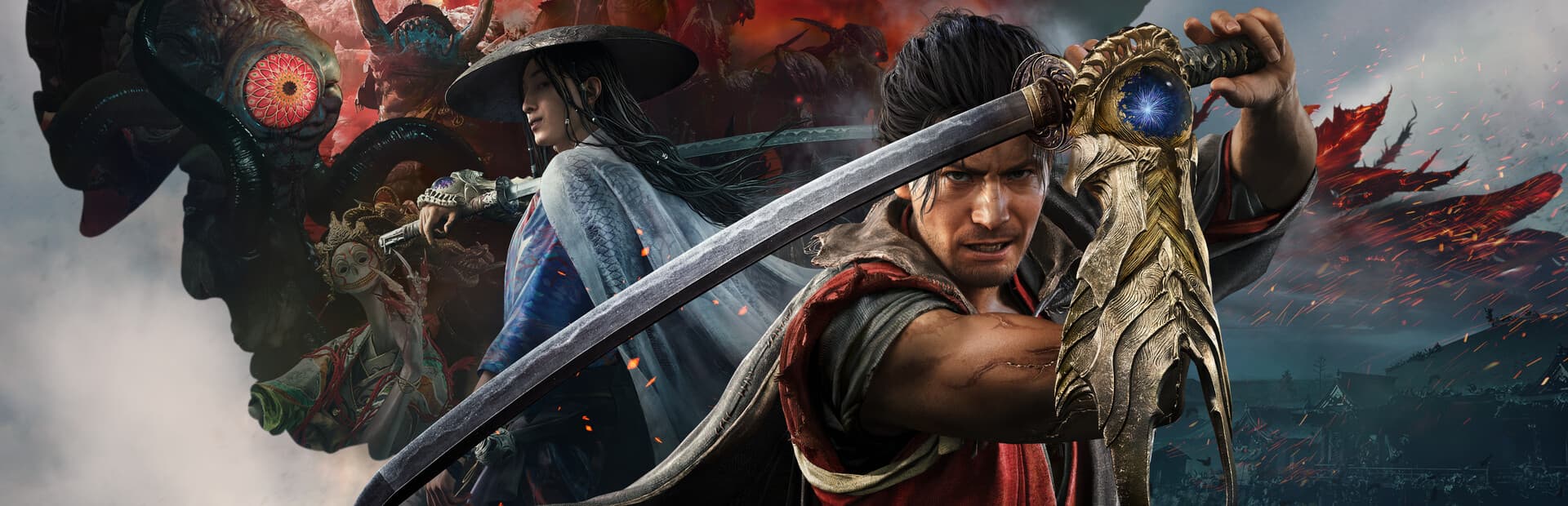
Onimusha: Way of the Sword releases September 4, 2026, on PC, PS5, Xbox Series X/S, and Nintendo Switch 2, according to Wikipedia and corroborated by CBR. That date matters more than it would for most sequels, because there hasn't been a mainline Onimusha game since Onimusha: Dawn of Dreams in 2006. Twenty years is a long time to leave a franchise on the shelf, and Capcom is coming back to it in a very different industry than the one it left — one where the Soulslike has become the default language for Japanese action games, whether a given title wants to speak it or not.
The early reviews suggest Capcom mostly navigated that gap well. Aggregate scores per Metacritic put the Switch 2 version at 88/100, with other platform versions landing in the 82-85 range — "generally favorable" territory across the board, and unusually consistent for a game launching simultaneously across four platforms. CBR's review goes further than the aggregate numbers, landing at a 9/10 and calling the game "a must-buy."
Why now, and why Musashi
Wikipedia reports that Capcom greenlit development on Way of the Sword in early 2020, as part of a broader push to revive franchises that had gone quiet — the kind of internal audit that publishers do periodically, looking at IP with residual brand recognition but no recent output. Onimusha fit that description well. The original trilogy, released between 2001 and 2004, was a commercial and critical success for Capcom on PS2, blending survival-horror-style fixed camera angles with sword combat and a soul-absorption mechanic that let players power up by draining defeated enemies. Dawn of Dreams in 2006 closed that era out, and then the series simply stopped.
Way of the Sword is directed by Satoru Nihei and produced by Akihito Kadowaki, built on Capcom's RE Engine — the same engine underpinning the studio's recent Resident Evil remakes and Monster Hunter Wilds. That's a meaningful technical foundation to build on; RE Engine has proven itself across wildly different genres at this point, from survival horror to open-world action, and Capcom clearly trusts it enough to hand it a franchise revival rather than building something bespoke.
The playable character is Miyamoto Musashi, visually modeled after actor Toshiro Mifune, according to Wikipedia and CBR. That's a deliberate choice worth sitting with — Mifune is the actor most associated with Akira Kurosawa's samurai films, the visual and tonal reference point an entire generation of samurai media has drawn from since. Modeling Musashi after him isn't subtle, and it isn't meant to be; it's Capcom signaling exactly what tradition it wants Way of the Sword to sit inside.
The setting and story, without connecting to the old games
Way of the Sword is set in a dark-fantasy version of Kyoto during the early Edo period, and per Wikipedia and CBR, the story is standalone — it doesn't connect to the previous Onimusha games or to the Netflix Onimusha anime series that streamed a couple of years back. Musashi gains a mysterious gauntlet capable of absorbing souls from defeated enemies and is tasked with confronting supernatural forces consuming the city.
That gauntlet is a direct callback to the original trilogy's soul-absorption mechanic, just reframed as a wearable device rather than the amulet-and-orb system the PS2 games used. Keeping the soul-draining hook while cutting the narrative connective tissue to the older games is a sensible move for a franchise this dormant — anyone picking up Way of the Sword cold doesn't need twenty-year-old backstory to understand what's happening, but longtime fans still get the mechanical throughline that made the series distinct in the first place.

The combat: Soulslike-adjacent, not Soulslike
Here's where the reviews get specific, and where the game's actual identity comes into focus. CBR reports that Way of the Sword replaces the original trilogy's tank controls with what it calls "a modern action system that feels far more fluid." The original Onimusha games, like a lot of PS2-era action titles built around fixed camera angles, controlled with a certain deliberate stiffness that hasn't aged particularly gracefully. Cutting that loose entirely was probably the single most necessary change Capcom could make for a 2026 audience.

What replaces it isn't a straight Soulslike, according to CBR, even though it borrows some of that genre's vocabulary — parrying and dodging both feature prominently, and standard and heavy attacks form the backbone of most encounters. The parry window specifically is described by CBR as "much more forgiving" than Sekiro's, which is the obvious comparison point any parry-focused samurai action game invites at this point in the genre's life. Sekiro set an almost punishingly precise bar for deflect timing when it released, and plenty of games since have tried to replicate that tension without always nailing the balance between "hard enough to feel earned" and "hard enough to alienate players who aren't chasing a masocore experience."
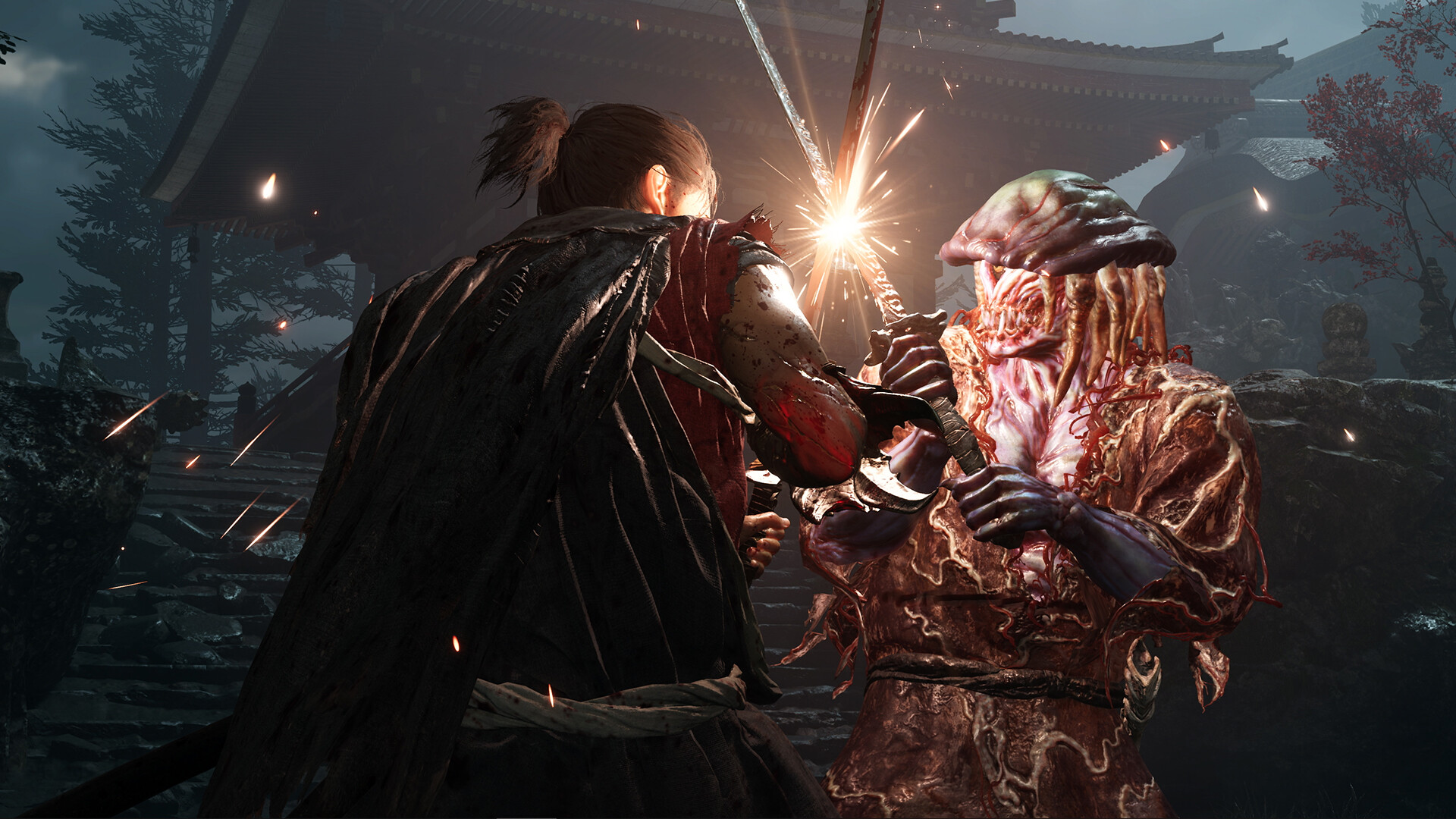
Way of the Sword, by CBR's account, lands closer to the accessible end of that spectrum. GamesRadar's review headline captures the same idea from a slightly different angle: "It's no Sekiro, but goofiness, accessibility, and tight combat help this rough diamond shine." That's a headline doing real work — it's simultaneously conceding the game isn't chasing Sekiro's exact reputation for difficulty while arguing that the tradeoff pays off anyway. The classic soul-absorption mechanic returns via the gauntlet system, tying the new combat framework back to what made the original trilogy's power fantasy distinct from other action games of its era.
What critics are praising
CBR's 9/10 review singles out the boss battles specifically, calling them "incredible" — a word that carries weight in a genre where boss design is often the single most scrutinized element of any given release. Sound design and the game's overall art direction also drew praise from CBR, with the reviewer noting the world design manages to balance "beauty with an eerie sense of danger," which tracks with a dark-fantasy Kyoto setting that needs to read as recognizably beautiful and recognizably threatening at the same time.

Tom's Guide's review headline reinforces the boss-fight praise specifically, calling Way of the Sword "a supremely satisfying samurai action game with some of the best video game boss battles this side of Sekiro." Worth flagging that the full text of Tom's Guide's review wasn't independently confirmed here — this is a headline-level read on their critical stance rather than a pull from the body of the review — but the framing lines up closely enough with CBR's own boss-fight praise that it's reasonable to treat "the boss fights are the highlight" as an emerging point of consensus rather than an outlier opinion.
PC Gamer's headline points in a similarly positive direction — "Onimusha: Way of the Sword whips ass" isn't subtle, and while the specific supporting arguments in that review weren't independently verified here either, a headline that blunt from an outlet not typically given to hyperbole is itself a data point worth including, even hedged.
What critics are knocking
The most consistent criticism across the coverage lands on the English voice acting. CBR specifically flags it as leaning "too heavily into a goofy tone that clashes with the brutality" of the rest of the game — a mismatch between the writing or performance direction on the English dub and the dark-fantasy tone everything else in the game is going for. CBR's reviewer recommends switching to the Japanese voice track instead, which is a fairly common recommendation for Japanese-developed action games generally, but notable here because it's being framed as something closer to a genuine tonal problem rather than a simple preference issue.
That's the kind of criticism that tends to be a fixable, isolated flaw rather than a systemic one — voice direction issues don't usually reflect on the underlying game design the way pacing or combat problems do. But it's also the kind of thing that colors a first impression badly if a player boots the game up on default settings and doesn't know to switch the audio track before getting deep into the story.
How long it takes and how it's structured
Per Wikipedia's summary, the campaign is largely linear with open areas and side content woven in, and reportedly runs around 20 hours to complete. That runtime figure comes from a single source rather than being cross-confirmed across multiple outlets, so it's worth treating as a rough estimate rather than a fixed number — the kind of thing that tends to firm up once more players and reviewers log full playthroughs and community averages start circulating.
A largely-linear-with-open-pockets structure is a fairly conservative design choice in 2026, especially with FromSoftware's open-world Elden Ring having reshaped a lot of what players expect from this general genre space over the past several years. Capcom seemingly chose not to chase that scale here, and given that Way of the Sword is explicitly positioned as Soulslike-adjacent rather than a full open-world Soulslike, that restraint tracks. A tighter, more linear structure gives a studio returning to a dormant franchise more control over pacing and boss encounter placement — the exact elements CBR and Tom's Guide both singled out as the game's strongest asset — rather than diluting them across a sprawling map the way some open-world action games have struggled to.
Where this sits in Capcom's 2026
CBR's review frames Way of the Sword as one of Capcom's final major releases of 2026, which is worth noting given how stacked Capcom's release calendar has been this year. Landing a franchise revival this late in the year, after a long stretch with no mainline entries, is a real bet — Capcom is essentially asking players who may not have thought about Onimusha in two decades to reengage with it during a season already crowded with other releases competing for attention.
The fact that it's clearing that bar with a 9/10 from CBR and generally favorable Metacritic aggregates across every platform suggests the bet is paying off, at least on the critical side. Sales performance and how the game holds up in broader community sentiment over the following weeks and months will be the next data points worth watching, but nothing in the current review coverage suggests Capcom fumbled the technical or design fundamentals on a franchise this many years removed from its last entry.
How it compares to the Onimusha trilogy
For longtime fans of the original games, the biggest shift is obviously the control scheme — moving away from fixed camera angles and tank controls toward the fluid, parry-driven system CBR describes is going to change how the game feels moment to moment more than almost any other single decision Capcom made. But the retained elements matter just as much: the soul-absorption mechanic via the gauntlet, the setting rooted in a supernatural, demon-infested version of feudal Japan, and a single, powerful protagonist facing down waves of enemies and imposing bosses are all direct throughlines to what made the PS2 trilogy work in the first place.
Modeling Musashi after Toshiro Mifune specifically, rather than inventing an entirely new visual identity for the protagonist, also signals that Capcom wants this revival to feel connected to a broader tradition of Japanese samurai cinema rather than just its own back catalog. That's a slightly different approach than the original trilogy took — the PS2 games built their own visual identity across original characters like Samanosuke and Jubei rather than leaning on real historical or cinematic figures as directly as Way of the Sword does with Musashi.
Should you play it
The case for Way of the Sword, based on the reviews so far, comes down to what you're looking for out of a samurai action game in 2026. If boss encounters are the thing you value most in this genre, CBR and Tom's Guide both point to them as the clear highlight — CBR calling them "incredible" and Tom's Guide invoking Sekiro's boss design as the comparison point it's chasing and largely reaching. If you want something that demands Sekiro-level parry precision, this isn't quite that game, and GamesRadar's headline is upfront about that tradeoff — accessibility and a more forgiving parry window in exchange for a combat system that's easier to actually enjoy rather than one built to punish.
The one clear piece of practical advice across the coverage: switch to the Japanese voice track before you start. CBR's criticism of the English dub's tonal mismatch is specific enough, and consistent enough with how dark-fantasy action games generally handle voice direction, that it's worth treating as a real recommendation rather than a nitpick.
For a franchise that's been dormant for two decades, Way of the Sword landing with generally favorable aggregate scores across every platform it released on, a 9/10 from CBR, and consistently strong headline-level reception from Tom's Guide and PC Gamer is a genuinely good outcome. Capcom took a real risk reviving Onimusha this late, in a genre space that's grown substantially more crowded and demanding since the series went quiet, and the reviews so far suggest that risk paid off.
Expect Capcom to gauge sales and critical momentum before deciding whether Way of the Sword becomes the start of a new trilogy rather than a one-off revival.