Resonance: A Plague Tale Legacy Review Roundup — Asobo Ditches the Rats for Arkham-Style Combat
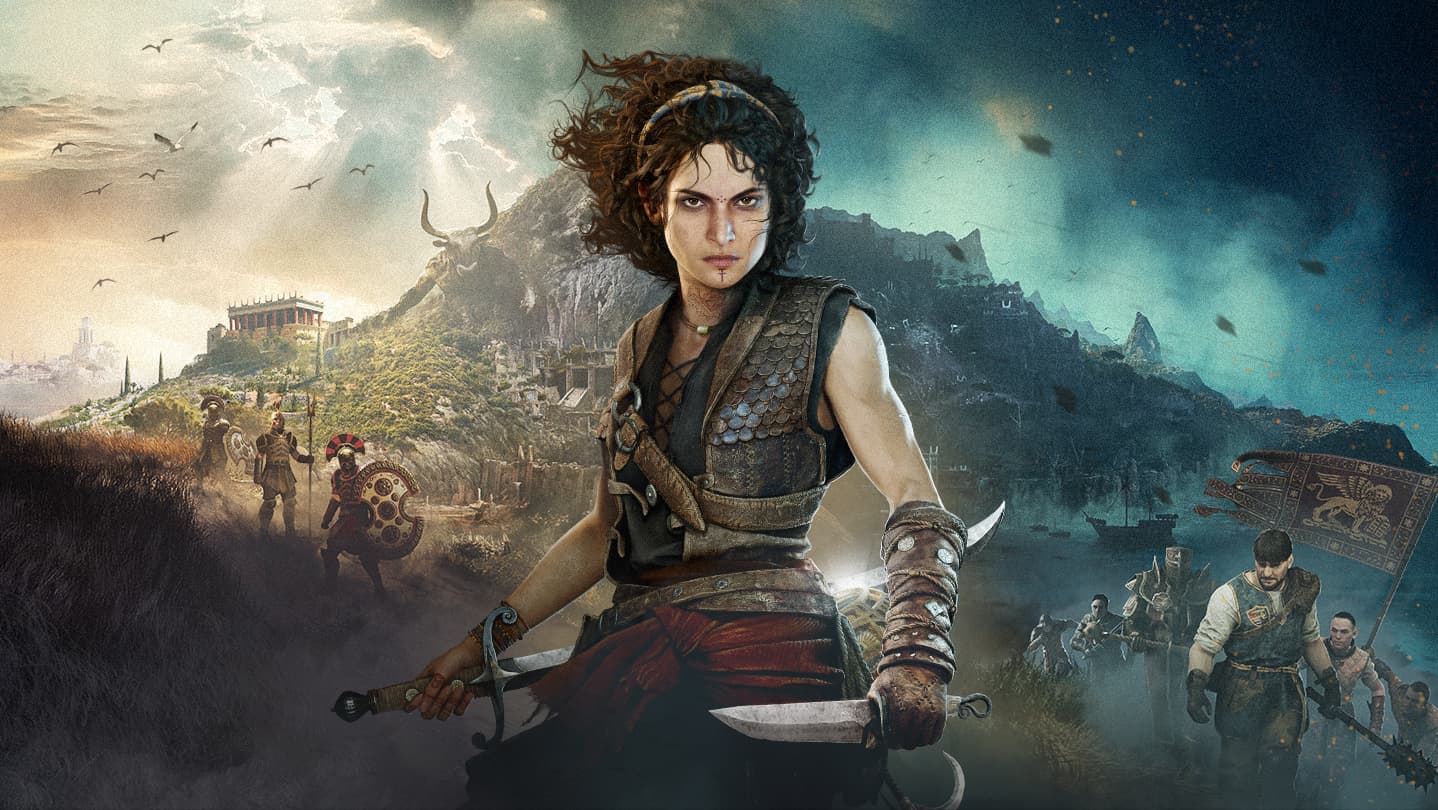
Resonance: A Plague Tale Legacy released August 27, 2026, for PS5, Xbox Series X|S, and PC, arriving day one on Xbox Game Pass, according to Wikipedia's entry on the game. It's developed by Asobo Studio and published by Focus Entertainment, the same pairing behind A Plague Tale: Innocence and A Plague Tale: Requiem — but this time, the studio has made a decision that's splitting its review coverage right down the middle: the rats are gone, and so is the stealth-first formula that defined the series' first two entries.
In their place is a third-person action game built around sword combat, parrying, and finishing moves, with Kotaku's reviewer going so far as to compare the targeting system directly to Rocksteady's Arkham games. That's not a small shift. A Plague Tale built its identity on vulnerability — Amicia and Hugo surviving by hiding, running, and manipulating swarms of rats rather than fighting anything head-on. Resonance asks players to do the opposite, and the reviews so far suggest that's a genuine gamble rather than a safe evolution.
A prequel built around a Requiem character
Resonance is a prequel set roughly 15 years before A Plague Tale: Requiem, and its protagonist is Sophia — the pirate captain who helped Amicia and Hugo escape France near the end of Requiem's story. Building a full game around a character who, in the main series, existed mostly as a late-game rescuer is a notable structural choice. It lets Asobo tell an entirely new story without touching Amicia and Hugo's arc directly, while still trading on the emotional weight the trilogy built up around them.
Per Wikipedia, the game uses a dual-timeline structure set on Crete, alternating between the year 1334 and the earlier Minoan period, with a narrative thread tied to the mythological figure Theseus. Worth flagging clearly: that specific setting detail — Crete, the Minoan-era timeline, the Theseus connection — comes from Wikipedia's entry alone. Kotaku's review only references "a mysterious island" in vague terms and doesn't corroborate the dual-timeline or mythological framing directly, so treat the fuller picture of the setting as single-sourced until more outlets weigh in.

The combat overhaul, explained
The headline change is combat, and it's worth walking through how it actually works rather than just noting that it exists. Sophia has a limited health pool — she can take three hits before dying — and recovers one hit's worth of health upon defeating an enemy, according to GameInformer's review. That's a meaningfully different risk-reward loop than anything in the first two Plague Tale games, where Amicia and Hugo generally couldn't survive direct confrontation at all and needed to route around danger instead of through it.
Layered on top of that baseline system, Kotaku's review describes combat abilities unlocked through "Resonance Points" — a progression currency, presumably tied to the game's title, that gates new moves and techniques as the story advances. Combined with the Arkham-style automatic enemy targeting Kotaku calls out specifically, the overall feel Asobo is going for reads as closer to a modern action-adventure brawler than anything in the stealth-survival lineage the series built its name on.

What's missing: the rats
The absence that's going to generate the most discussion among longtime fans is the rat swarms themselves. Kotaku calls this out by name as a deliberate departure — the series' signature mechanic, the thing that made A Plague Tale: Innocence stand out in a crowded field of stealth games back in 2019, simply isn't part of Resonance. Whether that reads as a bold reinvention or a mistake seems to depend heavily on what each reviewer wanted out of the game going in, and it's the single biggest fault line running through the coverage so far.
How long is it actually
Here's a discrepancy worth flagging rather than smoothing over: Kotaku reports a playtime of approximately 15 hours, while GameInformer's reviewer says they completed the game in about 9 hours on PC. That's a significant gap — nearly 40% shorter, depending on which figure you trust — and it's not immediately clear from either outlet's coverage whether that's a difference in playstyle, difficulty settings, how much side content each reviewer engaged with, or something else entirely. Anyone deciding whether Resonance is worth a Game Pass subscription slot or a full purchase should treat the actual runtime as a range rather than a fixed number until more data points come in.
The scores, side by side
GameInformer landed at 8.5 out of 10, praising well-realized characters and impressive performances, along with environmental puzzles the reviewer found genuinely rewarding. The review does flag that stealth sections — which are apparently still present, just no longer the core loop — occasionally disrupt the game's pacing, and notes that Resonance doesn't quite reach the heights of genre touchstones like Uncharted or God of War, the two obvious comparison points for a story-driven, combat-forward third-person adventure.

The aggregate picture backs up that generally positive read: OpenCritic shows an 84% recommendation rating based on 85 reviews, per Wikipedia's citation of the aggregator. That's a solid, if not spectacular, consensus for a series entry that fundamentally changed its own formula — reinventions this drastic often score worse simply because they alienate a built-in fanbase expecting more of the same.
Kotaku's review is the outlier, landing more mixed overall. The outlet praises what it calls "fast and deadly action combat," which lines up with GameInformer's positive read on the moment-to-moment feel of fighting. But Kotaku is considerably more critical elsewhere, calling out "rushed character development" and taking issue with the game's confinement to a single island rather than the globe-trotting variety fans might expect from an Uncharted-style adventure formula. That second criticism is worth sitting with — if Resonance is explicitly chasing an Uncharted comparison through its combat and pacing, staying locked to one island for the whole runtime is a real structural limitation against that specific genre standard, not just a nitpick.
Reading the split
Put the two major reviews next to each other and a clear pattern emerges. GameInformer and Kotaku actually agree on quite a lot: the combat system works, the characters and performances have real craft behind them, and the puzzle and exploration elements land well. Where they diverge is on execution and scope — GameInformer sees a game that mostly delivers on its ambitions with some pacing hiccups, while Kotaku sees a game whose ambitions outpace what a single-island, relatively short campaign can actually support.
That's a fairly normal split for a franchise entry attempting a genre pivot this significant. It's worth remembering that A Plague Tale: Innocence itself wasn't universally beloved on release either — some criticized its combat-avoidance stealth as thin — and Requiem drew its own mixed notes on pacing despite broadly strong reception. Asobo swapping its core mechanical identity for Resonance was always going to produce more disagreement among critics than a safer sequel would have, and that's roughly what's happened.
The engine and the AI stance
One detail buried in Wikipedia's entry is worth surfacing on its own, because it says something about how Asobo operates as a studio rather than just about this specific game. Resonance is built on Asobo's proprietary "Zouna" engine, and per Wikipedia, the studio has publicly stated it prefers not to use generative AI in development — framing the technology as a threat to creativity rather than a competitive tool worth adopting. That's a notably direct position at a moment when plenty of studios across the industry are quietly integrating generative AI tools into asset pipelines, writing support, or concept work without much public comment either way. Asobo taking a public stance against it, rather than staying silent on the subject, is the kind of detail that's easy to miss in launch coverage focused on scores and mechanics, but it's a meaningful signal about the studio's priorities heading into a game built specifically around handcrafted character performances and environmental detail — the exact things GameInformer singled out for praise.
Should you play it
If you came to A Plague Tale for the tension of hiding from rat swarms and outsmarting guards without ever picking a fight, Resonance is going to feel like a different series wearing familiar branding — and that's by design, not accident. If instead you're coming to it fresh, or you were always more invested in the series' character writing and atmosphere than its stealth mechanics specifically, the reviews suggest there's a genuinely well-crafted action-adventure here, with strong performances and a combat system reviewers on both sides found satisfying in the moment even when they disagreed about everything around it.
The Game Pass day-one availability lowers the stakes considerably for anyone on the fence — a 9-to-15-hour campaign is a reasonable ask for a subscription you're already paying for, even if it turns out the globe-trotting scope you might expect from the Uncharted comparison never quite materializes. For a full-price purchase, the calculus is a little tighter given the shorter reported runtime and the more mixed notes from Kotaku specifically, but an 84% OpenCritic recommendation rating and an 8.5 from GameInformer suggest Asobo's gamble on reinventing its own formula mostly paid off, even if it didn't land unanimously.
Expect Focus Entertainment to gauge post-launch sentiment before committing to any DLC, and for the combat overhaul here to shape how Asobo approaches a potential next mainline Plague Tale entry.