Modern Warfare 4's Open Beta: Is This Call of Duty's Course Correction?
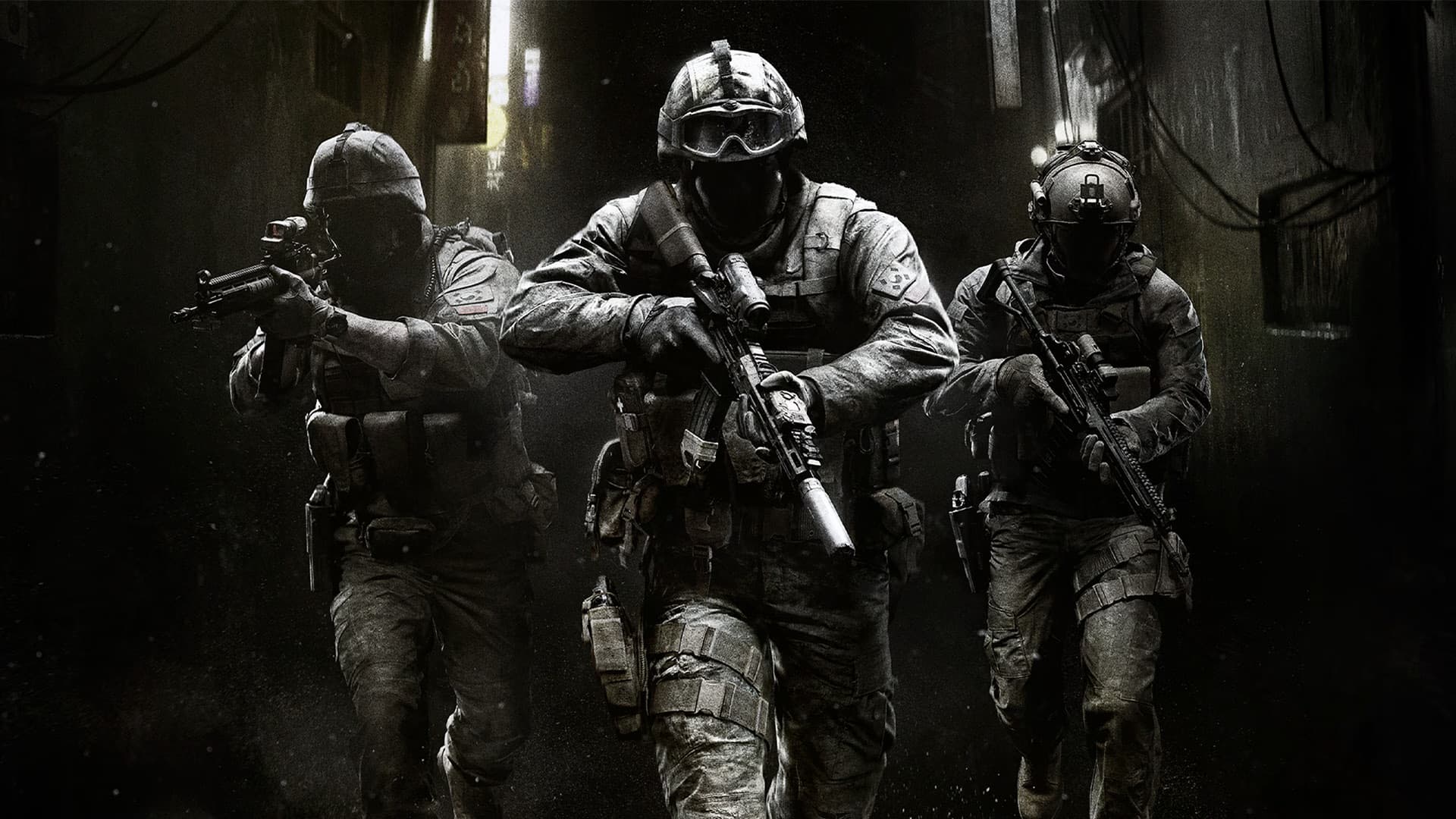
Call of Duty has spent the last several years absorbing the same complaints on loop — campaigns that feel like reskinned Warzone tourism, movement systems that swing wildly between "grounded" and "everyone's a parkour ninja," and multiplayer maps that get more predictable the longer a season runs. Modern Warfare 4 is Infinity Ward's answer to a lot of that at once, and as of this week, players don't have to take marketing's word for it. The open beta weekend runs August 28 through September 1, 2026, open to everyone across PS5, Xbox Series X/S, PC, and — notably — Nintendo Switch 2, following an early access beta weekend that's already wrapped. The full game launches October 23, 2026, on the same four platforms, according to the official Call of Duty beta page, with reporting from Gamerant and The AU Review corroborating the date and platform spread.
This isn't a review. The campaign is one mission deep in press hands-on coverage, and multiplayer is a beta build with beta-scale matchmaking and beta-scale bugs. But there's enough here — across two independent outlets' coverage — to start answering the question that's been hanging over this series since Modern Warfare III's campaign drew criticism in 2023: is Infinity Ward actually fixing what was broken, or just repackaging it with new marketing?
The campaign mission on display: "Entrenched"
Both Gamerant and The AU Review got hands-on time with a campaign mission called "Entrenched," and their independent descriptions line up closely enough to trust the broad strokes. The mission is set in Hajin City, South Korea, and puts players in control of Private Park Hyun Jin on a mission to deactivate a compromised nuclear power plant — the kind of ticking-clock, high-stakes premise Call of Duty campaigns have leaned on since the Modern Warfare reboot era began.
Structurally, Entrenched isn't a single-note firefight. According to both outlets' coverage, the mission moves through vehicle segments, underwater sequences, roof climbs, and platforming sections, stacking traversal variety on top of straight combat. That range matters more than it might sound like on paper — Call of Duty campaigns live or die on whether they keep finding new things to do with a given hour of playtime, and a mission that cycles between driving, swimming, and climbing is at least trying to avoid the "corridor shooting gallery" reputation that's dogged some recent entries.
The bigger headline, though, is what's not in the mission: reused Warzone assets. Infinity Ward has reportedly moved away from building campaign environments out of the same map geometry used in Warzone, which was one of the most widely cited criticisms of Modern Warfare III's campaign back in 2023 — a campaign that, fairly or not, became a shorthand example of a studio treating single-player as an afterthought bolted onto the battle royale machine. The AU Review's assessment of the new approach is blunt and positive: the campaign is "gritty, chaotic, and fast-paced," with lighting and texture work the outlet singles out as a clear step up, and difficulty that's apparently no joke — the outlet specifically notes it's "challenging even on Regular difficulty," which is a small but telling detail if you've ever bounced off a Call of Duty campaign's default setting expecting a breezy ride.
Movement: grounded is back
The other major structural change is movement, and it's arguably the more polarizing of the two. Black Ops 6 built its entire multiplayer identity around "omnimovement" — a system that let players sprint, dive, and slide in any direction relative to their aim, turning matches into something closer to an arcade shooter than the tactical, cover-based Call of Duty of a decade ago. Modern Warfare 4 walks that back. Per both Gamerant and The AU Review, MW4 drops omnimovement and returns to a more traditional, grounded movement model — no exoskeletons, no jetpacks, none of the boost-jump verticality that periodically resurfaces in the series' more sci-fi-leaning entries.
The framing from The AU Review is that this is a deliberate choice toward a weightier feel, explicitly positioned against the arcade-style movement Black Ops-branded entries have leaned into recently. That's a meaningful signal about who Infinity Ward is making this game for. Omnimovement had its fans — it rewarded mechanical mastery and made high-level play look spectacular — but it also alienated a chunk of the player base that wanted Call of Duty to feel like gunfights between soldiers, not a movement-tech showcase. Reverting to grounded movement is Infinity Ward siding with that second group, at least for this entry.
Whether that reads as "course correction" or "step backward" is going to depend entirely on which side of that divide you're on, and it's worth saying plainly: this isn't a universally beloved change. Players who built their multiplayer identity around slide-canceling and omnidirectional dives are losing a toolkit they'd gotten good with. But given how consistently "movement feels too chaotic" has shown up in community feedback since omnimovement launched, it's not a surprising bet for Infinity Ward to make.
Inflation: a new mode built from familiar parts
Multiplayer's new headline mode is called Inflation, and it's less an entirely new idea than a fusion of two mechanics Call of Duty players will recognize immediately. Per both Gamerant and The AU Review, Inflation is a cash-based mode: players earn money for kills, and once someone accumulates enough, they become a marked, high-value target for the rest of the lobby. It's Plunder's economy layered onto Kill Confirmed's hunted-target tension — you're not just racking up points anymore, you're racking up a bounty on your own head.
That's a smart hybrid on paper. Plunder's cash-grab loop gave players a reason to keep pushing even after a good run, while Kill Confirmed's marked-target dynamic creates natural end-game tension in modes that otherwise risk feeling like an undifferentiated point accumulator. Combining them means good players can't just farm kills in a quiet corner of the map indefinitely — eventually the game turns the spotlight on them and dares the rest of the lobby to come collect.
The map lineup, and one that's actively trying to break camping habits
The AU Review counts six maps available in the open beta: Rooftops, Silkworm, Transit 213, Cachette, Lotus, and Kill Block. Most of those are self-explanatory by name, but Kill Block is worth calling out specifically — it splices chunks from three different maps together and randomizes elements, a design choice explicitly aimed at disrupting camping and predictable spawn patterns. That's a fairly aggressive experiment for a launch-adjacent map. Spawn camping and predictable sightlines are perennial multiplayer complaints across the entire franchise, and building a map whose layout intentionally resists memorization is a more structural attempt at a fix than the usual season-two patch notes tweaking a couple of spawn points.
Mode variety is broad too. The AU Review lists eight modes in the beta: Team Deathmatch, Domination, Hardpoint, Kill Confirmed, Inflation, Search & Destroy, a Gunfight variant, and Mobility Course. Gamerant separately confirms the Gunfight variant specifically as a 10v10 mode, which is a notable scale-up — Gunfight has traditionally been a tight 2v2 mode built around small maps and limited loadouts, so a 10v10 version sounds like it's borrowing Gunfight's round-based, no-respawn tension and applying it at a much larger scale. That's a genuinely different proposition than classic Gunfight, and it'll be one of the more interesting things to watch develop if it survives past the beta.
What's not here yet
Two pieces of the multiplayer puzzle are explicitly missing from this weekend's build. Gamerant reports that Ground War mode and a new Warzone map are confirmed for the second beta weekend but weren't playable during the open beta. That's a fairly standard staggered rollout for Call of Duty betas — battle royale content and the largest-scale modes tend to get held back or drip-fed separately from core multiplayer testing — but it does mean this weekend's impressions are necessarily incomplete. Ground War in particular tends to stress server infrastructure differently than smaller lobby sizes, so how it performs in weekend two will say something the current beta simply can't.
The rough edges: connectivity issues
No beta is without its problems, and Modern Warfare 4's hasn't been an exception. Gamerant notes that players reported connectivity issues and disconnections during testing. Outlets covering the beta are treating this as fairly typical of pre-release testing rather than a red flag specific to this game — beta infrastructure routinely gets stress-tested at a fraction of launch-day server capacity, and disconnection reports during a beta weekend are close to a franchise tradition at this point. Still, it's worth flagging plainly rather than glossing over: connectivity problems are the kind of issue that either gets quietly fixed before launch or becomes a much bigger story if it doesn't. Two months is enough runway for Infinity Ward to address it, but it's not nothing, either.
Reading the tea leaves
Taken together, what's on display in this beta reads like a studio responding directly to the last several years of community feedback rather than just iterating on a template. Dropping omnimovement addresses the "multiplayer feels too chaotic" crowd. Moving the campaign away from recycled Warzone geometry addresses the "single-player feels like an afterthought" crowd. Kill Block's randomized, spliced layout addresses the "maps get stale and campable" crowd. None of these are radical reinventions — Call of Duty rarely swings for genre-redefining changes — but they're specific, targeted responses to specific, repeatedly voiced complaints, which is a different posture than the franchise has shown in some recent cycles.
The caveats are real, though. A single campaign mission and a beta multiplayer build are a narrow window into a full game, and "challenging even on Regular difficulty" cuts both ways depending on whether that's satisfying tension or unwelcome friction across a full ten-hour campaign. Connectivity issues need to actually get fixed, not just excused as beta growing pains. And the Kill Block experiment needs to hold up once players have a few hundred hours to fully map out its randomization rather than a beta weekend's worth of first impressions.
Still, for a franchise that's absorbed a genuinely rough stretch of "same game, new coat of paint" criticism, a beta that's actively walking back a divisive movement system and visibly trying to build campaign content outside the Warzone asset pipeline is a more encouraging signal than Call of Duty betas have offered in a while. The second beta weekend, with Ground War and a new Warzone map in tow, will fill in a lot of what's still missing. October 23 will answer the rest.
A second beta weekend is expected to add Ground War mode and a new Warzone map before Modern Warfare 4 launches October 23 on PS5, Xbox Series X/S, PC, and Nintendo Switch 2.