Shadow of the Erdtree: What the DLC Actually Changes About Elden Ring's Story
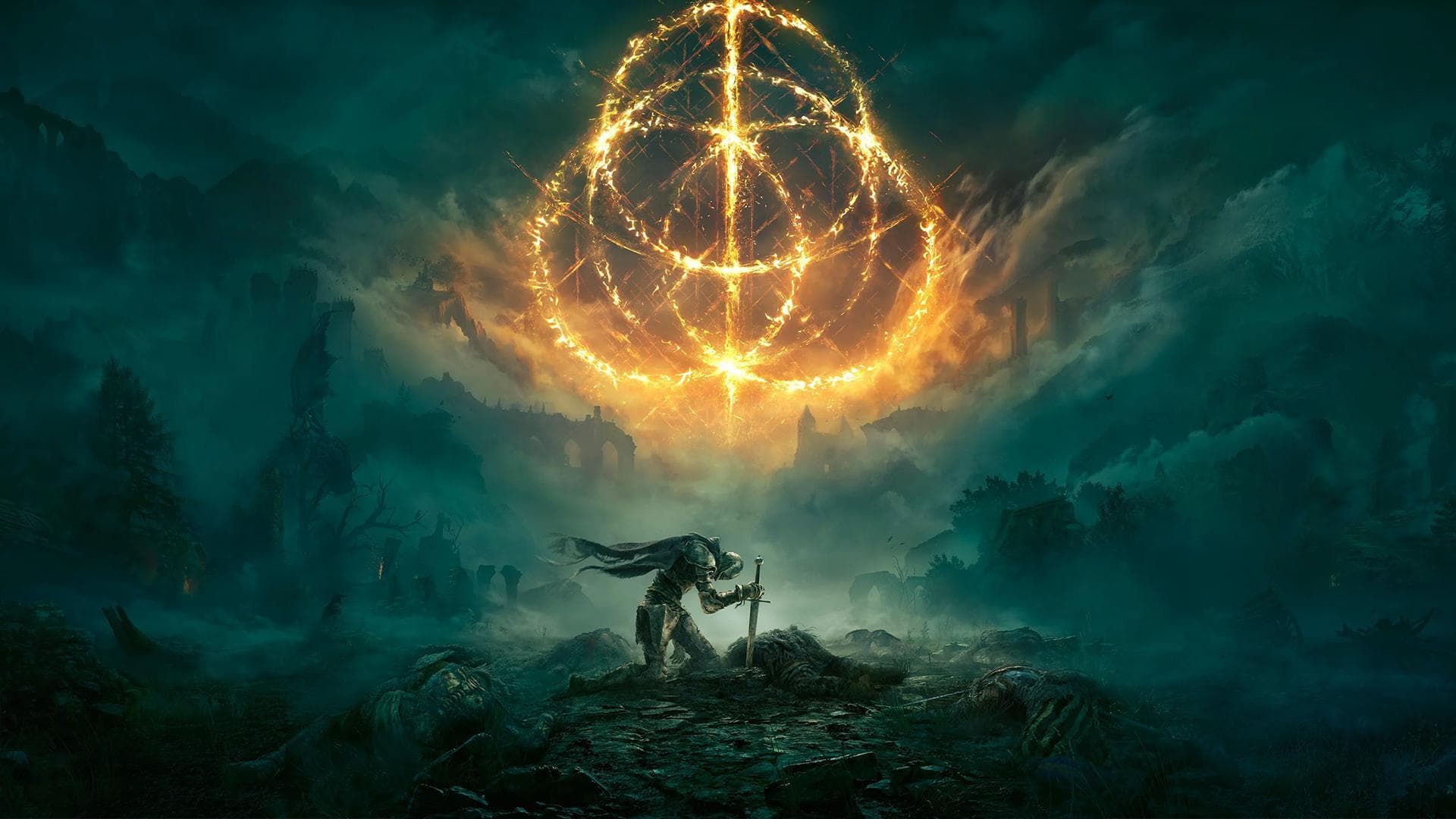
FromSoftware DLCs have a track record of doing more than adding a new area to explore — they tend to quietly rewrite how you understand the base game. Shadow of the Erdtree continues that tradition, and if you finished Elden Ring thinking you understood the Golden Order's origins, the Land of Shadow has a few corrections for you.
Miquella, finally in focus
The expansion centers on Miquella, a character who exists in the base game almost entirely through implication — a cocoon, a few item descriptions, a reputation. Shadow of the Erdtree finally lets you meet the ideas he represents directly, and what emerges is less "misunderstood hero" and more a portrait of someone whose compassion curdled into something closer to control. That reframing matters because it changes how you read Marika's original choices too — a figure the base game treats as a fixed, almost mythic constant turns out to have made decisions that ripple forward into exactly the kind of manipulation Miquella represents.
How the Land of Shadow is structured
Structurally, the DLC borrows the base game's open-world density but compresses it — the Land of Shadow is smaller than the Lands Between, but built with the assumption you already know how to play. Enemy density and boss difficulty both skew harder than the base campaign's back half, which tracks with FromSoftware's usual approach of designing DLC for players who've already finished the main story. Landmarks in the new region are deliberately placed to reward exploration over a direct critical path, continuing the base game's philosophy of hiding its best content off the beaten route rather than gating it behind story progression.
Faith, martyrdom, and the DLC's real argument
The most interesting narrative move is how the expansion treats faith and martyrdom as recurring, deliberately uncomfortable themes rather than simple good/evil framing. St. Trina's storyline, Messmer's fire-and-devotion arc, and the Shadow Realm's relationship to the Erdtree all point toward the same idea: the Golden Order was never a stable truth, just a story that enough powerful people agreed to keep telling. Messmer in particular reframes a lot of what the base game implies about the Erdtree's history — his arc functions almost as a case study in how belief gets weaponized by people who genuinely think they're doing the right thing, which is a more uncomfortable angle than a straightforward villain would provide.
Combat and boss design
If you're going in purely for combat, the DLC delivers — new weapons, new Ashes of War, and boss encounters that rank among the hardest in the series. Several of the new bosses lean harder into multi-phase aggression than the base game's roster typically did, which has been a point of debate among the community: some players read it as a natural escalation for a DLC meant for post-game characters, others as a step past what feels fair even by FromSoftware's standards. Either way, the new weapon movesets and Ashes of War meaningfully expand build variety rather than just adding numerically bigger versions of existing tools.
Why this DLC matters more than a typical expansion
The real payoff here is narrative. Shadow of the Erdtree doesn't just extend Elden Ring's world; it argues with the version of that world you thought you already understood. That's a rarer thing for a DLC to attempt — most expansions add a new area and a new threat without touching the base game's central mythology. By going after Marika and the Golden Order directly, Shadow of the Erdtree closes the loop on questions the base game raised without answering, which is part of why it's being discussed less as "more Elden Ring" and more as the piece that completes the picture.
How it changes a replay of the base game
One of the more interesting effects of the DLC is how it recolors a subsequent playthrough of the base game. Item descriptions, environmental details, and lines of dialogue that read as flavor text on a first run through the Lands Between take on new significance once you know what Shadow of the Erdtree reveals about Miquella and Marika. FromSoftware has used this technique before in past DLCs, but rarely to this degree — the Land of Shadow doesn't just add a new chapter, it functions almost like a director's cut that changes how the entire original text should be read.
Where it sits among FromSoftware's other expansions
Measured against the studio's prior DLCs — the Ashes of Ariandel and Ringed City expansions for Dark Souls III, or Bloodborne's The Old Hunters — Shadow of the Erdtree is notably larger in scope, both in playtime and in how directly it rewrites the base game's central mythology. The Old Hunters remains the closer comparison in terms of narrative ambition, since it also fundamentally recontextualizes its base game's core conflict, but Shadow of the Erdtree does it at a scale that reflects Elden Ring's much larger overall footprint. That makes it less a bonus epilogue and more a genuinely necessary piece of the complete story for anyone invested in the game's lore.
Should you play it before or after finishing the base game?
FromSoftware designed the DLC's access point to require significant base-game progress, which effectively answers the "when should I play this" question for most players — you're meant to have already formed your own understanding of the Golden Order, Marika, and the Erdtree before Shadow of the Erdtree starts complicating it. Attempting it too early, even if a workaround exists, blunts a lot of the DLC's impact, since its central twist relies on you already having internalized the base game's version of events.
How the new region's art direction supports the narrative
The Land of Shadow's visual identity leans harder into decay, fire, and rot-adjacent imagery than the base game's more classically fantastical Lands Between, and that shift isn't purely aesthetic. It mirrors the DLC's thematic focus on belief systems that have curdled or been corrupted from within, giving the environment itself a kind of visual argument that runs parallel to what the story is doing with Miquella and Messmer. Even players who skip most of the item descriptions and lore text tend to pick up on this shift, since the region's tone is different enough from the base game to register immediately on a purely visual level.
What the community's reception has looked like
Broadly, community reception has been strongly positive, with most of the debate centering on difficulty rather than narrative or content volume — a sign that FromSoftware largely delivered on scope and ambition even where individual boss encounters have proven contentious. That's a fairly typical pattern for a FromSoftware release: the studio's difficulty design choices generate more discussion friction than almost anything else about their games, while the actual amount and quality of content tends to be less disputed.
Who this DLC is really for
Given both its access requirements and its difficulty curve, Shadow of the Erdtree is squarely built for players who already finished Elden Ring and want deeper narrative payoff rather than a fresh onboarding experience. It's not designed as a good entry point for newcomers, and treating it as one will likely undercut both the story's impact and the combat balance, which assumes a fully built-out, endgame-level character. For the intended audience, though, it delivers on exactly the kind of narrative and mechanical density that's made FromSoftware's expansions a genre benchmark.
Final verdict
Shadow of the Erdtree earns its reputation as one of the more ambitious DLCs FromSoftware has produced, not because of its size alone, but because of how directly it's willing to complicate the base game's central mythology. Players going in for tougher bosses and new gear will get exactly that; players paying attention to the story will come away with a meaningfully different understanding of everything that came before it.
With Miquella's true nature and the Golden Order's origins now on the table, expect future FromSoftware releases to keep leaning on this same technique — recontextualizing an already-finished game rather than simply extending it. If the studio follows its usual pattern, don't expect a direct narrative sequel; expect the next project to explore an adjacent idea instead.