Dune: Part Two Review — Scale Without Losing the Story
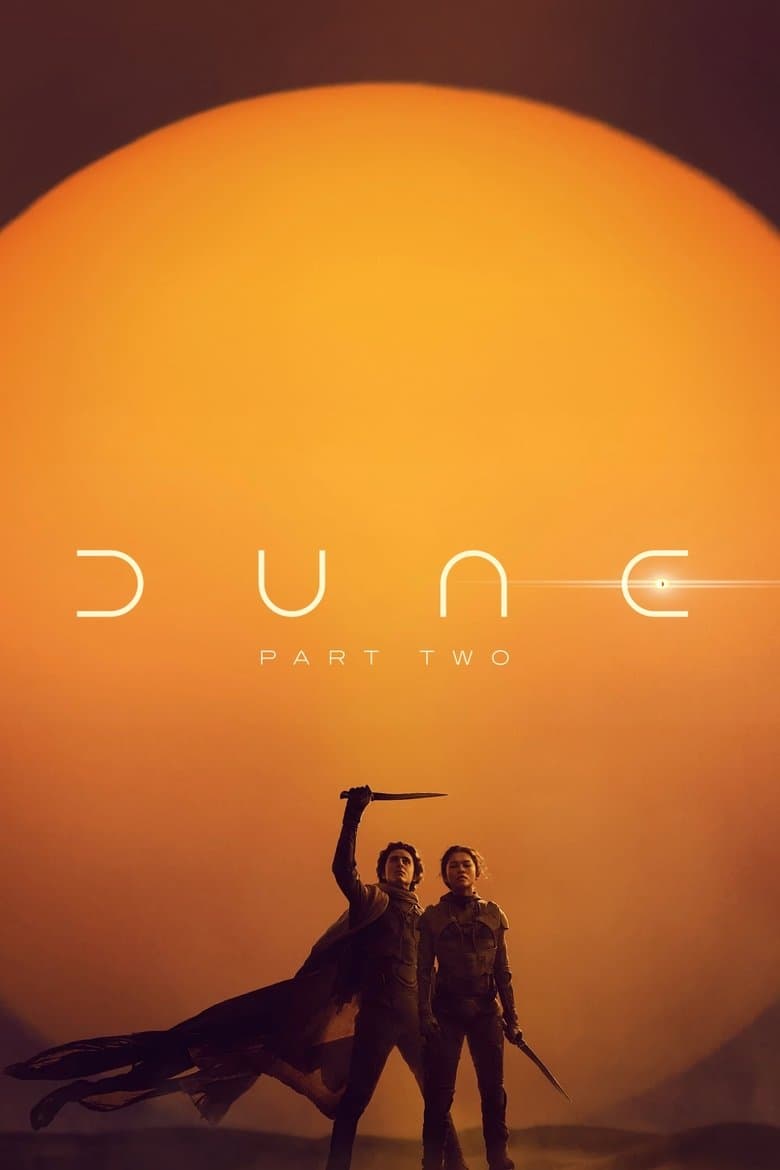
Every big-budget adaptation eventually has to answer the same question: does the spectacle serve the story, or does the story just become an excuse for the spectacle? Dune: Part Two spends its opening act proving it understands the difference, and its back half testing how far that understanding can stretch.
The pacing shift from Part One
The film picks up almost exactly where the first left off — Paul Atreides embedded with the Fremen, learning to survive a planet that has already killed everyone he grew up believing was invincible. What's immediately noticeable is the pacing shift. Part One was deliberate to the point of frustrating some viewers; Part Two moves. Sietch politics, Fremen holy war, Harkonnen brutality and imperial maneuvering all get compressed into a runtime that somehow still finds room to breathe during its quietest scenes.
Zendaya's Chani becomes the film's real center of gravity. Where the book treats her more as an idea than a person for long stretches, the movie gives her something closer to a counter-argument to Paul's entire arc — she's the one character who watches the myth being built around him and refuses to pretend it isn't dangerous. That tension, more than the sandworm-riding or the battle sequences, is what makes the back third land.
Why the Harkonnen sequence is the boldest choice in either film
The visual craft is not in question. Greig Fraser's cinematography treats Arrakis less like a backdrop and more like a hostile character in its own right, and the Harkonnen homeworld sequence — shot in a stark, near-monochrome palette — is the single boldest formal choice in either film. It's the kind of image that will get referenced in "how to shoot a blockbuster" video essays for the next decade.
Where the third act wobbles
Where the film wobbles slightly is in its final act's compression. Plot threads that needed two or three more scenes to fully land get resolved in single lines of dialogue. It's a minor cost for a film juggling this much narrative, but it's noticeable if you're watching for it.
The score and sound design deserve their own paragraph
Hans Zimmer's return to the score is less a repeat of Part One's approach and more an escalation of it — the vocal work leans further into something closer to religious chant than conventional film scoring, which tracks with how much of this film is actually about the manufacturing of a messiah figure rather than a straightforward hero's journey. The sound design around the sandworms in particular does a lot of quiet work: the low-end rumble that precedes every major worm sequence has been tuned to register almost physically in a proper theater, and it's one of the clearer arguments for seeing this one on the biggest screen available rather than waiting for a home release.
How the politics register differently on screen than on the page
One of the more interesting adaptation choices is how much weight the film puts on the Bene Gesserit's manipulation of religious belief across the Fremen population. Frank Herbert's novel treats this as background machinery — necessary to the plot, but rarely dramatized directly. Villeneuve's film pulls it much further into the foreground, staging entire sequences around the tension between Fremen who buy into the prophecy and those, like Chani, who see it for the engineered narrative it is. That choice does a lot of the film's thematic heavy lifting, and it's part of why the ending plays less as a triumphant coronation and more as something closer to a warning.
Where the cast earns its size
A film with this many major characters risks turning half its cast into background noise, and Part Two mostly avoids that trap by giving even smaller roles a clear function rather than a full arc. Javier Bardem's Stilgar gets used almost entirely for tonal contrast — his unwavering faith plays as both comic relief and quiet tragedy depending on the scene — while Christopher Walken's Emperor and Florence Pugh's Princess Irulan are kept deliberately underused, clearly being set up for larger roles in whatever comes next rather than being fully spent here. It's a patient way to handle a large ensemble, even if it occasionally means side characters feel more like promises than payoffs within this specific film.
How it holds up next to Part One
Watched back to back, the two films function almost like different genres wearing the same production design. Part One is closer to a slow-burn political thriller, spending most of its runtime on infiltration, betrayal, and the mechanics of House Atreides' downfall. Part Two is structured more like a war epic building toward a coronation, with the pace of an ensemble action film layered over the same underlying political skepticism. That tonal shift is deliberate rather than a loss of nerve — the first film earns the patience needed to understand exactly what's being manufactured before the second film shows you the machine actually running at full speed.
Where this fits in the broader landscape of recent sci-fi epics
Against other big-budget science fiction of the last several years, Dune: Part Two stands out for treating its worldbuilding as inseparable from its politics rather than as spectacle for its own sake. A lot of modern franchise filmmaking treats scale as an end goal — bigger battles, bigger effects, bigger reveals — without much interest in what that scale is actually in service of. Villeneuve's approach inverts that priority: every large-scale sequence in this film, from the Harkonnen homeworld to the final battle, is doing specific thematic work about power, belief, and manufactured legitimacy, which is a rarer combination than the genre's marketing usually promises.
A note on the film's ending, without spoiling specifics
Without getting into plot specifics, it's worth flagging that viewers expecting a conventional triumphant conclusion should recalibrate going in. The film is far more interested in showing you the cost of what's being set in motion than in delivering a clean victory lap, and that choice is consistent with the skepticism the film has been building toward the prophecy narrative since its opening act. It's a smarter ending than a typical franchise blockbuster tends to risk, even if it means the emotional note you leave the theater on is closer to unease than celebration.
The verdict
Taken as a whole, Dune: Part Two does what a lot of modern franchise filmmaking forgets to attempt: it treats scale as a tool for telling a specific story, not a substitute for having one. The politics are sharper than the marketing suggests, the sound design justifies the theatrical ticket on its own, and the ensemble is handled with more patience than films this size usually allow themselves. Worth the runtime, worth the big screen if you can get one.
Who this film is for
If you found Part One's pacing a genuine obstacle rather than a deliberate choice, Part Two's faster momentum will likely read as a meaningful improvement. But viewers hoping for a straightforward, morally uncomplicated hero's journey should adjust expectations — the film is far more interested in interrogating that structure than delivering it uncritically, and that interrogation is the whole point rather than a flaw to work around. Come for the scale, but don't be surprised if what actually stays with you afterward is how deliberately uneasy the ending makes all of that scale feel in hindsight, long after the credits roll.