Avatar: Fire and Ash's Long Goodbye — From $1.48 Billion in Theaters to a Split Oscar Night
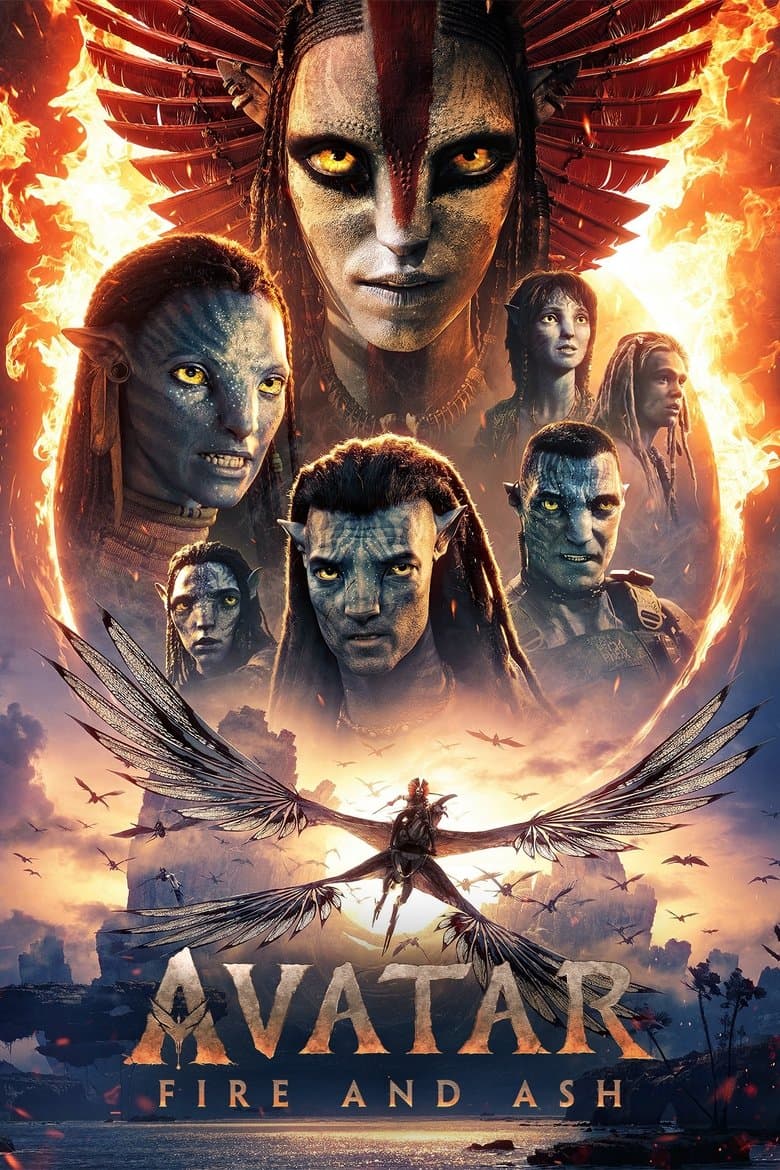
Avatar: Fire and Ash has finished its theatrical life, picked up a split verdict at the Oscars, and landed on Disney+. That's a tidy way to sum up a film that spent the better part of a year being simultaneously one of the biggest box office stories in the world and one of the more contested entries in James Cameron's Pandora saga critically. The theatrical run is over, the awards conversation has resolved, and the film is now available to anyone with a Disney+ subscription. Here's where it all landed.
Now streaming, with a companion piece attached
According to ABC7 News, Fire and Ash began streaming exclusively on Disney+ on June 24, 2026. It didn't arrive alone — Disney folded it into a dedicated "Avatar Collection" hub alongside the first two films, giving subscribers a single place to watch the trilogy in order rather than hunting across the service's library. ABC7 also reported that a companion making-of special, On The Red Carpet Presents: Avatar: Fire and Ash, is streaming on Disney+ as well, giving viewers a behind-the-scenes look at how Cameron and his effects teams built out this chapter of the saga.
The streaming arrival closes the loop on a theatrical run that, by any conventional measure, was enormous. But the film's road to Disney+ says as much about how these Avatar films are packaged and sold long-term as it does about the film itself — Disney is clearly building the franchise as a self-contained streaming destination, not just a string of theatrical events that eventually scatter into a catalog.

The box office numbers
The headline figure, per ABC7, is that Fire and Ash grossed $1.48 billion worldwide by the time it exited theaters. That's a massive number in any year, and it puts the film comfortably in the same financial tier as its two predecessors.
The pace at which it got there is worth dwelling on. Roughly three weeks into its theatrical run, Rotten Tomatoes and Fandango's box office editorial desk reported the film had already crossed $1 billion worldwide, with a domestic total of $306 million against a worldwide figure of $1.083 billion at that point. That split — a relatively modest domestic number next to a much larger international haul — has been a consistent pattern across the Avatar franchise, where Cameron's films tend to outperform overseas by a wide margin relative to typical Hollywood blockbusters.
The billion-dollar streak, twice over
Crossing $1 billion worldwide is notable on its own, but Rotten Tomatoes' box office desk flagged a bigger pattern: this is the third Avatar film in a row to cross that threshold, and it marked "James Cameron's fourth film in a row" — across his entire filmography, not just the Avatar series — to hit $1 billion worldwide. That's an extraordinary run for any director, and it underscores why Cameron's name alone still functions as a marketing engine independent of franchise fatigue, sequel exhaustion, or the mixed reviews the film would eventually collect.

A split verdict at the Oscars
Fire and Ash went into the 98th Academy Awards with two nominations. According to Avatar.com's official news coverage, the film was nominated for Best Costume Design, crediting Deborah L. Scott, and Best Visual Effects, crediting Joe Letteri, Richard Baneham, Eric Saindon, and Daniel Barrett.
The outcome was a mixed bag. According to WDWNT, corroborated by IMDb's awards listing, Fire and Ash won Best Visual Effects but lost Best Costume Design to Netflix's Frankenstein, with the win going to costume designer Kate Hawley. WDWNT reported that the Visual Effects win was reportedly Disney's only Oscar win of the entire ceremony — a notable data point for a studio that typically shows up across multiple categories in a given awards season.
It's worth flagging precisely how sourced that VES win detail is. WDWNT also reported that Fire and Ash beat out Jurassic World Rebirth, F1, Sinners, and The Lost Bus for the Visual Effects trophy. That specific list of losing nominees is single-sourced to WDWNT, a fan-news outlet, and hasn't been independently cross-checked here against a wire service report. Treat that particular detail as reported, not confirmed by multiple outlets, even though the win itself is corroborated by IMDb's own awards record.
Backed up by the VES Awards
The Visual Effects Oscar wasn't an isolated result. Fire and Ash had already won Outstanding Visual Effects in a Photoreal Feature at the 24th VES Awards on February 25, 2026, according to Wikipedia's VES Awards page. That's worth noting with the appropriate caveat — Wikipedia functions here as a secondary aggregator source rather than a primary report, so the underlying VES Awards announcement itself would be the ideal citation. Still, a VES win heading into the Oscars lines up with, and arguably foreshadowed, the Academy's own decision in the visual effects category.
Taken together, the visual effects wins make sense given what these Avatar films are built to do. Whatever criticisms get leveled at the franchise's storytelling, nobody has seriously argued that Cameron's effects pipeline isn't still operating at the top of the industry. The costume loss to Frankenstein is a different story — a reminder that even inside a franchise this technically dominant, individual categories can still go a different way when the competition brings something distinctive.
Critics and audiences, pulling in different directions
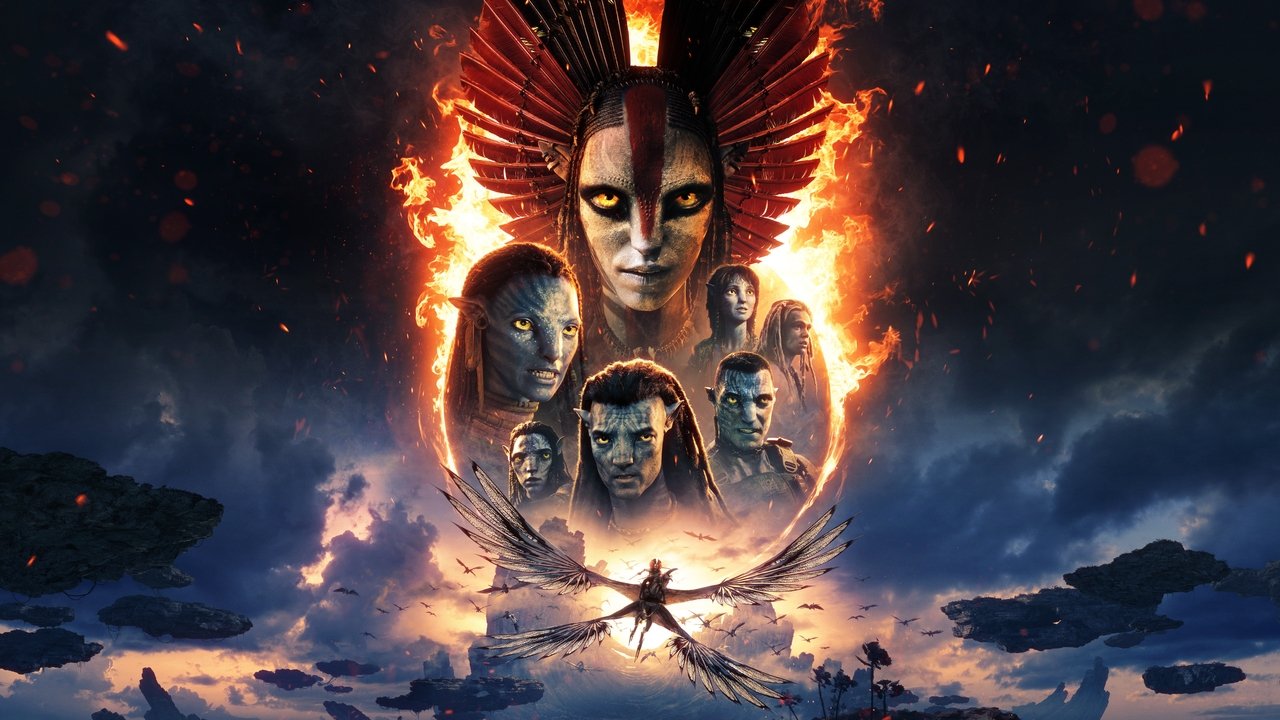
If the box office and awards numbers tell a story of dominance, the reviews tell a more complicated one. Rotten Tomatoes' Critics Consensus summed up the film's reception by noting that it "repeats the narrative beats of its predecessors to frustrating effect," while conceding that its "grand spectacle continues to stoke one-of-a-kind thrills." That's a fairly blunt acknowledgment from an aggregator that the film's storytelling and its technical achievement are pulling in opposite directions critically.
The numbers back that split up. The critic score on Rotten Tomatoes landed around 68% fresh, while the platform's Verified Audience score came in much higher, at 91%. That's a significant gap, and it's one of the more useful data points for understanding how this film actually played with the people who paid to see it versus the critics reviewing it professionally. Audiences, by and large, appear to have shown up for spectacle and gotten exactly what they wanted. Critics, watching a third film built on a similar structural template to the first two, were less forgiving of the repetition.
What the reviews actually said
The Hollywood Reporter didn't mince words, calling Fire and Ash "easily the most repetitious entry in the big-screen series, with a been-there, bought-the-T-shirt fatigue that's hard to ignore." That's a pointed criticism aimed squarely at the franchise's tendency to lean on familiar beats — a new Na'vi clan, a new threat to Pandora, a family in peril — rather than meaningfully evolving the formula established across the first two films.
IGN's Max Scoville was similarly unconvinced on the storytelling front, writing that he "can't imagine anyone thinking this film is the best of the trilogy." Scoville went further, describing moments in the film where the visuals and story beats felt like "deleted scenes or alternate takes intercut with new material" from the prior two Avatar films — a striking way of saying that even at its most technically dazzling, the movie occasionally felt like it was recycling footage and ideas rather than pushing the story into genuinely new territory.
Reception more broadly has been described in secondary reporting as mixed, without a reliably sourced single aggregate score attached to that characterization here — the specific numeric figures circulating for some review aggregators haven't been independently verified against a primary source, so they're being left out rather than repeated as fact.
Why the gap between spectacle and story keeps showing up
None of this is a new problem for the Avatar franchise. Since the first film in 2009, Cameron's Pandora saga has consistently drawn criticism for its familiar, borrowed story structures even as it's redefined what's technically possible on a movie screen. Fire and Ash extends that pattern rather than breaking it. The film's box office and awards success prove that audiences and the industry alike still value the technical craft enough to show up in force and hand out trophies for it. The critical pushback proves that craft alone isn't enough to silence complaints about a story that, three films in, is still leaning on the same emotional and narrative scaffolding.
That tension is probably the most honest way to describe where the Avatar franchise sits right now. It's not a series coasting on spectacle with nothing else going for it, and it's not a series that's cracked the code on matching its visual ambition with equally ambitious storytelling. It's stuck in the middle, and $1.48 billion worldwide plus a Visual Effects Oscar suggests that middle ground is still extremely profitable and still capable of winning the categories where the franchise has always been strongest.

Where things stand now
With Fire and Ash now folded into Disney+'s Avatar Collection alongside the first two films, and its own making-of special sitting right next to it, the trilogy is effectively packaged as a complete, on-demand experience for anyone who wants to catch up or revisit it. The theatrical chapter of this film's life is closed, with $1.48 billion worldwide and one competitive Oscar win to show for it. The costume loss to Frankenstein keeps the film from a clean sweep of its two nominations, but a Visual Effects win — backed up by an earlier VES Award in the same category — cements the film's technical reputation even as its storytelling continues to draw the same criticisms that have followed this franchise since its first installment.
What happens next for Pandora isn't confirmed yet. Cameron has talked in the past about a longer-term plan for the Avatar saga stretching beyond three films, and a $1.48 billion worldwide gross paired with a fourth-straight billion-dollar hit for Cameron personally gives Disney every financial incentive to keep going. Whether a potential fourth film addresses the structural repetition critics keep flagging, or leans further into the spectacle that's clearly still working with audiences, remains an open question.
With one Best Visual Effects win banked and the franchise's billion-dollar streak intact, attention now shifts to whether Cameron moves forward with a fourth Avatar film and how long Pandora's box office dominance can keep holding.