Digger Review Roundup: Critics Agree Tom Cruise Is Doing Something Real, They're Not Sold the Movie Around Him Earns It
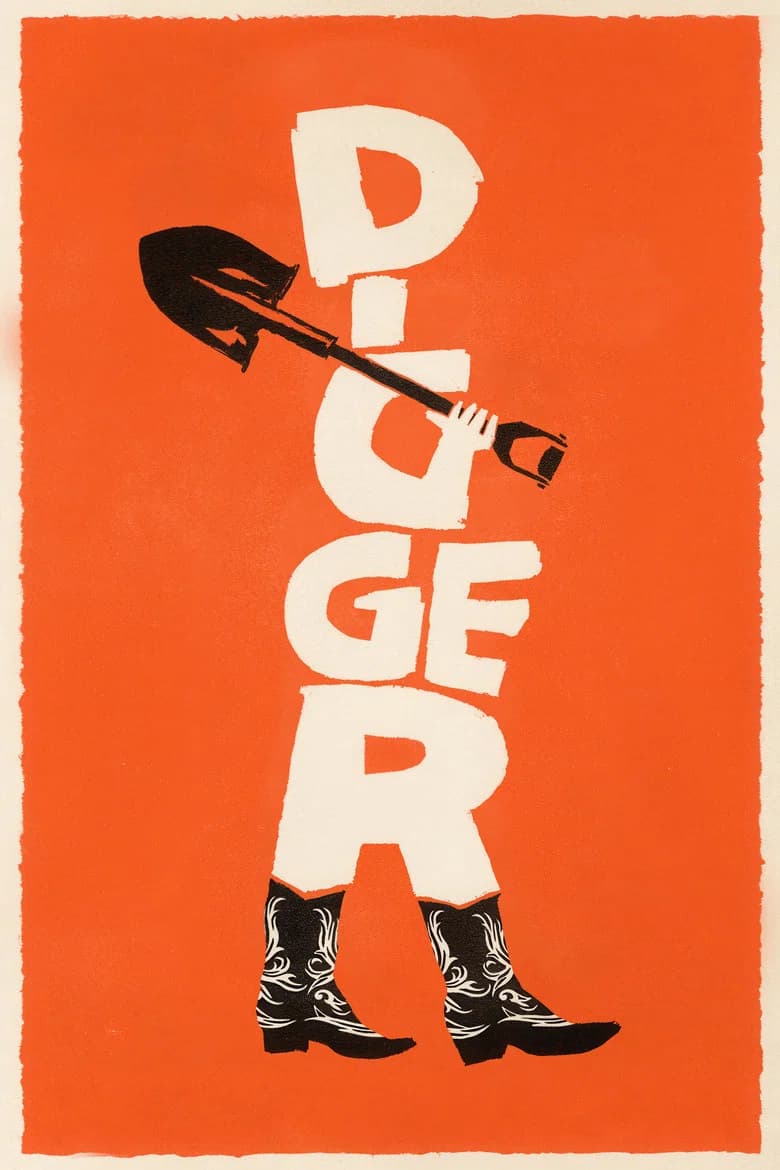
When we covered Digger's London premiere back on September 22, there was no review to write yet — just prosthetics, a royal red carpet, and CinemaCon buzz about Tom Cruise disappearing into an oil tycoon. That gap has closed. The film's international rollout began today, September 30, ahead of the US and UK theatrical release on October 2, and a real batch of reviews has landed. The verdict is genuinely split, but it splits in a consistent, legible way: critics who like the film and critics who don't largely agree that Cruise is doing something worth watching. What they disagree on is whether Alejandro G. Iñárritu built a movie around him that earns it.
Where the Numbers Actually Sit
Unlike some of the shakier early-aggregate situations we've covered on other titles this month, Digger's numbers are settled enough now to state plainly. Rotten Tomatoes has the film at 54% fresh from 91 critics, with an average score of 6 out of 10. Metacritic has it at 46 out of 100 from 38 critics, which the site's own scale labels "mixed or average." Both numbers land in roughly the same place: a film that's dividing critics close to down the middle, not one that's cratered or coasted to acclaim. That consistency between two separately calculated aggregates is worth noting on its own — it means this isn't a case of one outlier survey skewing the picture.
A Quick Recap of What the Film Is
For anyone coming to this fresh: Cruise plays "Digger" Rockwell, a wealthy Texas oil and energy tycoon whose Greenland drilling operation dislodges an ice shelf and triggers a catastrophe that devastates continental Europe and kills hundreds of thousands of people. The film follows him racing to spin his way into looking like humanity's savior rather than the man who caused the disaster in the first place. Cruise also plays a second role, actor Curtis Markson, through a metafictional subplot built around a satirical play-within-the-film called "Fossil Fools" — a structural wrinkle that several reviews below treat as either the film's cleverest idea or its most self-indulgent one, depending on who's writing.
Iñárritu directs from behind the camera of Emmanuel Lubezki, his longtime cinematographer, on a 129-minute runtime distributed by Warner Bros. and Legendary. The supporting cast — Riz Ahmed, John Goodman, Sandra Hüller, Michael Stuhlbarg, Jesse Plemons, and Emma D'Arcy — is exactly as stacked as it looked in premiere coverage. Whether that ensemble actually gets used is one of the recurring complaints in the reviews below.

IndieWire: "A Malformed Blockbuster"
David Ehrlich's review for IndieWire gives Digger a C+ and doesn't soften the verdict in his framing — he calls it "a malformed blockbuster," language that suggests a film with real ambition and real resources that never quite assembles into a coherent whole. That's a specific kind of failure, distinct from a film that's simply badly made or under-resourced. A malformed blockbuster is one where the pieces are individually expensive and often impressive, but the shape they add up to doesn't work.
Even within that overall grade, though, Ehrlich singles out a specific highlight: a roughly ten-minute monologue delivered by Cruise, built around the public's contradictory relationship with oligarchs — hating them in the abstract while remaining functionally dependent on the systems they run. That's a long stretch of screen time to hand one actor uninterrupted, and Ehrlich's review treats it as evidence the film knows exactly what it wants to say in its sharpest moments, even if it doesn't sustain that clarity across a full two hours and nine minutes.

AV Club: Style Over Substance, With a "Duh" Attached
The AV Club's review is the coldest grade in this roundup, landing at C-. The core complaint is that the film prioritizes visual style over substance, and that its environmental critique — a wealthy tycoon's greed literally destroying the world he claims to want to save — "lands with a 'duh,'" in the outlet's phrasing. That's a pointed way of saying the film's central satirical point isn't news to anyone who's been paying attention to climate coverage or oligarch culture over the last decade, and that Digger retreads territory Don't Look Up already covered without adding meaningfully deeper insight.
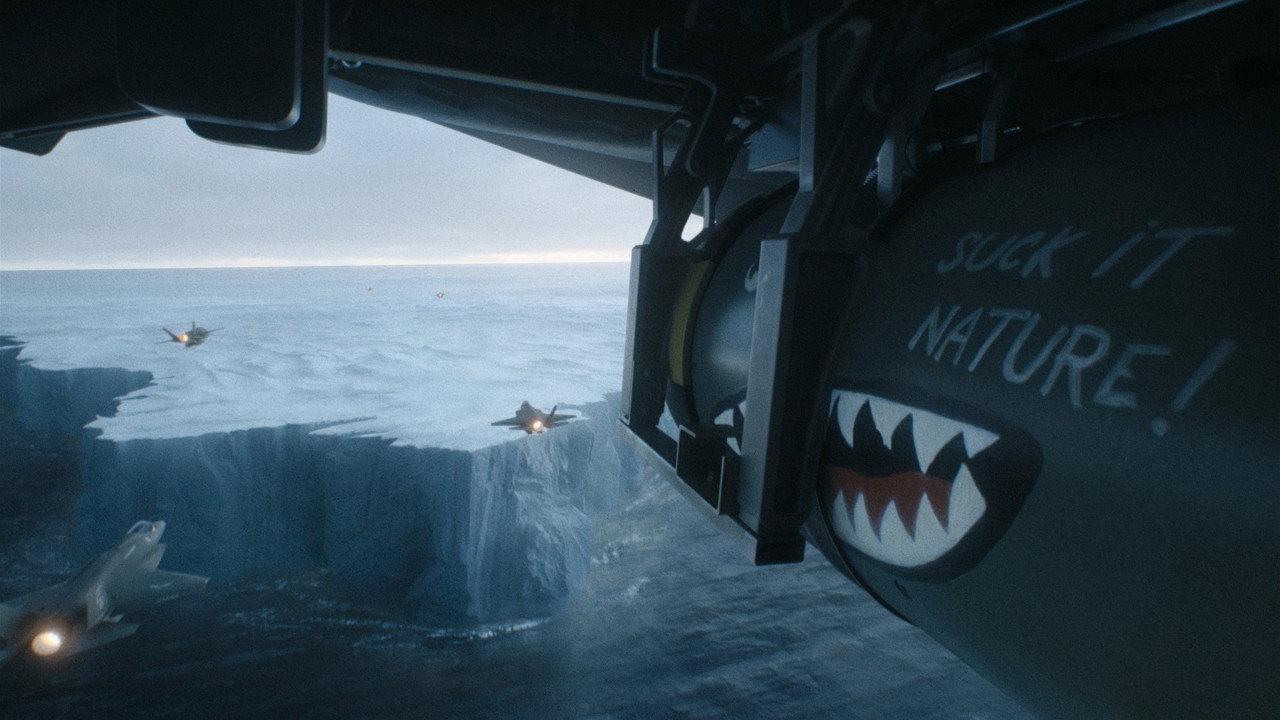
The AV Club is also specific about what it doesn't like visually, which is notable given how much premiere-era coverage of this film leaned on Lubezki's pedigree and the 35mm/VistaVision shoot as a selling point. The review describes the cinematography as producing "garishly colorless images, as if someone spilled bleach" across the frame — a description that reads as a direct rebuttal to the assumption that a three-time Oscar-winning cinematographer shooting on film automatically produces a film that looks good in the way audiences expect.
Where the AV Club's review lines up with IndieWire's is on Cruise. It praises his performance as having "hair-trigger temper and ego-driven bluster," comparing it to his supporting role in Tropic Thunder — a performance widely remembered as one of Cruise's funniest, most unguarded swings against type. The review frames Cruise as more entertaining than the film's actual messaging, which is a backhanded compliment to the film and a fairly direct compliment to the actor. The AV Club also flags a real structural complaint: with a cast this deep, Goodman, Ahmed, Hüller, Plemons, and D'Arcy are all reportedly underused, which tracks with a film that's apparently spending most of its attention on Cruise's dual role rather than distributing weight across its ensemble.
The Guardian, Vulture, and LA Times: More of the Same Split
Peter Bradshaw's review for The Guardian, cited via Wikipedia's aggregation of the film's reception, gives Digger 2 out of 5 stars and calls it "exasperatingly shallow" — language that echoes the AV Club's "duh" complaint about the film's satire not going deep enough for a story built around a climate catastrophe that kills hundreds of thousands of people.
Vulture's Bilge Ebiri, also per Wikipedia's reception summary, is even blunter, describing the film as "a torturous experience." That's about as unambiguous a negative reaction as exists in this roundup, and it comes from a critic generally more receptive to formally ambitious, difficult filmmaking than a typical mainstream reviewer — which makes the dismissal land harder than it might coming from someone less predisposed to Iñárritu's usual register.
Not every review breaks negative, though. The LA Times' Amy Nicholson, per the same Wikipedia reception summary, is notably more sympathetic to the film overall despite her own reservations, and she goes further than anyone else in this roundup on the Cruise question specifically — calling his performance "the riskiest role in eons." That's a strong claim for an actor with four decades of high-profile work behind him, and it suggests Nicholson reads the dual-role structure and the physical transformation as a genuine risk that paid off, rather than a stunt.
Variety and Hollywood Reporter: Worth Noting, Hard to Fully Verify
Two more outlets are worth flagging with a clear caveat, since neither review was fully accessible. Variety's Peter Debruge has a review whose headline calls Digger a "bombastically self-important satire" and states that Cruise "goes over the top." The full review sits behind a paywall, so that's genuinely all that can be responsibly reported here — a headline-and-snippet level of detail, not a fuller accounting of Debruge's actual argument.
The Hollywood Reporter's own review was similarly paywalled, but the outlet also ran a separate "reactions" piece describing what it called "very mixed reactions" to the film, and predicting a mainstream audience backlash despite some praise for Cruise's boldness in taking on the role. Treat that the same way as the Variety headline: a real signal about where reception is trending, but not a substitute for having read either outlet's full review.
The Pattern That Actually Matters Here
Step back from the individual grades and a clear shape emerges. IndieWire's C+ isolates a specific Cruise monologue as the film's best scene. The AV Club's C- singles out Cruise's "hair-trigger" energy as more entertaining than the film's own messaging. The LA Times calls his performance the riskiest of his career. Even the Hollywood Reporter's hedged reactions piece notes praise for his boldness amid the broader mixed response. That's four separate outlets, spanning the full range from cold to warm on the film overall, converging on the same read of its lead performance.
What nobody in this roundup argues is that Cruise phoned this in, or that the prosthetic transformation everyone covered before release turned out to be empty spectacle. The disagreement is entirely about the film built around him — whether Iñárritu's satire cuts sharp enough to justify its own self-seriousness, whether the visual choices Lubezki made actually serve the story, and whether a supporting cast this strong needed to be sidelined the way multiple reviews suggest it was. Critics who answer those questions favorably land somewhere around the LA Times' warmer take. Critics who don't land at Vulture's "torturous" or The Guardian's "exasperatingly shallow."
What Happens From Here
Ninety-one critics counted on Rotten Tomatoes and 38 on Metacritic is a real sample, not an early snapshot the way some review-roundup posts on this site have had to caveat. But it's still a sample gathered before the film's actual wide release. The US and UK opening on October 2 should bring a substantially larger wave of reviews, along with the first real read on how general audiences respond to a film this openly satirical and structurally unconventional for a Tom Cruise vehicle. Given how consistently critics have flagged the film's supporting cast as underused, that's also a detail worth watching for in the audience conversation once more people have actually seen it — whether viewers going in for Ahmed, Hüller, or Goodman come out with the same complaint the critics did.
The wide US and UK release lands October 2, which should bring a much larger batch of reviews and a clearer Rotten Tomatoes picture than the current 91-critic snapshot.