Control Resonant Preview: What to Expect From Remedy's Sequel
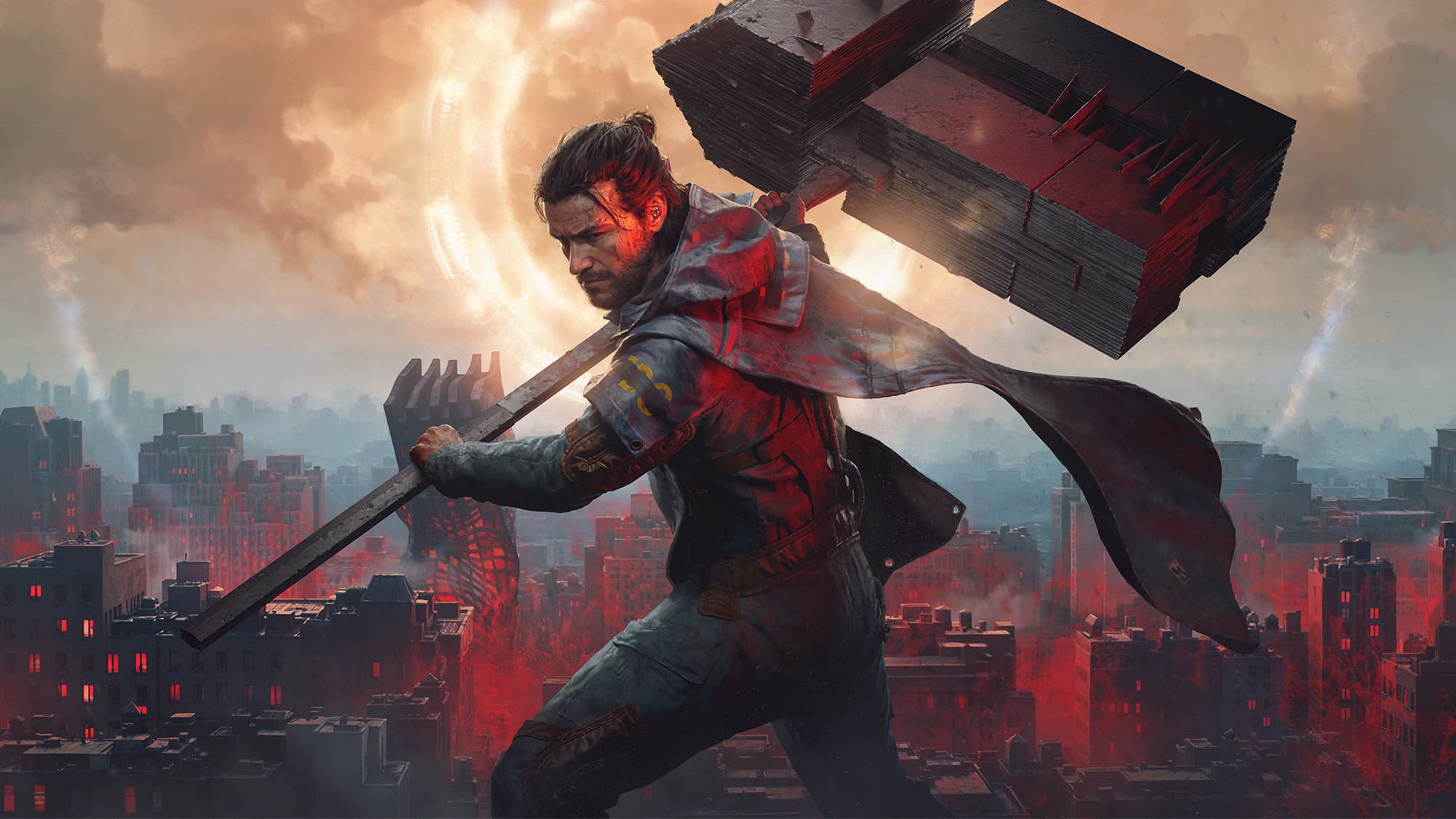
Control was never going to get a sequel that just did more of the same. Remedy Entertainment's 2019 original built its entire identity around the Oldest House — a shape-shifting government building full of bureaucratic horror and brutalist architecture — and a combat system that turned Jesse Faden into a telekinetic one-woman SWAT team. Seven years and one full IP buyout later, Control Resonant is arriving on September 24, 2026, and it's not interested in repeating that formula. New protagonist, new setting, new genre for its combat. This is a preview of what's actually been confirmed, not a review — the game hasn't shipped yet, and nobody outside Remedy and select press has played the whole thing.
Release dates, platforms, and the early access wrinkle
Control Resonant launches digitally on September 24, 2026, on PS5, Xbox Series X|S, and PC via Steam, the Epic Games Store, and GeForce NOW. Physical copies follow about three weeks later on October 15, 2026, which is a fairly standard gap for a game built around day-one patches and digital storefront momentum. A Mac version is planned for later in 2026, without a firm date attached yet.
There's one notable wrinkle for anyone who's already committed to the Deluxe Edition: PS5 owners who bought that tier get 48 hours of early access starting September 22, two days ahead of the general digital release. That's a fairly common incentive structure for premium editions these days, but it's worth flagging for PS5 players specifically, since it's not a universal early-access window across all platforms.
A new Faden, and Jesse's conspicuous absence
The biggest structural change is who's actually playing the game. Control Resonant follows Dylan Faden, brother of the original's protagonist Jesse Faden, rather than Jesse herself. According to Remedy, Jesse is missing or estranged by the time this story picks up, and Dylan — released by the Federal Bureau of Control specifically for this mission — is tasked with containing an escaped entity while searching for his sister.
Remedy has been direct about one thing here: Jesse is not a playable character in Control Resonant. That's a deliberate choice, and probably the right one — Jesse's arc in the original game reached a real conclusion, and dragging her back into a shooter-shaped sequel just to satisfy fan expectations would have cheapened that ending. Still, the studio has also said "she's a big part of the game," which suggests her absence from the roster doesn't mean her absence from the story. Given how Control's plot leaned on found documents, recordings, and characters who exist mostly as presences rather than on-screen bodies, it's easy to imagine Jesse functioning as a driving mystery rather than a sidekick.
Dylan himself isn't a blank slate introduced purely for this game — Control players who dug into the original's side content and Ashtray Maze-era material will recognize the Faden siblings' shared history with the paranormal, since Dylan was already established as connected to the Bureau's world before this sequel was ever announced. Building Resonant around him rather than an entirely new face gives Remedy a protagonist with built-in narrative baggage without needing to retell Jesse's whole story to set the stakes.
From the Oldest House to Manhattan's streets
Control's single best trick was making its setting the star: the Oldest House was a character in its own right, a brutalist maze that rearranged itself and buried secrets in its architecture. Control Resonant moves outdoors, setting its story in Manhattan rather than confining players to one building's shifting hallways.

That's a bigger swing than it might sound. A huge amount of Control's atmosphere came from claustrophobia — endless gray corridors, flickering fluorescent lighting, doors that led to places that shouldn't exist. An open city setting trades that specific kind of dread for something more expansive, and Remedy will need to find a new visual language for supernatural horror that doesn't rely on hallway lighting tricks. The upside is scale: Manhattan gives Remedy room to stage set pieces the Oldest House's tighter geometry never could.
The threats populating that city have also multiplied. Where Control centered its horror on a single antagonistic force — the Hiss, an invasive mind-controlling entity — Resonant introduces a three-pronged supernatural crisis: the Hiss returns, joined by something called the Mold, and "a new form of resonance" that Remedy hasn't fully detailed yet. Stacking three distinct threats instead of one suggests a story with more moving parts and probably a longer, more escalating structure than the original's relatively contained plot.

The bigger change: this isn't a shooter anymore
If the setting shift is notable, the combat shift is the real headline. Control was a third-person shooter with telekinetic powers layered on top — Jesse's Service Weapon and her ability to hurl chunks of the environment at enemies were the backbone of every fight. Control Resonant abandons that structure entirely in favor of melee-driven action RPG combat, with comparisons to Devil May Cry and Platinum Games' output — fast, fluid, momentum-based combat built around chaining attacks rather than aiming down sights.
That's about as significant a genre pivot as a sequel can make while still calling itself the same series. Remedy is essentially betting that what made Control memorable wasn't the gunplay specifically, but the atmosphere, the world, and the feeling of wielding impossible power — and that those things can survive a transplant into a completely different combat skeleton.

Dylan's core weapon is Aberrant, a shapeshifting metallic weapon rather than a conventional gun. It switches between three equippable melee forms — reportedly including a two-handed hammer built for heavy, slow attacks and a pair of fast blades for quicker strikes — giving players a build-your-moveset flexibility that Control's fixed Service Weapon never had. Combo strings reportedly end in flashy "Combo Enders," including rapid-fire gauntlets and a rotating glaive-like projectile, which sounds closer to a character-action game's finisher system than anything in the original Control's kit.
New RPG systems Control never had
Alongside the combat overhaul, Control Resonant is adding systems the original game simply didn't have: character stats, multiple talent or skill trees, and customizable weapon builds. Control was, structurally, more of a linear action game with light Metroidvania-style ability gating — you unlocked new powers that opened previously blocked paths, but there wasn't a stat sheet or a build to theorycraft. Resonant sounds like it's chasing a deeper progression loop, letting players actually specialize Dylan's combat style rather than following one fixed power curve.
That's a meaningful investment. Remedy has reportedly assembled its largest development team ever for this project, which tracks with the scope of what's being described — a new setting, a new combat genre, and RPG systems bolted onto a studio whose past decade of output (Alan Wake 2, Quantum Break, Control) has mostly stayed in the narrative-driven action-adventure lane rather than anything build-focused.
Despite the RPG trappings, a Control Resonant gameplay designer has pushed back on one comparison that seems obvious given the genre shift: this isn't a soulslike. Instead, the designer described it as "action-driven," leaning on melee combat and supernatural abilities, and added that "the player is very much in charge" — language that reads like a deliberate distancing from the punishing, attrition-based combat rhythms Soulslikes are known for. If that framing holds up, expect Resonant's difficulty curve to feel more like a character-action game's skill ceiling — reward aggression and mastery — rather than a Souls game's emphasis on patience and resource management.

How we got here: the IP buyout and the budget behind it
Control Resonant exists in its current form partly because of a business decision made years before any of the above was public. In February 2024, Remedy bought full ownership of the Control IP from 505 Games for €17 million, a move that gave the studio complete creative and financial control over the franchise rather than splitting rights and revenue with a publisher. That buyout lines up with how ambitious the sequel has turned out to be — a studio willing to spend €17 million just to own a property outright is clearly planning to build something bigger than a modest follow-up.
Remedy also partnered with Annapurna Pictures on financing, with Annapurna covering half the development costs. The initial development budget was reportedly around €50 million, with a break-even target of 3-4 million lifetime sales — a target roughly in line with what the original Control needed to turn a profit for its publisher at the time, though Resonant's larger scope and team size make that comparison rougher than it looks on paper.
Full production began in February 2025, and the game went gold on August 18, 2026 — meaning the master build was finalized and locked for manufacturing about five weeks before digital launch. That's a fairly typical gold-to-release window for a big cross-platform release, and it's a reassuring sign for anyone worried about a rushed launch, since it implies Remedy had a working, complete build well ahead of the September 24 date rather than scrambling right up to it.
Built on Northlight, with Nvidia's help on PC
Control Resonant runs on Remedy's in-house Northlight engine, the same tech that powered Alan Wake 2's much-discussed lighting and Control's original ray-traced showcase moments. On PC specifically, Remedy has partnered with Nvidia to support path tracing, RTX Mega Geometry, and DLSS 4.5 — a heavier feature set than the original Control shipped with, reflecting how far ray-tracing tooling has moved since 2019, when Control's RTX reflections were a genuine showcase feature for the technology rather than a baseline expectation.
That Nvidia collaboration also signals where Remedy expects the flashiest version of this game to run — high-end PC hardware, most likely, given how demanding full path tracing tends to be even years after RTX first launched. Console players on PS5 and Xbox Series X|S will presumably get scaled-back versions of the same lighting tech, similar to how Alan Wake 2 handled its own ray-tracing tiers across platforms.
A crowded September, on purpose or not
Remedy has openly acknowledged that launching in September 2026 is "challenging." That's an understatement worth unpacking: Control Resonant is releasing directly into the same window as Silent Hill: Townfall and Onimusha: Way of the Sword, two other high-profile genre releases both already covered on this site. That's three substantial single-player action games competing for the same slice of player attention and press coverage in the same few weeks, which is the kind of scheduling collision publishers usually try to avoid rather than court deliberately.
There's no confirmation of why Remedy held this date despite the crowding — whether it's tied to the game going gold on a fixed internal schedule, contractual obligations with Annapurna's financing, or a calculated bet that Control's specific audience doesn't overlap heavily with Silent Hill or Onimusha fans. What is clear is that Resonant will need strong word of mouth out of the gate to cut through a month where players have multiple other big single-player releases pulling at their backlog and their budget simultaneously.
What's still unknown
A lot of the specifics here — exact mission structure, how long the campaign runs, whether the Mold and the "new form of resonance" get properly explained or held back for a sequel hook, how deep the talent trees actually go — haven't been detailed publicly yet. Remedy's marketing cycle has focused heavily on the big pitch: new protagonist, new city, new combat genre. The finer mechanical details, the kind that usually surface in extended hands-on previews or early access impressions, are still mostly unconfirmed ahead of the September 24 launch.
What's not in question is the scale of the swing Remedy is taking. Trading a beloved shooter-and-telekinesis combat system for melee action RPG mechanics, moving the story outdoors after building an entire game's identity around one indoor location, and sidelining the character players spent the whole first game with — that's not a cautious sequel. It's the kind of bet a studio makes when it owns the IP outright and has a partner covering half the bill. Whether it pays off starts becoming clear in less than two weeks.
Control Resonant goes digital September 24, 2026 on PS5, Xbox Series X|S, and PC, with physical editions following October 15 and a Mac port later in the year; expect review embargoes to lift close to launch given the game went gold August 18.