Diablo V Is Real — And Sanctuary Has Already Fallen
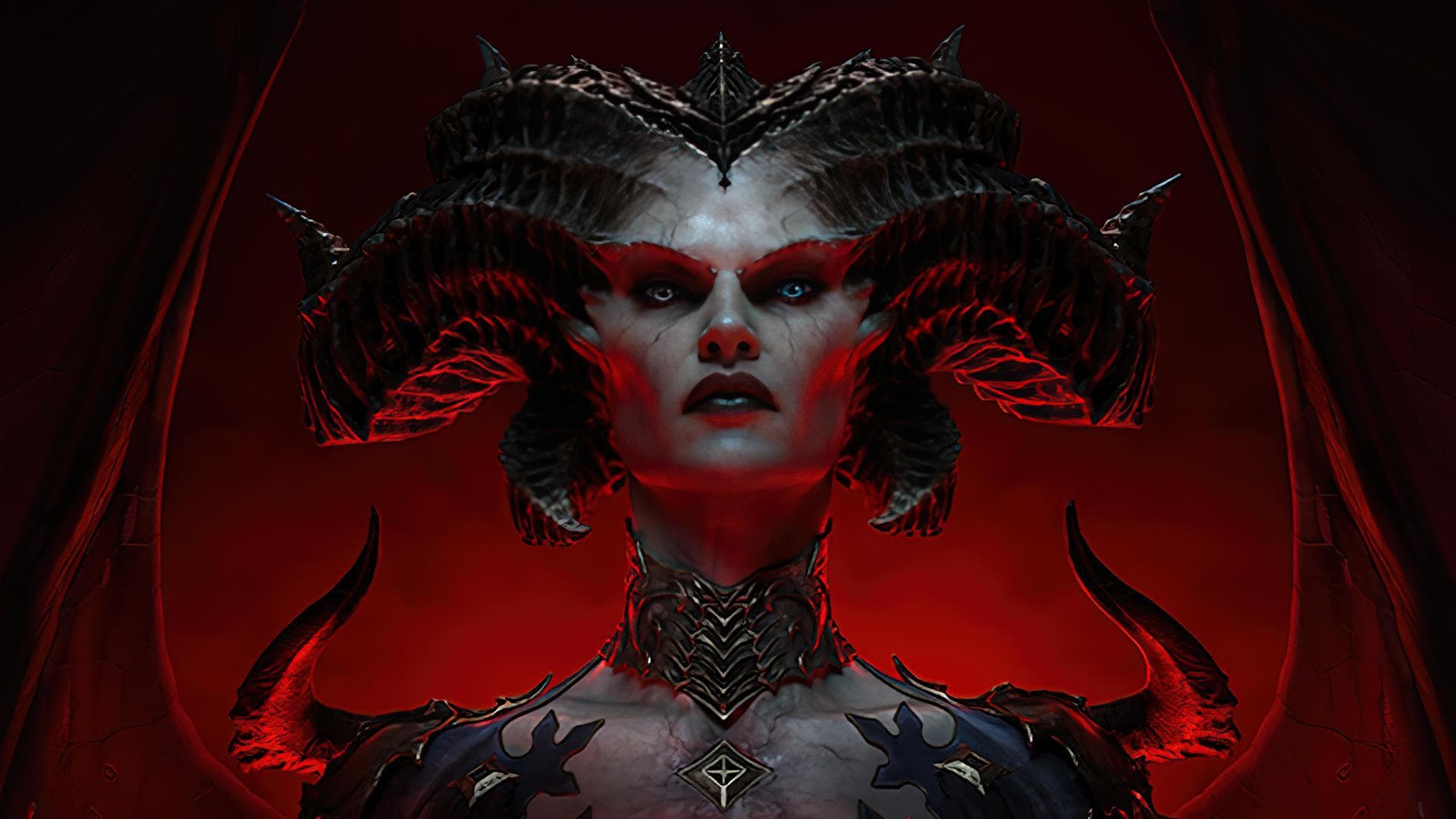
Blizzard used the Opening Ceremony of BlizzCon 2026, held September 12, to confirm what had been rumored for a while: Diablo V is happening. A dedicated panel titled "Diablo V: Forging the Next Era" followed later the same day, and between the two, Blizzard laid out a premise that inverts nearly everything the series has trained players to expect. This isn't a story about stopping the apocalypse. According to Blizzard's own panel recap, "This is not Sanctuary waiting for the apocalypse. It is already living through one."
That's a genuinely different starting position for a franchise that has spent thirty years building toward the moment evil breaks loose. Diablo V starts after that moment has already happened, and there's no reset button waiting in act one.
What Was Actually Announced
The headline is simple: Diablo V exists, it was revealed at BlizzCon 2026, and Blizzard used both the Opening Ceremony and a same-day deep-dive panel to introduce its core premise, its player character, three of its classes, and several systemic pillars. What wasn't announced is almost as notable as what was. Blizzard didn't disclose an engine, target platforms, a monetization model, or any director or lead-developer names during either the ceremony or the panel, based on what's been published so far. Anyone claiming to know those details right now is filling in gaps Blizzard hasn't filled in itself.
The framing tagline Blizzard is using across its marketing, according to the opening ceremony recap, is blunt: "What must you become when the world has already fallen?" That's not a rhetorical flourish tacked onto a press release — it's the entire pitch for why this Diablo game plays differently from the four that came before it.
The Premise Flip: A World Diablo Already Won
Every mainline Diablo game has followed roughly the same shape. Something terrible stirs beneath Sanctuary, heroes converge on it, and the back half of the campaign is a race to put it down before the world burns. Diablo IV leaned into that structure even while giving Lilith a genuinely unsettling amount of narrative control over the opening acts. Diablo V throws that structure out entirely. Per Blizzard's panel recap, Sanctuary has already fallen by the time the game begins, and Diablo has already won. There are no angels intervening, no assembled heroes riding in to save the day, no hope baked into the setup, and — this is the detail that seems to be doing the most work in early reactions — no towns or safe harbors left standing anywhere in the world.
That last point matters more than it might read on paper. Diablo games have always used towns as the emotional exhale between dungeon crawls: a blacksmith, a healer, some NPCs standing around doing nothing dangerous, a place where the stakes visibly drop for a minute. If there are no safe harbors left, Blizzard is signaling that Diablo V doesn't intend to give players that exhale, at least not in the traditional form. Whatever replaces it has to come from somewhere else in the design, which is presumably where the game's new base-camp system comes in — more on that below.

Who You Play: The Heir to Westmarch
The player character has a name Blizzard is leaning on directly: the Heir to Westmarch. According to the panel recap, this character travels through a kingdom that's already been conquered, which lines up with the broader premise — there's no intact civilization left to protect, only the wreckage of one to move through. Westmarch itself isn't a new location for series veterans; it's appeared as a hub and setting across multiple Diablo entries. Framing the protagonist specifically as its heir gives the story a personal stake in a fallen kingdom rather than the more generic "chosen hero wanders into danger" setup the series has used before.
Beyond the title and the fact that this character is walking through conquered territory, Blizzard hasn't detailed backstory, voice, gender options, or how customizable the Heir to Westmarch actually is. That's normal for a reveal at this stage — Diablo IV's own early reveals were similarly light on protagonist specifics — but it's worth flagging as an open question rather than assuming any detail that hasn't actually been shown.
Three Classes, Two Familiar and One Genuinely New
Class reveals are usually the part of any Diablo announcement that gets picked apart frame by frame, and Blizzard gave fans three to chew on. The Demon Hunter returns, built around twin crossbows, shadow strikes, and battlefield leaping — a kit that should feel recognizable to anyone who's played the class since Diablo III. The Monk also returns, sticking with fist-based martial combat powered by holy energy, continuing a lineage that goes back to the same game.
The genuinely new addition is the Plague Knight, a heavily armored class built around spreading disease across the battlefield and then consuming that disease to gain power. It's a push-pull design — inflict a debuff, then cash it back in as a buff — that gives the class an identity distinct from anything Diablo has fielded as a starting-class archetype before. Blizzard has also said, per the panel recap, that Diablo V will launch with more classes in total than any previous entry in the franchise has ever had. Notably, Blizzard did not attach a number to that claim, and nothing reported so far specifies how many classes total are planned. Treat "more than ever" as the confirmed statement and resist the urge to guess a specific count — Blizzard hasn't given one, and inventing one would be getting ahead of what's actually been said.
A World That Reshapes Itself
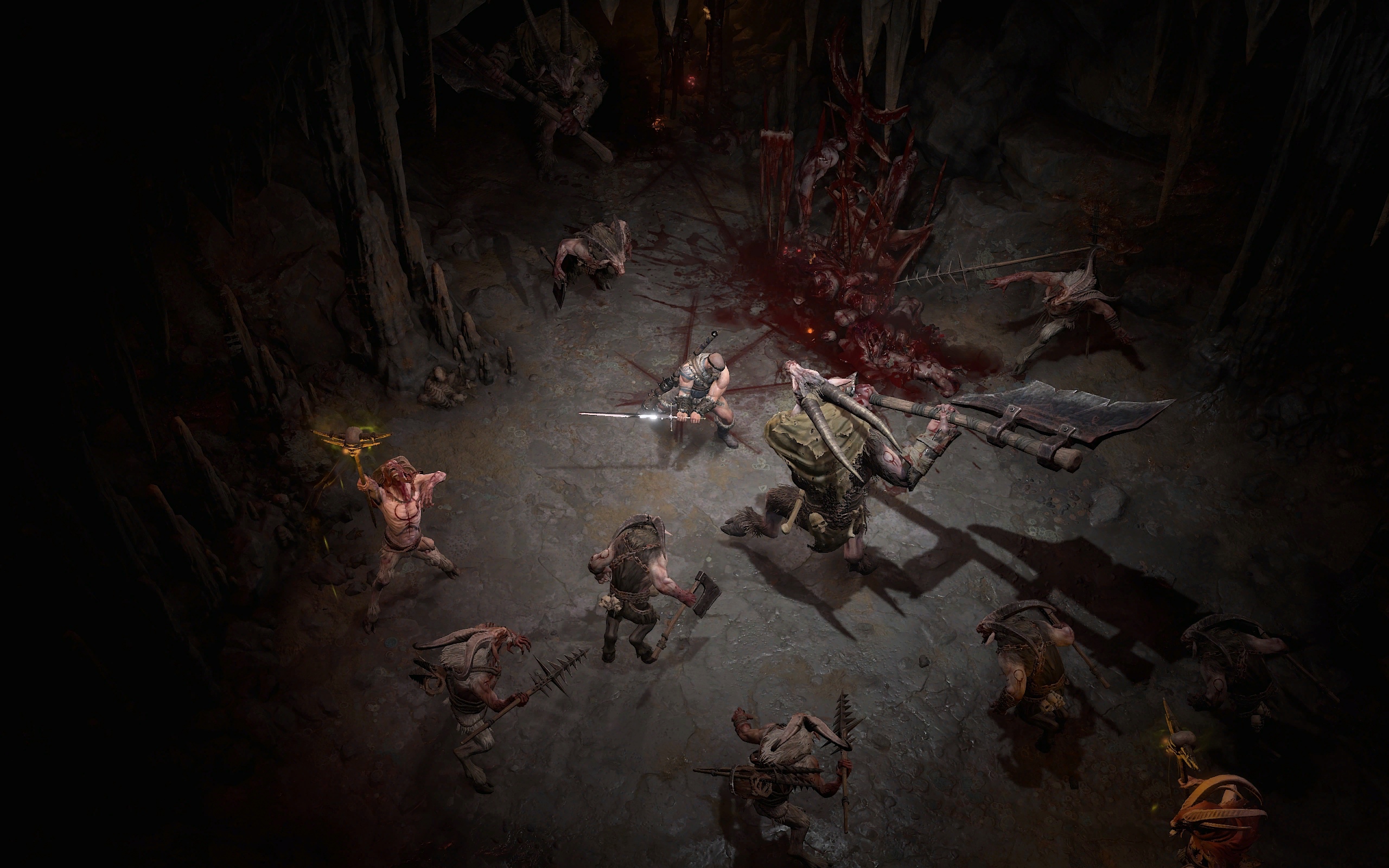
One of the more structurally interesting pieces of the reveal is what Blizzard is doing with the overworld. According to the panel recap, Diablo V's world is procedural and dynamic in a way the series hasn't attempted before: terrain, points of interest, monsters, and rewards can all change when players return to areas they've already visited. Blizzard describes the world as "reshaping" under Diablo's ongoing influence — which, given the premise that Diablo has already won and the world is actively living through an apocalypse rather than waiting for one, makes some narrative sense. A static, fully-mapped world would sit awkwardly against a story about a conquest that's still actively happening.
Mechanically, this is a notable departure from how Diablo games have traditionally handled their maps. Diablo III and IV both leaned on randomized dungeon layouts within fixed zone boundaries — the broad shape of the world stayed the same even as individual dungeon interiors shuffled. A world where the macro-level points of interest and even the terrain itself can change on repeat visits is a bigger swing, closer in spirit to how some survival or roguelite games handle world persistence than anything the ARPG genre typically attempts at this scale.
Itemization Goes Back to Diablo II
If the world-building is a swing toward something new, the itemization pitch is explicitly a callback. Blizzard confirmed Runes and Runewords are returning — a system most associated with Diablo II, where players socketed specific rune combinations into gear to create powerful, named item effects. According to the panel recap, the crafting approach in Diablo V draws inspiration from the system introduced in the "Lord of Hatred" expansion. Blizzard's stated design goal, per the same recap, is for items to be "readable, memorable, and worth chasing" — language that reads like a direct response to years of community complaints about loot in modern ARPGs feeling like an unreadable wall of stat rolls rather than something players actually get excited to find.
That's a meaningful signal for anyone who's felt burned by itemization complexity creep across the genre. Diablo III's affix system and Diablo IV's aspect and legendary-power systems both drew criticism at various points for burying interesting effects under dense stat sheets. Explicitly reaching back to Runewords — a system fans have nostalgically requested for years — suggests Blizzard is trying to recapture some of that clarity rather than iterate further on the more spreadsheet-heavy direction recent entries have taken.
No More Towns: The Caravan Base Camp
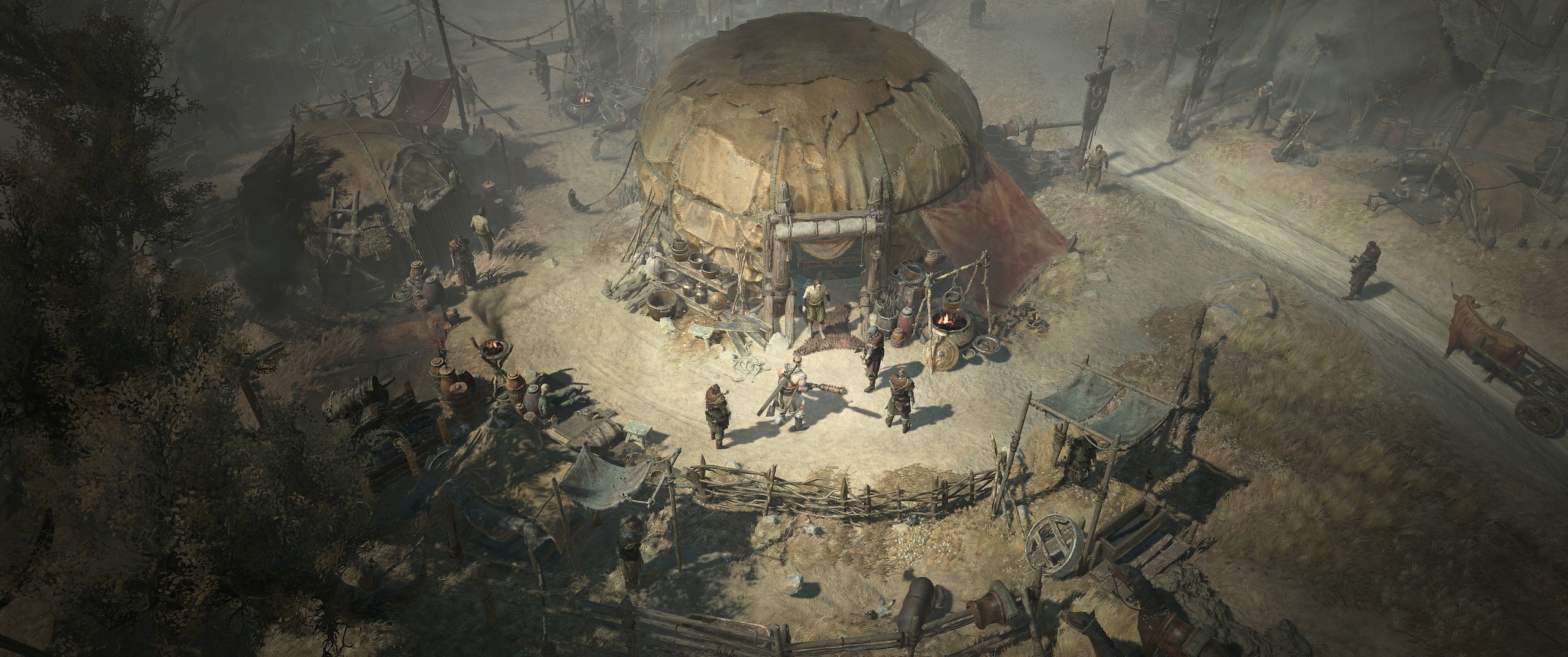
Given that the premise removes traditional towns and safe harbors from the world, Diablo V needed something to replace the hub functions towns normally serve. Blizzard's answer, per the panel recap, is a mobile, caravan-based home base that travels with the player, populated by vendor companions rather than static NPCs rooted to one location. That base pairs with a size-based inventory grid and stat-gated gear, meaning what a player can carry and equip is being tied more directly to physical space and character progression than a simple weight or slot count.
This is a fairly significant structural change from how Diablo has always handled the player-vendor relationship. Every prior entry rooted players to fixed hub towns — New Tristram, Kyovashad, whatever the current game's central settlement happened to be — where merchants sat in one place and players traveled to them. A caravan that moves with the player inverts that relationship, which fits neatly with a world that has no safe harbors left standing for a fixed hub to exist in.
When Is It Actually Coming Out?
This is the part of the story that needs real caution. MMORPG.com has reported a "Spring 2029" target for Diablo V. But Blizzard's own panel recap describes the game as being in an early stage of development, with regular content updates planned to begin in 2027, ahead of any actual launch. Those two things aren't necessarily contradictory — a 2027 content-update cadence could plausibly build toward a Spring 2029 release — but Blizzard has not confirmed a release date or window directly, and treating "Spring 2029" as locked would be overstating what's actually been verified. The honest read right now is that Diablo V is early enough in development that Blizzard itself is only committing to a 2027 start for pre-launch content updates, not a launch date.
The Rest of BlizzCon's Diablo News
Diablo V wasn't the only Diablo news out of the show. Blizzard also confirmed a new Amazon class coming to the still-active Diablo IV in the first half of 2027, built around bow and javelin archetypes split into four sub-builds — Champion, Skirmisher, Ranger, and Commander — with an origin tied to the Island of Skovos, the setting introduced in the "Lord of Hatred" expansion. Separately, Blizzard confirmed a Netflix animated series set in the Diablo universe is in development, though no further details — cast, showrunners, timeline, or tone — were shared. And Diablo IV itself launched on Nintendo Switch 2 on September 15, 2026, as the "Age of Hatred Collection," bundling the base game with both expansions and supporting USB mouse-and-keyboard input, though notably not Joy-Con mouse mode.
Taken together, it's a full slate for a franchise that isn't slowing down even as its next mainline entry sits years away from any confirmed launch.
What's Still Genuinely Unknown
A lot, and that's expected for a reveal this early. There's no engine confirmed, no platform list, no monetization model, and no developer or director names attached to Diablo V yet. The exact total class count is unconfirmed beyond Blizzard's claim that it'll exceed every prior entry. And the release window itself is sitting between an outlet-reported "Spring 2029" and Blizzard's own more cautious framing of early development with 2027 content updates. What is clear is the ambition: a Diablo game willing to strip away the genre's built-in optimism and ask what a hero looks like when the fight was already lost before they showed up. Whether that premise holds up across a full campaign, or whether Blizzard quietly softens it once the marketing cycle gives way to actual level design, is a question nobody outside Blizzard can answer yet.
Blizzard says regular content updates start in 2027 ahead of any launch, so expect gameplay deep-dives and class reveals before a firm date — the 'Spring 2029' figure reported by MMORPG.com hasn't been confirmed by Blizzard itself.