Godzilla Minus Zero Early Reviews: A Great Sequel, Maybe Not a Great Godzilla Movie
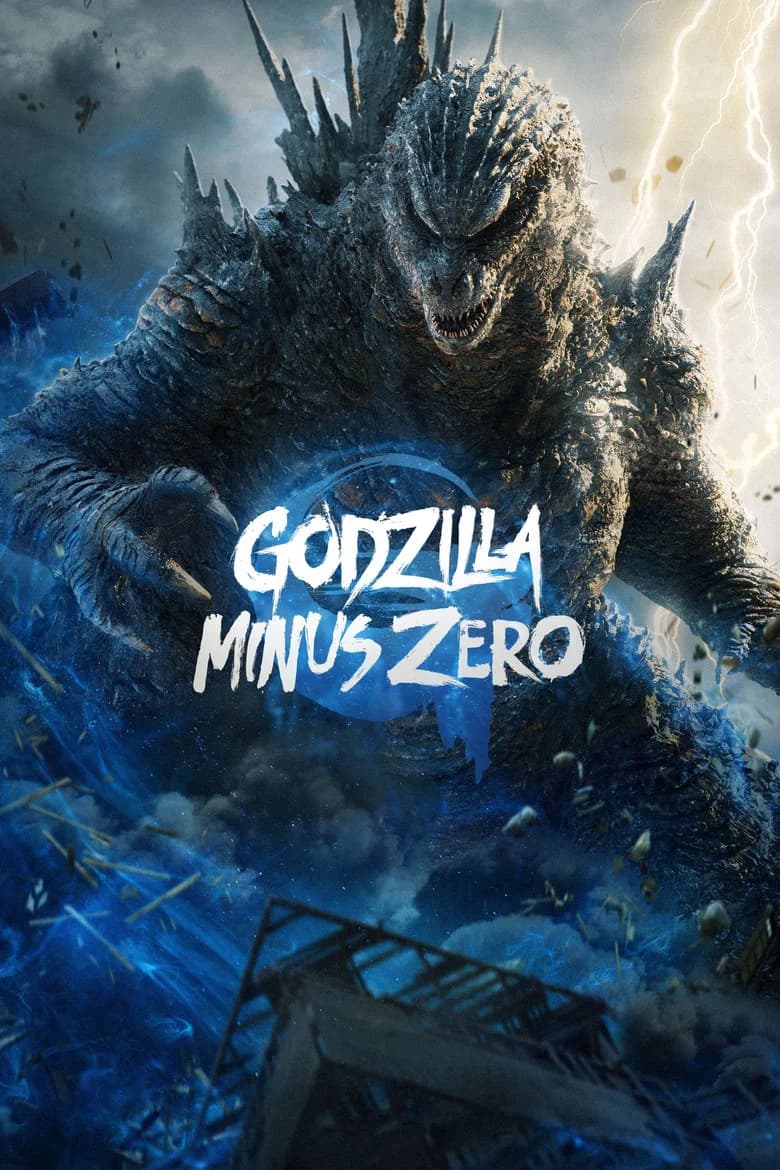
Godzilla Minus Zero is still about a month from theaters, and the critical verdict is already forming. As of Oct 3, 2026, Rotten Tomatoes shows a 97% Tomatometer from 33 reviews, and Metacritic shows a Metascore of 77 ("Generally Favorable") from 17 critic reviews: 15 positive, 2 mixed, none negative.
Those are strong numbers for a sequel to a film that won an Oscar. They are also a notch below the original, and the interesting part is not the number but the argument inside the reviews. Critics aren't asking whether Minus Zero is good. They are asking whether it is good in the way Godzilla Minus One was, and several of the excerpts below say it falls a little short.
The Scores, and Where They Sit
Start with the aggregate picture. A 97% on Rotten Tomatoes is close to unanimous approval, and per MovieWeb that figure ranks third among all Godzilla films. The 77 on Metacritic is the more revealing number, because Metacritic weights degrees of enthusiasm rather than just thumbs up or down. A 97% and a 77 on the same film usually means nearly everyone liked it and relatively few loved it without reservation.
For comparison, World of Reel, MovieWeb and ixbt all cite Godzilla Minus One as having landed 99% on Rotten Tomatoes and 81 on Metacritic. That film also earned roughly $116 million worldwide, according to those same outlets, and took the Best Visual Effects Oscar. The sequel is therefore starting from a very high bar, and falling slightly short of it on both aggregators is not the same thing as disappointing.
One caveat applies to everything here. Thirty-three Rotten Tomatoes reviews and 17 Metacritic reviews is a small sample with a month still to go before release. Both scores can and probably will move as more outlets weigh in.
What Critics Are Actually Saying
The Metacritic rows make the divide easy to see. The excerpts below are the passages Metacritic displays next to each score, quoted in full as shown there. They are short pull-quotes, not the outlets' complete reviews, so they should not be read as any outlet's full verdict.
At the top, Polygon scored the film 98 (Sep 27). Metacritic's excerpt of Polygon's review reads: "While the follow-up might be missing some of the filmmaking ingenuity that made the last entry so special (nothing quite matches that Jaws-inspired boat chase), it more than makes up for it with a grander spectacle and more heart-wrenching drama that grapples directly with the literal fallout of the bombing of Hiroshima and Nagasaki. This is the right kind of doubling down." Notice the structure: even the highest score on the page opens with a concession that the sequel lacks some of the first film's ingenuity, then argues that scale and drama more than compensate.
Total Film gave it a 90. Metacritic's excerpt of Total Film's review says: "With devastating human drama and earth-shaking kaiju action, Godzilla Minus Zero ups the ante in every way from its predecessor – and is easily one of the best films of the year." That is the cleanest statement of the pro-sequel position: not just more of what the first film did well, but better.
IndieWire sits at 83, and Metacritic's excerpt of its review reads: "Another mid-century melodrama with very occasional monster sightings, the more thematically coherent and emotionally affecting Godzilla Minus Zero expands on the naive grassroots nationalism of its predecessor by reframing that movie's characters from victims to survivors." The opening clause describes the film's rhythm, human drama with the monster appearing only now and then, and the sentence then turns to praise. It is a useful reminder that how much of a Godzilla movie is actually about Godzilla is a question this series has carried since the first film.
The Real Argument: Great Sequel or Great Godzilla Movie
TheWrap's 80 comes with the line that best sums up the whole critical conversation. Metacritic's excerpt of TheWrap's review reads: "It's a great Godzilla sequel, maybe even one of the best, but it's not one of the great Godzilla movies."
That distinction is doing a lot of work. Calling something a great sequel is a statement about how well it follows up on its predecessor. Calling something a great Godzilla movie is a statement about its place in a 72-year franchise. TheWrap's excerpt grants the first and withholds the second, and a number of other reviews appear to land in the same place.
RogerEbert.com scored it 75, and Metacritic's excerpt of its review reads: "'Minus Zero' doesn't quite reach the miraculous highs of its predecessor, but the old boy still has plenty of bite." New York Magazine/Vulture came in at 70 (Sep 30), and its excerpt goes the other way on the action: "Whoever's coming out on top in the industry battles, there's no question that the action in Godzilla Minus Zero beats out the recent Monsterverse movies, and even its own predecessor, with kaiju carnage that's all the more thrilling for how it's shown from the perspective of the humans in danger of being crushed, either deliberately or incidentally. The movie may keep you waiting on its monsters, but when they show up, it delivers."
Taken together, the mid-table rows are not a tidy pattern. Several measure the film against Minus One, but they do not agree on where it falls short: RogerEbert.com is about peaks, while Vulture rates the action above the predecessor's. A score near 70 can mean different reservations.
The Daily Beast Is the Outlier
The lowest of the rows listed here is The Daily Beast at 55. Metacritic's excerpt of its review reads: "At its finest, it roars with thunderous majesty—but that, regrettably, is far too rare for a wannabe-epic monster mash."
Even that line concedes the film has moments of real force; the complaint is about how rarely they arrive and about the film's ambitions. It is the sharpest dissent on the page, and it is a very different objection from IndieWire's, whose excerpt reads as praise.
The First R-Rated Godzilla
The most unusual fact about the release has little to do with the scores. JoBlo, CBR and World of Reel all report that Godzilla Minus Zero is the first R-rated film in the franchise's 72-year run. Rotten Tomatoes' page lists the R rating with the descriptor "Bloody Images, Some Violent Content," though other outlets word it differently. JoBlo reports that the predecessor was rated PG-13.
A franchise this old has gone through a lot of tonal shifts, from earnest postwar allegory to children's-matinee monster brawls to modern studio spectacle, so a first R rating is a real marker. It signals that this series is leaning into the grimmer end of what Godzilla stories can be.
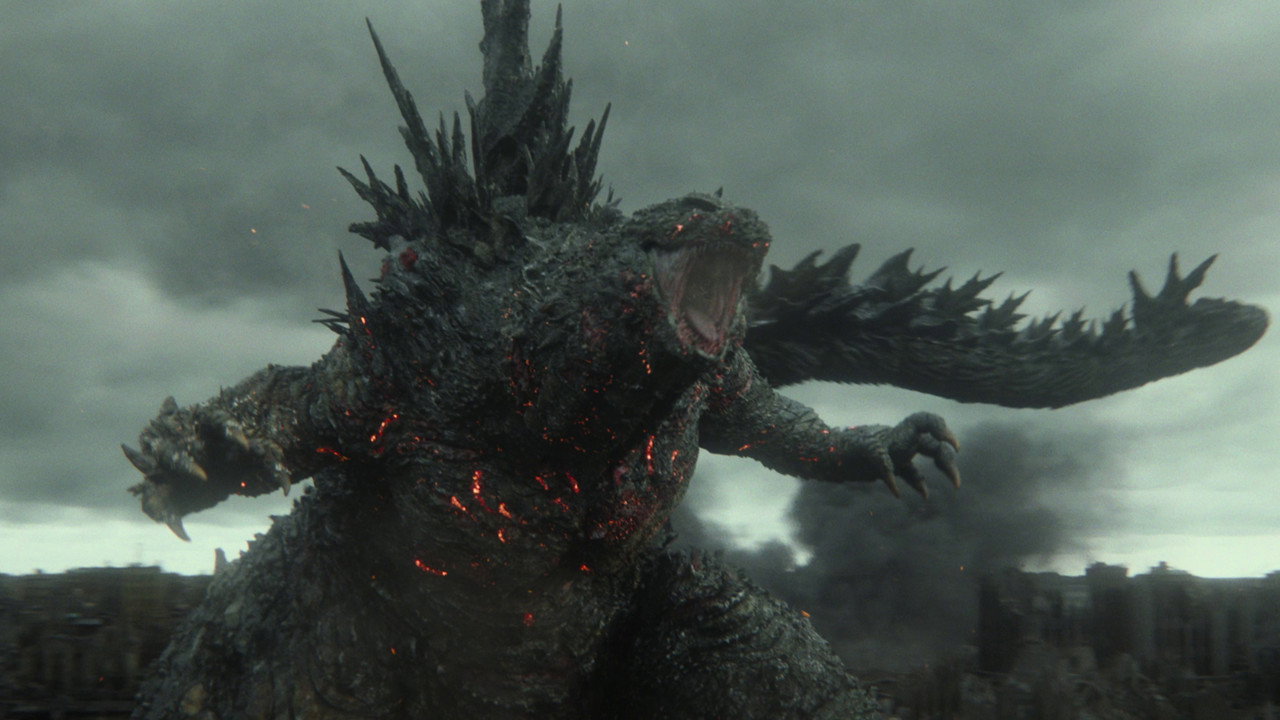
According to The Movie Blog's report from the New York Film Festival premiere, Yamazaki addressed the rating there, saying that certain scenes were essential to the film and that cutting them to reach a lower rating was not an option. That is a paraphrase of the report rather than a direct quote, and it is one outlet's account, but it fits the picture: the R was a creative choice, not a side effect.
It also fits the reviews. Total Film's excerpt emphasizes "devastating human drama," and the visible excerpts lean toward weight and consequence as much as spectacle. An R rating is a commercial trade-off, since it narrows the audience, and a studio only accepts that trade-off when the filmmaker has argued hard for it.
A Sequel Built on an Oscar Winner
It is worth remembering what Godzilla Minus One did. Per the outlets above, it won the Best Visual Effects Oscar. Takashi Yamazaki directed that film and returns for this one, and World of Reel and JoBlo both report that leads Ryunosuke Kamiki and Minami Hamabe are back.
On scale, CBR reports that Minus Zero is the first Japanese production filmed for IMAX, and gives budget estimates in the range of $15 million to $25 million or more. Those are industry estimates rather than official figures, and the spread tells you how little is publicly confirmed. Since none of those figures is official, treat them as a rough scale rather than a fact. Total Film's excerpt calls the action "earth-shaking," so if that holds up, the film's ambitions clearly run ahead of its reported means.
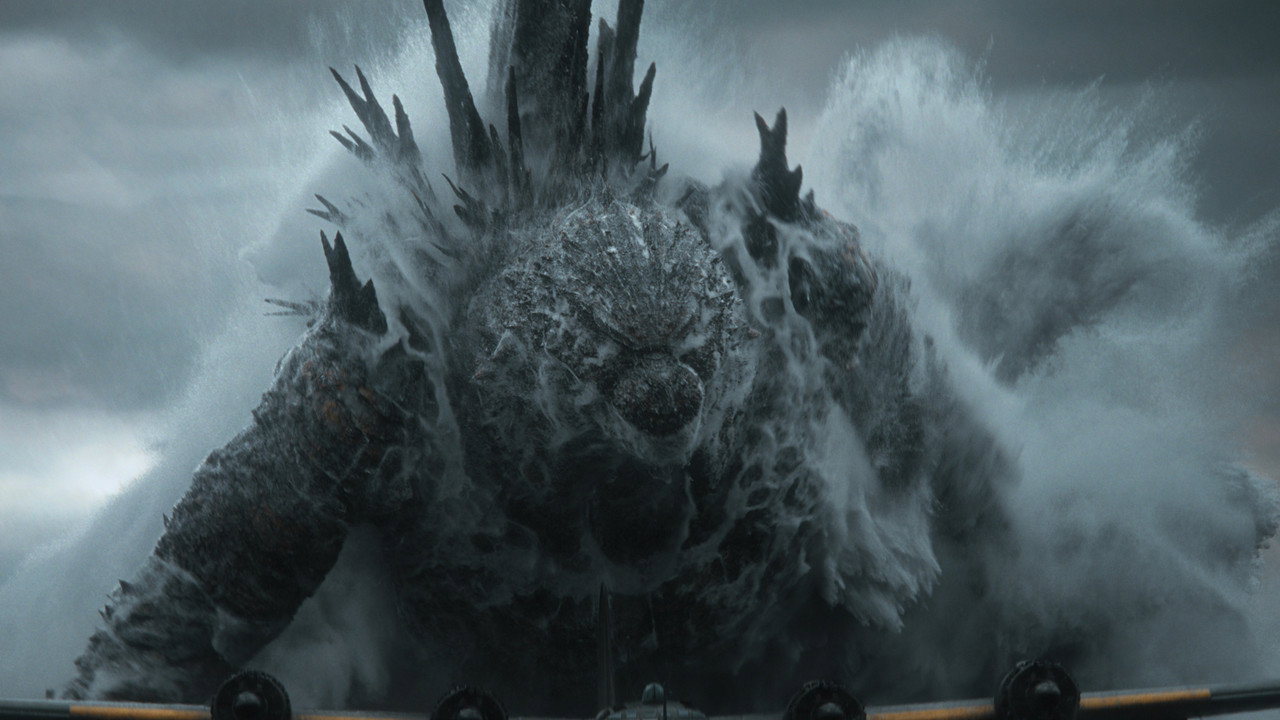
The release schedule is Nov 3 in Japan and Nov 6 in North America. One outlet gave Nov 4 for international markets, so the exact dates elsewhere may vary by territory. According to Rotten Tomatoes' listing, GKIDS is the distributor, with Toho as the production company.
Why the Gap Between 97 and 77 Matters
Aggregators compress things. Rotten Tomatoes asks whether a review is positive at all, and that is why a film with several "very good but not as good as the last one" reviews can still sit at 97%. Metacritic converts each review to a number, which is why the same film lands at 77.
For a sequel to a beloved film, the second number is usually the more honest one. The reviews that pull the average down are mostly not saying the film fails. Several of the excerpts above say it falls short of the first film's peaks or emotional resonance, and surprise was a large part of why the first film became a phenomenon. Even Polygon's 98 concedes the sequel is "missing some of the filmmaking ingenuity" of the first film before arguing that it makes up for it. A follow-up cannot repeat that kind of surprise. It can only continue it.
That is also a fairly good summary of why critics are splitting on "great sequel" versus "great Godzilla movie." The first label rewards a film for doing what a follow-up is supposed to do. The second is a claim about canon, and canon status takes years to settle regardless of what a Metacritic page says in October.
Early reactions from critics and journalists on social media, which came before any reviews, were glowing. Those posts were not reviews, and the scores above, a few points below the predecessor's, read as a somewhat more measured stage of the conversation.
What to Watch For
Two things will tell us more than any score at this point. The first is how the numbers move once the film opens in Japan and North America and the reviewer pool widens. Scores that start at 97% and 77 with small samples often drift down a few points; they sometimes hold. The second is whether general audiences read the film the way the more skeptical critics do, as a strong but familiar follow-up, or the way Total Film does, as an escalation.
For now, the honest summary is this. Critics think Godzilla Minus Zero is very good. A meaningful minority think it is not quite the film its predecessor was, and a few think the monster should be in it more. A first R rating for the series, and a director who reportedly refused to cut for it, makes it one of the more distinctive entries the franchise has produced, whatever its final place in the ranking turns out to be.
The Nov 3 Japan and Nov 6 North America releases will show whether audiences agree with critics, and whether the Rotten Tomatoes and Metacritic scores hold as the review pool grows beyond its current size.