Colony Review: Does Yeon Sang-ho's New Zombie Movie Live Up to Train to Busan?
This review discusses the film's hive-mind zombie evolution mechanic, the general shape of its high-rise siege plot, and how critics assessed its ending, though it stops short of describing the final scene in detail.
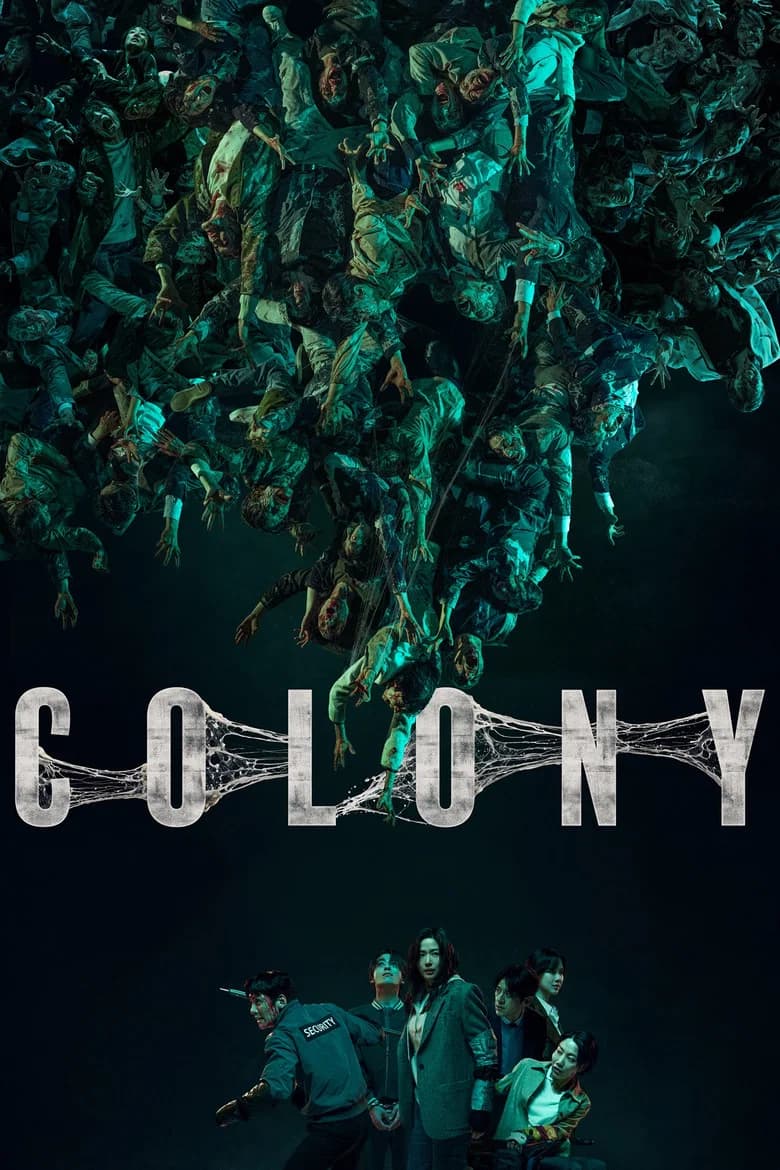
Colony opened in US theaters on August 28, 2026, distributed by Well Go USA, according to Wikipedia and The Hollywood Reporter. It's the latest film from Yeon Sang-ho, the director who turned a mid-budget Korean zombie thriller into a global phenomenon a decade ago with Train to Busan, and the marketing around Colony leans hard into that connection. The comparison is unavoidable and, going by the reviews that have piled up since the film's Cannes premiere in May, also the thing critics can't stop measuring the new film against — sometimes to its benefit, more often not.
What Colony Is Actually About
Yeon directs from a script he co-wrote with Choi Gyu-seok, according to Wikipedia. The story traps a group of survivors inside a quarantined high-rise after a bioterrorism attack unleashes an outbreak during a biotech conference — a premise that swaps Train to Busan's runaway-train claustrophobia for a vertical, building-wide siege instead. Jun Ji-hyun, billed in US press materials as "Gianna Jun" per The Hollywood Reporter, stars as Kwon Se-jeong, a biotech professor thrust into the middle of the outbreak. The rest of the cast includes Koo Kyo-hwan as antagonist Seo Young-cheol, along with Ji Chang-wook, Kim Shin-rok, Shin Hyun-been, and Go Soo, per Wikipedia's cast listing.

The film premiered in the Midnight section at the Cannes Film Festival in May 2026, then opened in South Korea on May 21, ahead of its US debut roughly three months later, according to The Hollywood Reporter and Wikipedia. That's a notably long runway between the Korean release and the US one — long enough that Colony's domestic reputation, box office trajectory, and critical reception were all essentially locked in before American audiences got a chance to see it.
The Hook: A Zombie Hive Mind
The premise that's actually generating conversation isn't the high-rise setting, it's what the infected are doing once they're inside it. According to Wikipedia's plot summary, corroborated by both GeekVibesNation's and Heaven of Horror's reviews, the infected in Colony share a collective intelligence. When one zombie in the horde figures something out — Wikipedia's summary specifically cites one learning to walk upright again rather than shambling or sprinting on all fours — the rest of the group evolves along with it, more or less instantly.
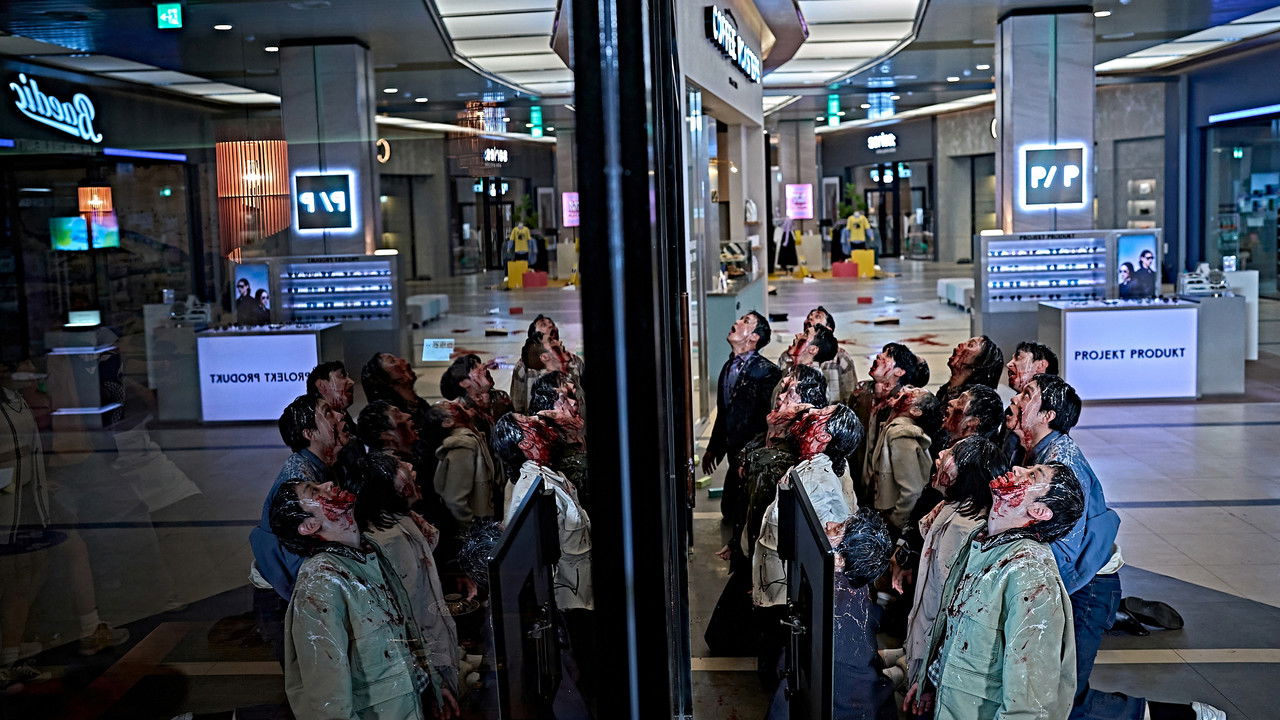
It's a smart formal idea for a zombie movie built around a contained, vertical space. A horde that learns collectively means the threat inside the building is never static; every scene raises the stakes for what the infected are now capable of, rather than relying on the genre's usual trick of introducing faster or smarter individual zombies one at a time. Heaven of Horror's review draws a direct line between this mechanic and the mutated, networked infected of The Last of Us, which tracks — both properties are working from the same basic idea that intelligence spreading through infection is scarier than mindlessness spreading through infection.
Where the Critics Actually Landed
The aggregate numbers on Colony tell two somewhat different stories depending on where you look. Rotten Tomatoes has the film sitting at 78% positive from 68 critics, with a 6.8 out of 10 average rating — a solidly good number for a genre film, and one that would normally read as a clean critical win. Metacritic, per Wikipedia's sourcing of both aggregators, is considerably less enthusiastic, placing the film at 54 out of 100 and classifying that as "mixed reviews." That's a meaningful gap between the two systems, and it's worth sitting with rather than picking whichever number tells the story you'd prefer. Rotten Tomatoes is a binary fresh-or-rotten count that rewards films critics broadly liked even if they liked them only moderately; Metacritic weights the actual intensity of a review, and a lot of the coverage on Colony reads as genuinely lukewarm even when it's technically positive. Both numbers are true at once. The film is winning more critics than it's losing, but not by the wide margin the 78% figure alone would suggest.
The Case For: Ambition and a Genuinely Manic Set Piece
GeekVibesNation's review, which lands at 6.5 out of 10 and is headlined as a "Solid" verdict, is a useful microcosm of where a lot of the mixed-positive reviews end up. The site praises the hive-mind concept as a genuinely clever engine for the film's back half and singles out Yeon's direction as "manic" in the best sense — pointing specifically to a car-ramming set piece staged largely from a first-person, point-of-view perspective as one of the film's high points. That's a description that lines up with what made Train to Busan and Peninsula work when they were firing on all cylinders: Yeon has always been good at turning chaos into something legible rather than just loud, and a POV-driven action sequence inside a hive-mind zombie siege is exactly the kind of formally aggressive choice that separates his films from the genre's more anonymous entries.

Heaven of Horror's take is the most enthusiastic review among the sources here, awarding the film 4 out of 5 stars. The review argues the roughly two-hour runtime never drags, praises a strong ensemble cast operating in morally gray territory rather than clean hero-versus-monster roles, and credits the new writing partnership between Yeon and Choi Gyu-seok with fixing problems the reviewer had with Yeon's previous film, Peninsula. That's a notable detail on its own — Peninsula was a critical step down from Train to Busan for a lot of viewers, and a reviewer explicitly framing Colony as course-correcting from that specific film is a meaningful data point about where the franchise's reputation has been sitting.
The Case Against: An Overstuffed, Convoluted Back Half
Where GeekVibesNation's review pulls back is on structure. According to the site, the film "nearly collapses within its own overly long and convoluted narrative" by its later stretches, and the review specifically calls out Kwon Se-jeong's abilities and the internal rules governing them as feeling inconsistently written — bent, in other words, to serve whatever the plot needs from scene to scene rather than following a clear internal logic the audience can track. That's a fairly common failure mode for high-concept genre films: the central hook is strong enough to carry the opening and middle acts, but by the climax the story needs the rules of its own premise to flex in ways that start to feel like cheating rather than escalation.
GeekVibesNation is also explicit about where Colony falls short of Train to Busan specifically — arguing the newer film doesn't match the 2016 original's balance of contained chaos and genuine character pathos. That's arguably the sharpest single critique in any of the reviews sourced here, because it's not really a complaint about Colony as a standalone film. It's a complaint about Colony failing to replicate a very specific, very difficult trick that Train to Busan pulled off: keeping an audience emotionally invested in specific people even while the film spends most of its runtime on spectacle and survival mechanics.
So — Does It Live Up to Train to Busan?
The honest answer, based on the reviews assembled here, is close but not quite. Heaven of Horror's review puts it most directly, writing: "To me, this one isn't better than his 2016 megahit [Train to Busan], but it manages to come close." That's about as generous a verdict as a film following up a genre-defining hit can realistically hope for, and it's notably more positive than GeekVibesNation's read on the same comparison. Between the two, a reasonable synthesis emerges: Colony is ambitious enough, and its central hive-mind concept clever enough, that it earns comparison to Yeon's best work rather than getting dismissed as a cash-in sequel-in-spirit. But the consistency that made Train to Busan land as tightly as it did — every set piece serving both the horror and the emotional throughline at once — isn't fully there. What both sources agree on is more telling than where they diverge: this is a real evolution of Yeon's zombie filmmaking, built around a genuinely new mechanical idea, rather than a retread. It just doesn't stick every landing that idea sets up.
The Korean Box Office, With Some Necessary Caveats
Colony's commercial performance in South Korea is where the numbers get a little harder to pin down cleanly, and it's worth being upfront about that rather than smoothing it over. WatchDarkly, citing Korean Film Council (KOFIC) ticketing data, reported that the film passed 2 million admissions within five days of its Korean release — described as the fastest pace of any 2026 release in the country — and closed its domestic theatrical run in mid-August at roughly 5.95 million total admissions. That's per KOFIC data as reported by WatchDarkly rather than a figure independently checked against KOFIC's own site here, so treat the specific numbers as reported rather than fully verified.
Separately, Wikipedia cites a total box office figure of roughly $50 million for the film, including $32.4 million from its Korean run and a $9.6 million opening weekend there. That's a dollar-denominated figure rather than an admissions count, and it hasn't been cross-checked against WatchDarkly's admissions numbers here, so the two shouldn't be read as confirming each other. What both sets of figures agree on, even without reconciling the underlying math, is the broad shape of the story: Colony was a genuine hit in Korea, fast out of the gate and durable enough to sustain a long theatrical run, in a year where a title moving that quickly in its first five days is being described as unusual.
The Verdict
Colony is a film that's easier to admire than to fully love, at least going by the critical record so far. The hive-mind zombie concept is a legitimately clever formal idea, well-suited to the vertical, contained setting Yeon and Choi built around it, and the film's most aggressive set pieces — the car-ramming sequence in particular — sound like Yeon Sang-ho working at the peak of his genre instincts. Where it comes up short is in the same place a lot of ambitious high-concept sequels-in-spirit do: an overlong back half where the premise's internal rules start bending to serve plot convenience rather than escalating cleanly. A 78% Rotten Tomatoes score against a 54 Metacritic average captures that tension almost perfectly. Critics broadly like this film. Fewer of them love it. If you're going in expecting Train to Busan levels of tight, emotionally grounded horror, temper expectations slightly — but if you're going in for an ambitious, visually aggressive zombie film with a genuinely fresh mechanical hook, Colony clears that bar comfortably, even without quite matching the film it can't stop being compared to.
With Colony already closing out an outsized Korean theatrical run and Well Go USA now pushing the US release, expect the mixed critic-audience gap to keep shaping the conversation as word of mouth builds domestically over the next few weeks.