Bad Apples Review: Saoirse Ronan's Darkly Funny Kidnapping Satire Can't Stick the Landing
This post discusses the film's central premise in detail, including why Maria kidnaps Danny and how critics describe the tone of the ending, though it does not spell out the final scene beat by beat.
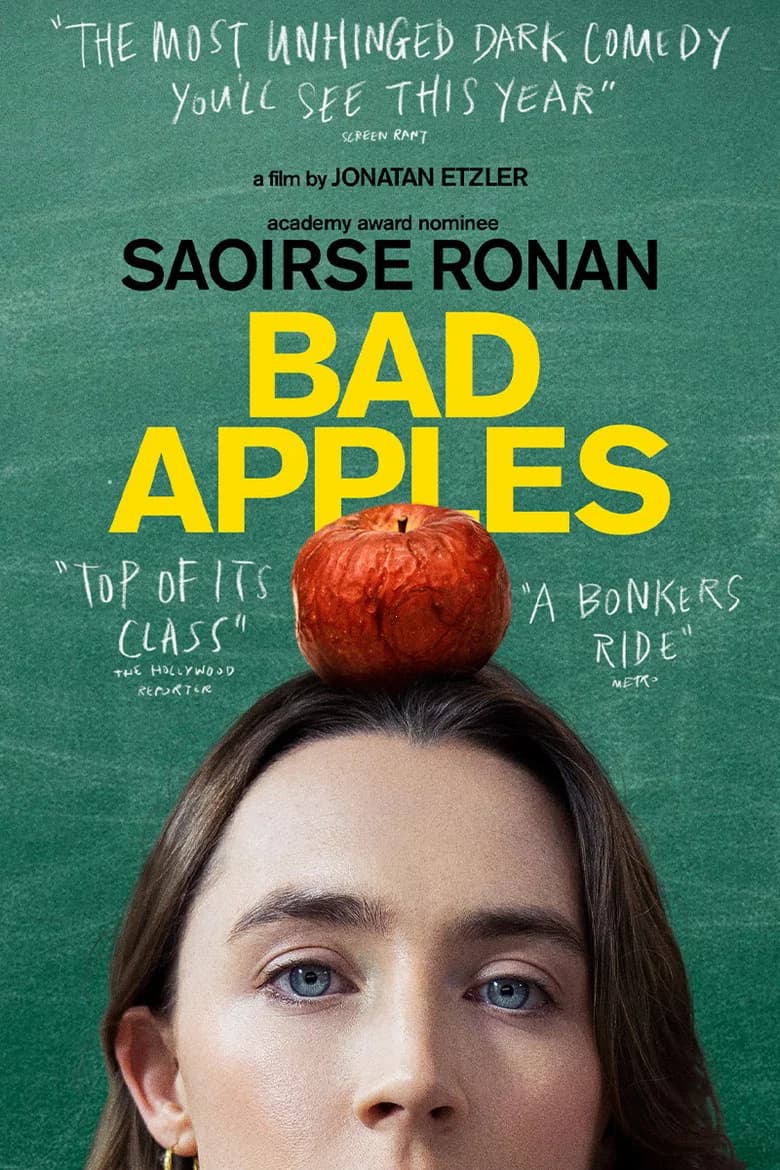
There's a very specific kind of movie that only works if the lead actor is willing to look genuinely unhinged without losing the audience's sympathy. Bad Apples asks Saoirse Ronan to do exactly that, and for roughly two-thirds of its runtime, she pulls it off. The film is a pitch-black social satire about a burnt-out primary school teacher who ends up keeping one of her most difficult students locked in her basement, and it's the kind of premise that could collapse into either tasteless shock value or toothless message-movie preaching. For a while, director Jonatan Etzler threads that needle. Then the third act happens, and the needle snaps.
What Bad Apples is actually about
Ronan plays Maria Spencer, an overworked teacher in a small town in Somerset, England, according to plot details reported by TheWrap, Collider, and Wikipedia. Maria is already stretched thin before the film's inciting incident — underpaid, under-supported, and stuck dealing with a school system that treats teachers as infinitely absorbent sponges for other people's problems. One of those problems has a name: Danny, a troubled 10-year-old student played by newcomer Eddie Waller in his film debut.
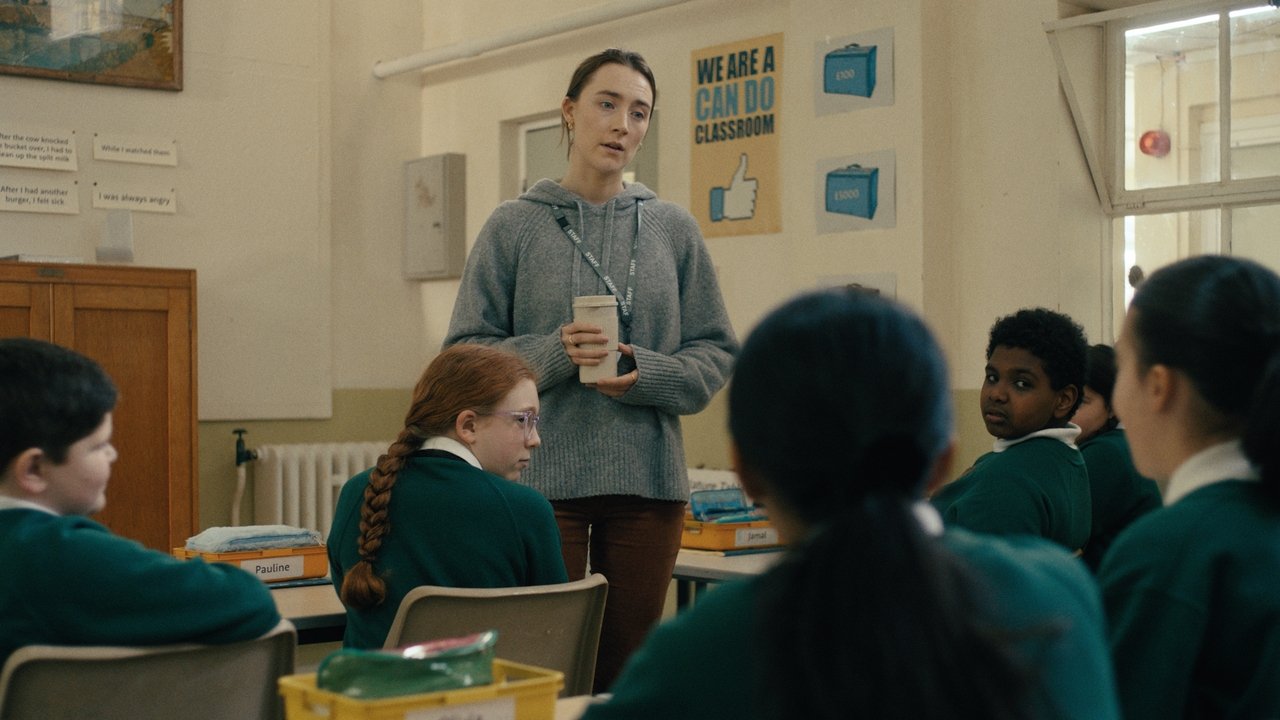
What starts as ordinary classroom friction escalates, according to the same reporting, into a series of incidents that push Maria past some invisible line, and she ends up kidnapping Danny and confining him in her basement. From there, Bad Apples splits its attention between what's happening inside that house and the town-wide search for a missing boy unfolding just outside it. It's a premise that sounds like it belongs in a straight thriller, but the film's actual mode, according to both TheWrap and Collider, is dark comedy — closer to a satire about institutional neglect than a home-invasion nightmare.
The satire underneath the shock
The reason Bad Apples works as well as it does for most of its runtime is that it isn't really interested in Maria as a monster. It's interested in her as a symptom. Collider and TheWrap both frame the film's core thematic engine around a genuinely uncomfortable irony: without Danny around, everyone's lives seem to improve. The classroom is calmer. Maria's colleagues are less stressed. Even Danny's own home life, once he's out of the picture, seems to run more smoothly. That's the satire — a pointed argument that institutions built to protect at-risk kids are often quietly relieved when those kids simply disappear from view, and that nobody involved is willing to admit that out loud.
It's a bold thing for a film to suggest, and it only works because the tone stays controlled. TheWrap's review calls the film "audaciously clever" and "witheringly funny," which gets at the tightrope Etzler is walking — the comedy has to be sharp enough to land as commentary rather than as a shrug. Ronan's performance is doing most of that load-bearing work. TheWrap specifically praised her as "fiercely funny" and multilayered, and that description tracks with what the premise demands: Maria has to be sympathetic enough that the audience doesn't just check out, self-aware enough that her actions register as satire rather than pure villainy, and unstable enough that the tension never fully resolves into comfort.
A strong ensemble around a demanding lead role
Ronan doesn't carry the film entirely alone. Jacob Anderson plays Sam, a co-worker and apparent ex of Maria's, according to Wikipedia's cast listing, giving the film someone inside Maria's orbit who can register alarm on the audience's behalf without fully understanding what he's looking at. Robert Emms plays Josh, Danny's father, a role that carries some of the film's heaviest thematic weight given the satire's focus on parental as much as institutional indifference. Rakie Ayola plays Sylvia, Maria's boss, and Sean Gilder and Kerry Howard round out the cast as Frank and PC Williams respectively — the latter presumably tied to the investigation running parallel to Maria and Danny's story.
That's a lot of adult characters circling a story that, structurally, is really about two people in a basement. The best version of that setup uses the surrounding cast as a pressure valve, letting the audience step outside Maria's headspace periodically so the film doesn't become claustrophobic in the wrong way. Based on the reviews, that's roughly what Bad Apples does for most of its runtime — cutting between the domestic nightmare in the basement and a town slowly, messily reckoning with a missing child.
Where the source material comes from
Bad Apples is reportedly adapted from a Swedish novel — sources disagree on the author's name, with some outlets crediting one writer and Wikipedia crediting another, so it's not worth pinning down here with false confidence. What's more clearly attributed is the screenplay, credited to Jess O'Kane, with Jonatan Etzler directing what is, per TheWrap and Collider, his English-language feature debut. That's worth noting on its own — a filmmaker making the jump into English-language production with material this tonally difficult is a genuine swing, and for most of the film, it pays off.
The production itself comes from Pulse Films, with Republic Pictures handling distribution, according to Wikipedia. The film runs a lean 101 minutes, which is the right instinct for a premise this concentrated — a satire built around one escalating bad decision doesn't need room to breathe so much as it needs to keep tightening.
The festival run and where it's headed
Bad Apples premiered at the Toronto International Film Festival on September 7, 2025, according to Wikipedia, before also screening in San Sebastián's "New Directors" competition later that same month and landing a spot in the Official Competition at the BFI London Film Festival on October 9, 2025. That's a solid festival trajectory for a directorial debut — competition slots at San Sebastián and BFI London aren't handed out casually, and it suggests the industry response, even before general release, saw something worth backing.
The film is set for wide theatrical release in the UK, Ireland, and the US on September 18, 2026, per Wikipedia, which means the festival reviews discussed here — from TheWrap and Collider, both writing out of the fall 2025 festival circuit — are the fullest picture available of the film's reception so far. A wider critical consensus, plus audience reaction, will only take shape once the film is actually in theaters broadly.
Why the third act is the problem
Here's the part where the reviews start to diverge, and it's worth being upfront that this section gets into some plot territory. Collider's review is generous about the film's first two acts, praising the dynamic between Ronan and Waller and describing the film's comedy as landing in a "pitch-black shade" that suits the material. But Collider is also specific about where the film loses its footing: in the third act, "the story spins out of control" into what the review calls "pure absurdity." Crucially, Collider notes the film stays thematically consistent even as it does this — the satire's point about institutional indifference doesn't get abandoned — but the narrative cohesion that held the first two acts together comes apart.
That's a meaningfully different criticism than saying a film's ending is simply bad. A film can be thematically coherent while narratively chaotic, and that's precisely the gap Collider is describing — the ideas still land, but the plot mechanics required to get there stop making sense as a sequence of events rather than as a collection of increasingly outlandish beats.
TheWrap's take on the same stretch of the film reads more forgiving, if not entirely contradictory. TheWrap describes the ending as "as hilarious as they are horrifying," which suggests a critic willing to read the tonal whiplash as intentional and effective rather than as a structural failure. Put those two reviews side by side and a pattern emerges that's familiar from a lot of pitch-black satire: some critics will read escalating absurdity as the whole point, a natural extension of a premise that was never fully realistic to begin with, while others will read the same escalation as a film losing its grip on the more grounded, character-driven tension that made its opening stretch work in the first place.
A hard needle to thread
It's worth sitting with why a film like this is so difficult to land cleanly. A satire about a teacher kidnapping a student has to do several contradictory things simultaneously — it has to make the audience laugh at something genuinely alarming, it has to keep Maria legible as a person rather than a cartoon, and it has to build toward some kind of resolution without either punishing her too neatly or letting her off the hook entirely. Films built around this kind of moral discomfort tend to succeed or fail based almost entirely on whether the ending can hold that balance, because an ending that tips too far into either straightforward horror or straightforward comedy retroactively flattens everything that came before it.
Based on the split between TheWrap and Collider, Bad Apples seems to land somewhere in between — an ending that's genuinely trying to hold horror and comedy in the same hand, executed with enough confidence that at least one major outlet finds it fully successful, while another finds the mechanics underneath it start to buckle under the weight of everything the film is asking them to carry.
The verdict
Bad Apples is a genuine calling card for Jonatan Etzler and another reminder that Saoirse Ronan remains one of the more fearless actors working when a script asks her to be genuinely difficult to watch rather than simply likable. The film's satire — that institutions and parents alike are quietly relieved when a difficult child disappears from view — is sharp, specific, and doesn't flinch. Where it stumbles is in the mechanics of actually landing that idea by the credits, with reviews split on whether the third-act chaos is a feature of the film's commitment to absurdity or a sign that the story ran out of road before its themes did. Either way, this isn't a film that plays it safe, and on a fall release calendar that will have plenty of safer options, that alone makes it worth a look once it opens wide on September 18.
Bad Apples opens wide in the UK, Ireland, and US on September 18, 2026, after festival stops at TIFF, San Sebastián, and BFI London — wider critical consensus and audience reaction will firm up once general release reviews land.