The Blood of Dawnwalker Review Roundup: Rebel Wolves' Debut Vampire RPG Is Divisive, Not Disastrous
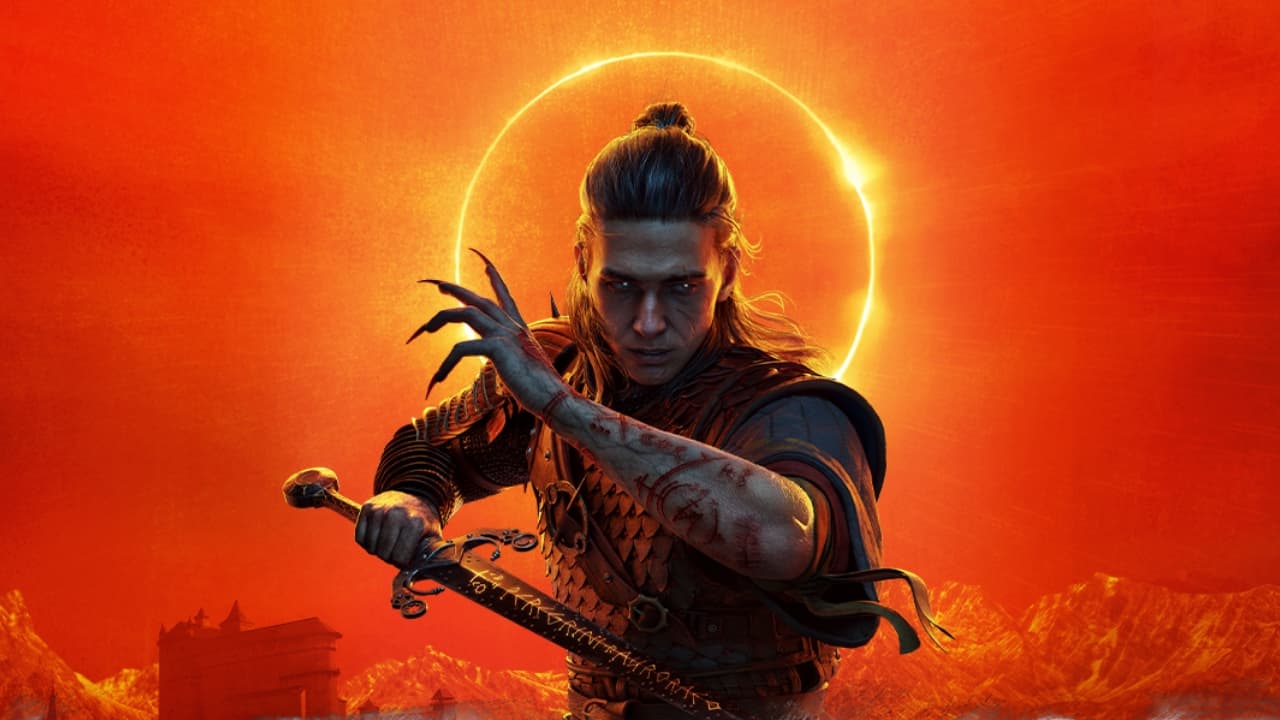
The Blood of Dawnwalker released September 3, 2026, on PC via Steam, PS5, and Xbox Series X|S, according to Kotaku and DLCompare. It's the debut title from Rebel Wolves, a studio founded by veteran developers who cut their teeth on The Witcher 3 and Cyberpunk 2077 at CD Projekt Red, per Mobalytics and Kotaku. That pedigree alone guaranteed scrutiny — a new studio built from RPG royalty, promising a vampire-tinged open world with a ticking clock, was always going to be judged against the games its founders helped make legendary. Four days after launch, the picture is neither a coronation nor a disaster. It's something messier: a game reviewers keep calling one of the best-written RPGs of the year in the same breath as one of the more mechanically repetitive ones.
The premise: a 30-day countdown with teeth
Players control Coen, a villager turned "Dawnwalker" — half-human, half-Vrakhir, the game's vampire race — after an encounter that leaves him caught between both worlds. The hook is a 30-day in-game deadline: Brencis, the Vrakhir leader, intends to sacrifice Coen's family to fuel his own ascension to Vrakhir royalty, and nearly every action the player takes advances the clock toward that deadline, according to Mobalytics and RPG Site. That's a genuinely unusual structural bet for an open-world RPG in 2026, a genre that has spent the better part of a decade training players to expect sprawling, consequence-free side content. Rebel Wolves is explicitly betting against that instinct, and the reviews so far suggest that bet is the single most talked-about thing about the game — for better and worse.

Day and night aren't just a lighting toggle
The mechanic underpinning everything is a day/night duality that reshapes what Coen can do and how the world responds to him. By day, he's effectively human: he fights with the Witchcraft skill tree, heals through standard food and potions, and has none of his vampiric agility. By night, he shifts into his Vrakhir form, unlocking the Vampirism skill tree and abilities like Shadowstep, Clawride, and Planeshift — but healing switches entirely to Voracious Bite, a blood-drinking ability that replaces potions as his only recovery option. Unlike other Vrakhir in the setting, sunlight doesn't burn him, which is what lets him function in both states at all, according to guides from Game8, TechWiser, and theclick.gg, corroborated by RPG Site's review.

The point of the system isn't just cosmetic variety. It's meant to produce what several guides describe as "quest multiplicity" — the same objective having genuinely different solutions or outcomes depending on whether Coen tackles it as a human by day or a vampire by night. Eurogamer's Robert Purchese singled out the city of Svartrau as the clearest showcase of this idea in action: at night, rooftop traversal and vampiric mobility open up entire areas of the city that are simply unreachable during the day. It's the kind of design flourish that, when it lands, makes an open world feel like it's actually reactive to a system rather than just decorated by one.

What critics are praising
The writing is the throughline in nearly every positive review. IGN's Travis Northup called The Blood of Dawnwalker his "new favorite vampire game." RPG Site went further, awarding it a 9 out of 10 and calling the writing "possibly the absolute best I've seen in an RPG" — strong enough that the reviewer named it their favorite RPG of 2026 outright. GameSpot's Phil Hornshaw, in a review aggregated via Kotaku, praised the quests specifically as "well-written," a distinction worth noting given how much of the genre's writing praise tends to land on worldbuilding or voice acting rather than quest design itself.
That's a meaningful signal coming from a debut studio. The Witcher 3's reputation was built substantially on the strength of its side quests refusing to feel like filler, and if Rebel Wolves' founding team brought that specific instinct with them from CD Projekt Red, the reviews so far suggest it survived the jump to a new studio and a new IP. Purchese's praise for Svartrau's day/night traversal difference points at something similar — a world built with enough intentional layering that reviewers are finding new things to point at beyond the base pitch of "vampire RPG."
What critics are criticizing
The complaints cluster hard around one thing: repetition, both in quest structure and in combat. GameRant's Josh Cotts didn't mince words, describing nearly "every single quest" as following an identical shape — talk to a character, go somewhere, inspect something, gather clues, fight enemies. That's a pointed criticism to level at a game whose writing is otherwise being singled out as a highlight, and it suggests the issue isn't the quality of individual scenes so much as the scaffolding holding them together across dozens of hours.
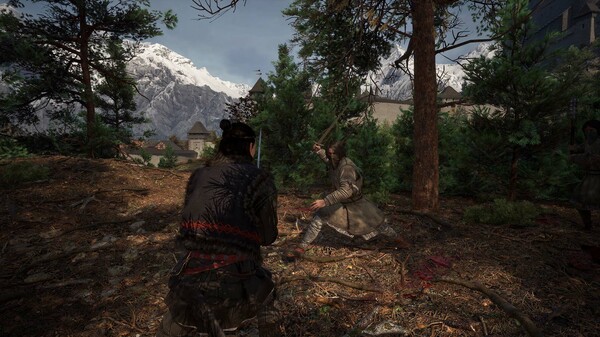
Combat draws similar pushback from multiple directions. Game Informer noted that enemies "repeat movesets" outside of boss encounters, which makes regular fights feel like "repetitive Simon Says sequences" — a pattern-recognition loop rather than a system that keeps evolving. Notably, this isn't just a complaint from reviewers who otherwise disliked the game. RPG Site's 9/10 review — the same one that called the writing the best it's seen in an RPG — still flagged combat as feeling "largely unchanged" between the human and vampire modes, and put enemy variety outside boss fights at a number countable "on two hands." When a reviewer's highest-praise review and a middling one land on the same specific complaint, that's usually the more reliable signal than either score in isolation.
VGC's review added technical concerns to the pile, flagging "choppy frame rate" and what it called "more than a shrug-offable number of bugs" — the kind of phrasing that suggests performance issues significant enough to color the overall experience, not just the occasional glitch reviewers are used to shrugging off in a big open-world launch.
One outlet's take on the combat systems
Worth flagging separately: some of the more granular combat detail circulating around this game — directional blocking, counterattack timing windows, and a skill-charge system with upgradeable perks — comes specifically from RPG Site's review rather than being cross-confirmed across multiple outlets. It's a useful window into how the combat is actually built, but it's one reviewer's characterization of the system's mechanics, not a consensus description, and it's worth treating it that way until more reviews dig into the same specifics.
The scores, lined up
Aggregate numbers paint a genuinely split picture rather than a clean consensus. Metacritic has the game sitting around 83, while OpenCritic places it in the 91st percentile — two different aggregation methods landing in a similar "strongly positive, not universal" zone. Kotaku and Mobalytics both describe the overall critical reception explicitly as "divided" or "mixed" rather than a rout in either direction, which tracks with everything above: a game that's earning some of the highest individual praise of the year for its writing while drawing consistent, specific criticism for combat repetition and technical rough edges.
That split is worth sitting with rather than smoothing over. A game scoring in the low-to-mid 80s with reviewers actively flagging it as "divided" is a different proposition than a game scoring in the low-to-mid 80s because reviewers broadly agree it's solidly good but unspectacular. The Blood of Dawnwalker's number is being generated by reviewers who are, in some cases, giving it near-perfect individual scores for specific strengths while other reviewers are hammering the same structural weaknesses. That's the kind of spread that tends to mean different players will bounce off completely different things depending on what they're prioritizing going in.
The sales numbers tell a different story than the scores
Whatever the critical split says, players are showing up. Rebel Wolves announced the game had passed 1 million copies sold within roughly two to three days of launch, an announcement made September 5 — though the studio reportedly didn't clarify the exact timestamp of when that threshold was crossed, so treat the "two to three days" framing as the outlets' approximation rather than a precise figure, per Inven Global, Gamer.org, and DLCompare.
Steam alone accounted for an estimated 308,900 or so of that million, based on aggregated third-party estimates from PlayTracker, Gamalytic, and VG Insights. That leaves the bulk of the million-copy milestone coming from console sales, and multiple outlets infer — based on a much larger volume of PS Store reviews compared to Xbox — that PS5 likely drove the larger share of that console total, though this is an inference from review-count volume rather than a directly confirmed sales split.
On Steam specifically, the game hit a peak concurrent player count of 64,438 shortly after launch, climbing to an all-time peak of 70,692 on September 5, according to DLCompare. As of that same date, roughly 80% of Steam user reviews were positive, giving the game a "Very Positive" rating on the platform — a number that sits comfortably above the more cautious critic aggregate, suggesting the player base is, on balance, more forgiving of or less bothered by the repetition complaints than critics have been.
A debut studio finding its footing
It's worth zooming out on what Rebel Wolves actually pulled off here regardless of where you land on the score. This is a brand-new studio's first release, built by developers who left one of the industry's most scrutinized RPG pedigrees to make something entirely their own, and the result is a game good enough that IGN and RPG Site are handing out some of the highest individual praise any RPG has gotten this year — while also carrying exactly the kind of rough edges you'd expect from a first outing untethered from an established engine and pipeline. The 30-day clock and day/night duality are ambitious systems that could easily have collapsed into gimmicks, and by most accounts they didn't; Svartrau's shifting traversal and the "quest multiplicity" concept both point to a studio that understood what it wanted its core hook to do narratively, not just mechanically.
Where it stumbles — enemy variety, moveset repetition, quest structure sameness, performance hitches — reads less like a fundamental design failure and more like the kind of scope-management problem that hits ambitious debut RPGs specifically. Building genuinely reactive quest content at this scale is expensive in a way that's very hard to fully solve on a first project, even with a team full of veterans who've solved similar problems before at a different studio with a different budget and timeline.
Should you play it
If what you want out of a vampire RPG is genuinely excellent writing, a world that reacts meaningfully to a day/night structure instead of just reskinning it, and a premise with real narrative tension baked into its central deadline, the reviews here — especially RPG Site's 9/10 and IGN's enthusiastic framing — suggest The Blood of Dawnwalker delivers on that in a way few RPGs this year have matched. If what tends to sour an RPG for you is repetitive quest scaffolding and combat that runs out of new ideas well before the credits roll, the criticisms from GameRant, Game Informer, and even RPG Site's own combat caveats are consistent enough across outlets that they're not outlier complaints.
At roughly 83 on Metacritic, 91st percentile on OpenCritic, and a million copies sold within days despite outlets explicitly calling the reception "divided," this is a game that's rewarding patience with its narrative ambitions more than its combat systems. For a debut studio built out of Witcher 3 and Cyberpunk 2077 alumni, that's a genuinely promising split to land on — the parts that are hardest to get right on a first try, the writing and the systemic worldbuilding, are the parts multiple outlets are calling some of the best in the genre this year. The parts that are more forgivable to fix later, combat variety and performance, are exactly what a patch cycle exists for.
Expect Rebel Wolves to prioritize performance and combat-variety patches given the recurring complaints, with DLC or a sequel likely only after the studio gauges how the divided reception settles over the coming months.