Bleach: TYBW – The Calamity Episode 5 Recap: The Fight Against Yhwach Reaches Its Breaking Point
Full spoilers for Bleach: Thousand-Year Blood War – The Calamity Episode 5, including its ending. If you haven't watched it yet, stop here.
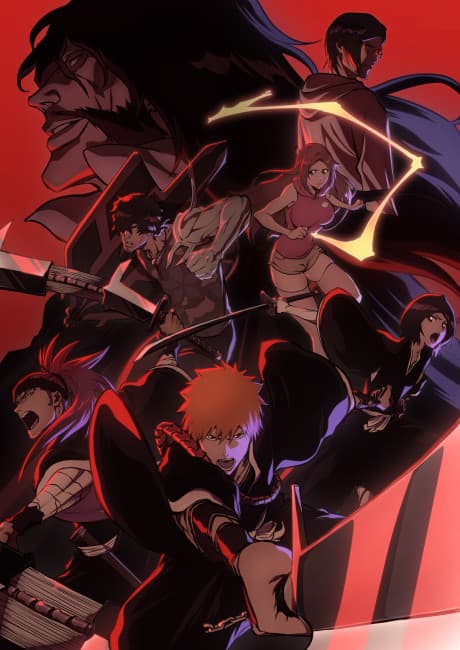
Bleach: Thousand-Year Blood War – The Calamity, the anime's fourth and final season, dropped its fifth episode overnight, and it's already being talked about as one of the defining chapters of the whole final arc. Titled "Life to Defend You," the episode pushes Ichigo's fight against Yhwach past the point where either side can walk it back.
How the episode opens
The episode picks up mid-battle, with Ichigo and Orihime backed into a corner against Yhwach. Rukia arrives just in time, her Bankai buying the two of them a brief window to regroup before Yhwach closes back in. It's a short reprieve — his Getsuga-Cero fusion barely marks Yhwach, and even Ichigo's established Bankai isn't enough to turn the fight.
A new Bankai enters the fight
The episode's mid-point turn is Ichigo unlocking a new Bankai form entirely — his blade reshaping into something far larger, wrapped in chains and horn-like projections. It's staged as a clear escalation past everything Ichigo has shown in the series so far, and it's the moment that finally lets him meet Yhwach's pressure head-on instead of just surviving it.
The ending everyone's talking about
The last stretch of the episode belongs to Orihime. With Rukia critically wounded and Ichigo pinned down, she gets back up and walks straight at Yhwach, absorbing hit after hit without folding. When she reaches him, she unleashes everything she's been holding back and erases him from the fight entirely, at enormous cost to herself. The episode closes on two flowers — one intact, one shedding its petals — spelling out the episode's title across the two images.
It's a moment several outlets have flagged as one of the best-executed scenes the adaptation has produced, and it finally gives Orihime an active, offensive role in a fight the anime has spent years building toward.
Where episode 5 sits in the season so far
The Calamity has moved at a noticeably faster clip than the Thousand-Year Blood War's earlier seasons, and episode 5 is the point where that pacing choice pays off. Rather than stretching this confrontation across several episodes of buildup, the season has been steadily raising the pressure since its premiere, using the first four episodes to establish just how outmatched Ichigo's group is against Yhwach before letting things break open here. Watched as a stretch rather than in isolation, episode 5 reads less like a sudden twist and more like the release valve for tension the season has been building deliberately.
How the animation handles the climax
A large part of why this episode is getting singled out in reviews comes down to execution rather than just plot. The studio leans on a slower, more deliberate pace for Orihime's walk toward Yhwach instead of the rapid-cut action typical of the season's earlier fight scenes — a choice that gives the moment room to land as something closer to a ritual than a battle beat. Combined with the muted color work in the closing shots and the flower motif carried through to the credits, it's a episode that's being praised specifically for restraint, which is a less common compliment for a shonen finale-style episode than raw spectacle.
What critics and fans are saying
Early reactions across review outlets have been unusually consistent in singling out Orihime's arc specifically, with several pieces describing it as a long-overdue payoff rather than a surprise twist. That reaction lines up with a common complaint from longtime readers and viewers — that Orihime's power has always been narratively undersold relative to how strong it's actually described as being. Episode 5 is being read widely as the show finally correcting that imbalance, which is part of why the response has skewed toward relief and validation rather than shock.
Production context
The Calamity marks the final stretch of Bleach: Thousand-Year Blood War's anime adaptation, adapting material Tite Kubo wrote to close out the manga's run. Because the source material has been complete for years, the adaptation isn't racing to catch up to an ongoing story — every major beat, including this one, has a known endpoint the production team is building toward, which gives scenes like this one a level of foreshadowing and setup that an ongoing, unfinished series usually can't match.
How this episode fits into the season's remaining runtime
With the season expected to run a standard 13-episode length for this final stretch, episode 5 lands almost exactly at the season's midpoint — a natural place for a major turning point, giving the back half room to deal with consequences rather than escalation for its own sake. That structural positioning is worth keeping in mind heading into the next several weeks: expect the season's second half to spend real time on fallout rather than immediately jumping to the next big confrontation.
What to expect if you're new to the franchise
If this episode is your entry point into Bleach rather than something you've followed from the beginning, it's worth knowing that very little of what happens here is meant to be understood in isolation — Orihime's arc, Ichigo's power progression, and Yhwach's specific design as a villain all draw on years of prior setup. Jumping in cold, the emotional beats will likely register at a smaller scale than they do for viewers who've followed the buildup. It's a good moment to catch up on the series rather than a natural starting point on its own.
How the episode was received across platforms
Reaction across streaming platforms and social discussion has skewed heavily positive, with a noticeable amount of the conversation focused specifically on the episode's restraint rather than its scale. That's a somewhat unusual pattern for a season midpoint in a long-running shonen adaptation, where audience reaction typically centers on raw spectacle — the size of a power-up, the intensity of a fight. Here, the loudest praise has been reserved for the quieter choices: the pacing of Orihime's walk, the muted visual language of the closing sequence, and the decision to end on ambiguity rather than a clean resolution.
Where the story goes from a structural standpoint
With Yhwach removed from the immediate confrontation, the season now has a clear structural choice to make: spend the back half of its run on the group's recovery and regrouping before escalating again, or move quickly back into conflict. Bleach's history suggests the former is more likely, at least initially — the series has generally taken time to show characters processing major losses or costs before jumping back into the next confrontation, rather than treating a sacrifice like Orihime's as something the plot can simply move past in the following episode.
A quick primer if you're catching up mid-season
For anyone tuning in partway through The Calamity's run without having followed the earlier Thousand-Year Blood War seasons closely, the short version of the stakes going into this episode: Yhwach has already proven capable of outmaneuvering nearly every direct confrontation the Soul Reapers and their allies have attempted, largely because of his precognitive ability to see outcomes before they happen. Every fight leading into episode 5 has been building toward the show needing to find an approach that doesn't rely on simply hitting him harder — which is exactly what this episode delivers, just not from the character most viewers would have expected to deliver it.
Bottom line
Episode 5 is a genuine turning point rather than a mid-season filler beat — it resolves an immediate crisis, escalates Ichigo's power, and gives Orihime the defining moment of her arc so far, all without fully closing the door on Yhwach as a threat. If you've been on the fence about catching up on this season, this is the episode that justifies it.
With Yhwach off the board for now, expect the next episode to deal with the immediate aftermath — Orihime's condition, how the group regroups, and how Ichigo responds to someone else landing the decisive blow. Don't expect Yhwach to stay down permanently; Bleach rarely treats a defeat like this as final.