One Piece's Egghead Arc Is Quietly Setting Up the Series' Endgame
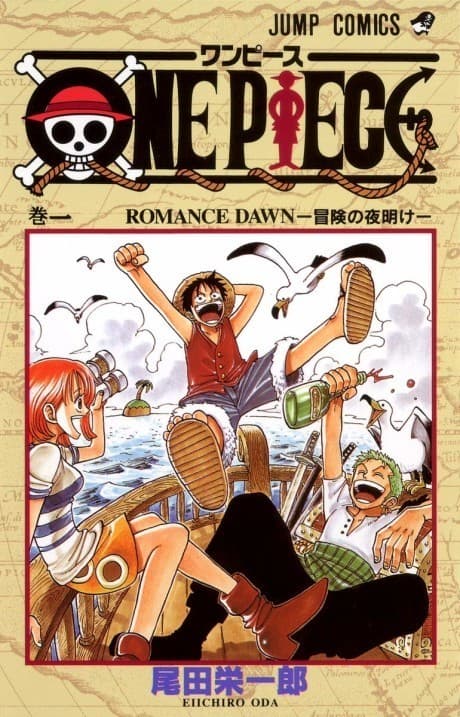
The Egghead arc has been running long enough now that it's worth stepping back and cataloguing what it's actually revealed, rather than treating each chapter as an isolated cliffhanger. Taken together, the last several dozen chapters have done more to reshape the series' broader mythology than any stretch since Wano.
The Void Century puzzle finally clicking together
The biggest structural reveal is the confirmation of details around the Void Century and the ancient kingdom's fall, tying Ohara's destruction, the World Government's founding, and Joyboy's legacy into a single throughline rather than three separate mysteries. Oda has spent two decades scattering pieces of this puzzle across unrelated arcs; Egghead is where a meaningful number of them finally click together. Readers who've followed the series since the Ohara flashback in particular are seeing payoff for background details that looked like throwaway worldbuilding at the time — a strong signal that this connective material was planned far earlier than the arc itself.
Why splitting Vegapunk into six satellites works
Vegapunk's role as an information-dump character was predictable structurally, but the execution has been sharper than that description suggests — splitting his personality across six satellites lets the arc deliver exposition through actual character conflict (the satellites disagree with each other) instead of a single monologue. It's a clean solution to a problem that's sunk weaker long-running series: rather than having one character explain decades of backstory in a static info-dump, the disagreement between satellites turns exposition into drama, letting readers absorb dense lore through argument and personality rather than lecture.
The Straw Hats' new status quo
On the plot-momentum side, the arc has also forced a reset in how the Straw Hats' bounties and public standing function, with the government's reaction escalating in ways that will likely define the tone of whatever arc follows. Several fan theories about Luffy's Sun God Nika form and its connection to the ancient kingdom have gone from speculative to functionally confirmed. That escalation isn't just a numbers change — a shift in how the World Government treats the crew publicly has ripple effects on how future arcs can be structured, since it closes off some of the lower-stakes storytelling options the series has relied on in the past.
How this arc compares to Wano's reveal pacing
Wano is the natural comparison point for how much lore Egghead has been unloading, but the two arcs handle revelation pacing differently. Wano tended to deliver its biggest reveals through dramatic mid-battle flashbacks, timed to land during specific fights. Egghead has leaned more on direct dialogue and archival information — Vegapunk's satellites functioning almost like a research team walking readers through history in real time. That's a slower, more deliberate delivery method, and it's part of why some readers have described Egghead as denser but less immediately thrilling than Wano's climactic reveals, even though the total amount of information being confirmed is arguably larger.
What this means if you've been skimming
If you've been skimming chapters for action beats and skipping the dialogue-heavy pages, this is the arc where that habit will cost you the most context. Egghead isn't filler dressed up as lore — it's the setup chapter for whatever Oda has planned as the series' final stretch. Chapters that read as slow in isolation are, taken together, doing the structural work of closing two-decade-old open questions, which makes this arc worth a second read for anyone who's been chapter-hopping rather than reading closely.
Where this leaves the series' remaining mysteries
Even with as much as Egghead has resolved, it's worth being clear about what's still open. The full picture of the ancient kingdom's fall, the exact nature of the Void Century's suppression by the World Government, and the specifics of what the "true history" actually contains remain incomplete even after this arc's reveals. What Egghead has done is close the gap between separate threads readers have tracked individually for years, not answer every remaining question outright. That distinction matters for setting expectations heading into whatever arc comes next — there's still a meaningful amount of the series' central mystery left to resolve.
Why the timing of these reveals matters
Oda has a well-documented habit of loading major worldbuilding reveals into arcs that also carry heavy plot momentum, rather than isolating lore dumps into slower-paced stretches. Egghead follows that same approach, pairing its exposition with an active, escalating threat from the World Government's response to the crew. That pairing is deliberate: it keeps the arc from reading as a pure information dump, using the external pressure of an approaching military response to give the lore reveals a ticking-clock urgency they wouldn't have in isolation.
What longtime theorists are saying
The reaction from longtime theory communities has largely been vindication rather than surprise — many of the connections Egghead confirms (Joyboy's relationship to Nika, the throughline between Ohara and the World Government's founding) have circulated as fan theories for years, in some cases predating the current arc by well over a decade. That track record says something about how carefully Oda has been laying groundwork throughout the series' run, and it's part of why Egghead is being received less as a twist and more as confirmation of a plan that was visible in outline form long before it was spelled out directly.
How the arc handles its large ensemble cast
One underappreciated aspect of Egghead is how it manages to service a genuinely large cast of characters — the full Straw Hat crew, multiple Vegapunk satellites, Government agents, and returning characters from earlier arcs — without letting the story lose momentum. Oda's solution has largely been to split the crew across multiple simultaneous plot threads on the same island, letting each character or small group carry their own mini-arc that eventually converges. That structural choice keeps the pacing readable despite the scale of what's happening, and it's a technique the series has refined significantly compared to how it handled ensemble-heavy arcs earlier in its run.
The role of visual and tonal shifts on Egghead itself
Egghead's setting matters as much as its plot content. A futuristic, technology-driven island stands in sharp visual contrast to the more traditional, historically-inspired settings the series has used for most of its run, and that contrast is doing thematic work of its own — pairing the series' oldest mysteries (the Void Century, the ancient kingdom) with its most advanced setting reinforces the idea that the past and the future of the One Piece world are more entangled than earlier arcs let on. It's a deliberate juxtaposition, not just an aesthetic choice for variety's sake.
What this arc signals about the series' remaining length
Arcs this dense with foundational lore tend to appear closer to a series' endgame than its middle stretch, and Egghead's positioning fits that pattern. Without speculating on an exact chapter count for the series' conclusion, the sheer volume of long-dormant threads being resolved here is a reasonable signal that One Piece is entering its final major phase rather than opening up new, unrelated storylines. That's worth keeping in mind for readers wondering how much more story is left — Egghead reads much more like a hinge point than a detour.
Bottom line for readers deciding whether to catch up
If you've fallen behind on One Piece and are wondering whether now is a good time to jump back in, Egghead is a strong entry point specifically because of how much it consolidates. Rather than needing to track a dozen scattered plot threads independently, catching up through this arc means absorbing most of the series' major open questions in a single, connected stretch — which is a more efficient re-entry than picking almost any other point in the last several hundred chapters.
With this much groundwork laid, expect the next arc to move fast on fallout rather than spend more time on exposition — the World Government's response, the Straw Hats' next move given their new bounty status, and how much of the Void Century mystery Oda leaves unresolved heading into the series' final stretch.