Frieren: Beyond Journey's End — What the Ending Is Actually About
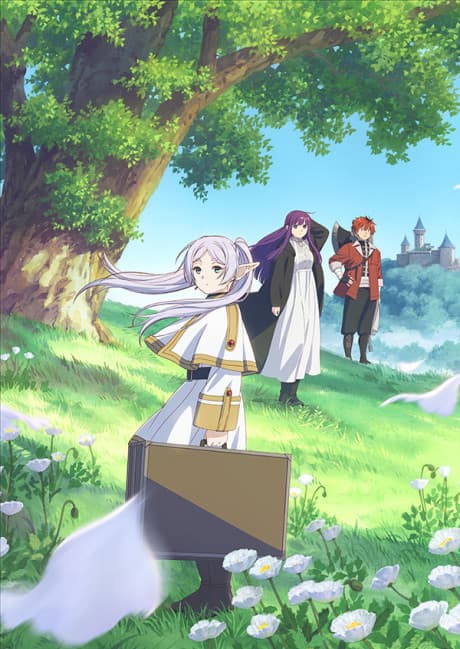
A lot of first-time viewers go into Frieren expecting a conventional fantasy adventure and come out confused about why the pacing feels so unhurried. That confusion usually clears up once you realize the show was never structured around external conflict — it's structured around grief processed in slow motion, by a character who experiences time on a completely different scale than everyone around her.
Why an elf's sense of time is the whole premise
Frieren is an elf who measures her life in centuries. The human party members she traveled with as a young adventurer are gone within what feels, to her, like a blink. The show's central emotional engine is her slowly realizing — decades after the fact — that she spent too little time actually paying attention to people she assumed she'd have forever. Every flashback, every new party member, every "spell that does something oddly specific and sentimental" is really about that same idea approached from a new angle.
The structural trick behind the flashbacks
What makes the flashback structure work is that it never plays as simple nostalgia. Each memory of the original party is recontextualized by what Frieren notices only in hindsight — a habit she dismissed at the time, a request she brushed off as unimportant, a moment of kindness she didn't register as significant until the person offering it was long gone. The show uses this pattern deliberately: rather than building sympathy through direct present-tense drama, it builds it retroactively, letting the audience watch Frieren realize the value of something only after it's already unrecoverable. That's a harder trick to sustain across a full season than conventional plot-driven tension, and it's a large part of why the show reads as unusually patient even by slice-of-life standards.
What the Aureole fight is actually arguing
The Aureole arc late in the story pays this off directly. Frieren's fight isn't really about defeating a powerful mage — it's a mirror. Aureole represents someone who chose the opposite response to immortality: cynicism and detachment instead of Frieren's quiet, delayed devotion. The battle works because it's an argument between two ways of surviving loss, not just a power scaling exercise. Aureole's worldview isn't presented as simply wrong so much as a plausible alternative path Frieren herself could have taken — which is what gives the confrontation its weight instead of playing as a standard good-versus-evil showdown.
Why Fern and Stark matter more than typical party members
Fern and Stark's roles matter here too. They're not just replacement party members; they're Frieren's second chance to actually be present, which she takes far more seriously than she'd admit out loud. The show tracks her growth almost entirely through small gestures — remembering a birthday, noticing exhaustion, choosing to explain herself instead of staying silent — rather than through any traditional "power of friendship" speech. Fern in particular functions as a direct echo of the original party members Frieren failed to appreciate in time; the show is careful to show her actively applying lessons from that earlier failure rather than simply repeating the same mistakes with a new cast.
Why the pacing is the point, not a flaw
Viewers who bounce off the show's slower episodes are often reacting to a genuine structural choice rather than filler. Frieren deliberately avoids treating its magic system or worldbuilding as the main draw — spells exist mostly to characterize relationships (a spell invented to impress someone, a spell kept alive specifically to remember someone) rather than to escalate power in a conventional sense. Once you're reading the show through that lens, scenes that initially look like padding tend to reveal themselves as some of the most carefully constructed material in the series.
How the show uses magic to characterize instead of escalate
It's worth expanding on how differently Frieren treats its magic system compared to genre convention. Most fantasy anime use spells to signal power tiers — bigger spell, stronger character, higher stakes. Frieren largely opts out of that logic. A huge number of the spells introduced across the series are explicitly framed as low-utility, even useless in combat, existing only because someone Frieren once traveled with found them charming, or because she invented one to solve an oddly specific problem for a person she cared about. That inversion — magic as memory rather than magic as escalation — is a large part of why the show reads as emotionally dense despite relatively low action content per episode.
How other party members reflect different responses to mortality
Beyond Fern and Stark, the wider cast functions almost as a set of case studies in how different characters process the same basic problem — living alongside someone whose lifespan dwarfs their own. Himmel, the hero of Frieren's original party, is defined largely by how deliberately he tries to make his mortality visible to her, engineering small moments specifically designed to be memorable precisely because he knows he won't be around to remind her of them later. That's a very different strategy from Aureole's detachment, and contrasting the two approaches — active, generous memory-making versus withdrawal — is part of what gives the show's broader cast of long-lived and short-lived characters its thematic coherence.
Why the show avoids melodrama
A notable stylistic choice across Frieren is how consistently it underplays moments that a more conventional anime would treat as big emotional set pieces. Deaths, revelations, and reunions are frequently handled with minimal dialogue and long, quiet shot compositions rather than swelling music or dramatic declarations. That restraint is a deliberate aesthetic choice tied directly to the show's themes — grief, in Frieren's experience, doesn't arrive as a single cathartic event, it accumulates slowly and gets noticed late, so the show's visual language mirrors that by refusing to spike emotionally where a more conventional series would.
What makes the show rewatchable
Because so much of Frieren's meaning depends on hindsight — the audience, like Frieren herself, only understands the significance of certain scenes after later context recontextualizes them — the show holds up unusually well on a second viewing. Moments that read as simple or slow on a first watch tend to land differently once you already know what they're quietly building toward, which is part of why the series has generated sustained discussion well past its initial airing rather than being treated as a one-and-done watch.
The takeaway
So when people ask what the ending is building toward, the honest answer is: it already told you, several times, in the quiet scenes you might have been tempted to skim. Frieren isn't a story about stopping a demon king. It's a long, patient argument for paying attention to the people in front of you while you still can.
Why this approach is unusual for the genre
Fantasy anime built around a party of adventurers overwhelmingly default to quest structure as their organizing principle — defeat the next threat, reach the next town, level up before the next confrontation. Frieren keeps the surface trappings of that structure (a party, a destination, occasional monster encounters) while quietly replacing the actual engine underneath it with something closer to a character study. That's a harder sell commercially, which makes the show's success worth noting on its own terms: it suggests there was a real audience waiting for a fantasy series willing to slow down this much, even within a genre usually defined by escalation, and it's likely part of why the show has gone on to visibly influence how other studios pitch quieter, character-first fantasy projects in its wake, well beyond its original broadcast run.
Expect future arcs to keep circling the same idea from new angles rather than pivoting to a conventional action-driven plot. Frieren's premise practically guarantees more of this pattern — new characters entering her life, more of them aging or dying relative to her, and more small, specific gestures standing in for growth instead of a big speech.