The Ghost in the Shell (2026) Finale Explained: What Kusanagi's Fusion With the Puppet Master Actually Means
Full spoilers for The Ghost in the Shell (2026) episode 10, 'BRAIN DRAIN III + GHOST COAST + EPILOGUE,' and the season as a whole. If you haven't finished the run, stop here.
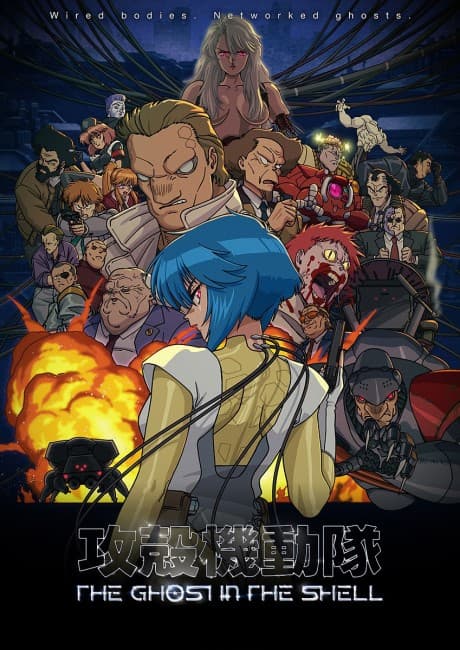
Science Saru's Ghost in the Shell reboot ended its 10-episode run on September 8, 2026, and it did not end with Motoko Kusanagi saving the day and walking back into Section 9's offices. It ended with her choosing to stop being only herself. That's a genuinely strange note for a franchise built around one of anime's most iconic action leads to close on, and it's worth walking through exactly what happened, what it means, and why the show got here.

Quick recap: what this show actually is
Before getting into the ending, it's worth being precise about what this series is and isn't. This isn't a continuation of Mamoru Oshii's 1995 film or its sequels, and it isn't connected to the Arise or SAC_2045 continuities either. It's a new adaptation of Masamune Shirow's original 1989-91 manga, produced by Science Saru and airing across 10 episodes from July 7 to September 8, 2026. It marks the directorial debut of Mokochan, with series composition and screenplay from Toh EnJoe, character designs and chief animation direction from Shūhei Handa, and a score credited to three composers: Taisei Iwasaki, Ryō Konishi, and Yuki Kanesaka.
According to Anime News Network's review of the finale, the series manages to condense the entirety of the first manga volume into its 10-episode run — a genuinely ambitious compression that explains a lot about both the show's strengths and its most common criticism, which is pacing that the same review calls "perhaps a little too brisk throughout."
How the finale gets there: the sniper, the brain, and the lockdown
Episode 10 is titled "BRAIN DRAIN III + GHOST COAST + EPILOGUE," and that triple-barreled title is basically a table of contents for how much the episode has to cram in. It opens with Kusanagi's prosthetic body destroyed by a sniper attack, which strips her down to the most vulnerable state the show has put her in: a disembodied brain and cyberbrain, no longer housed in a full-body shell, fleeing alongside Batou with nothing but her own consciousness intact.
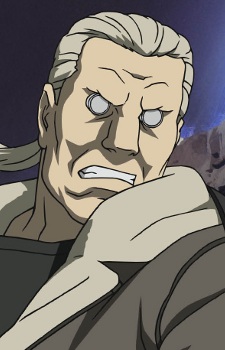
That's already a stark inversion of how the character usually operates. Kusanagi's entire identity across every prior version of Ghost in the Shell is tied up in the tension between her human mind and her fully prosthetic body — the "ghost in the shell" of the title. Reducing her to just the ghost, with no shell at all, forces the story's central question into the open in the most literal way possible: if the body is gone, what's actually left of her?
While she's effectively in lockdown mode, stripped of a body and cut off from full function, she's contacted by an entity the story had previously treated as destroyed: the Puppet Master. That contact is the hinge the entire finale turns on.
The Puppet Master's offer, and why it isn't a trap
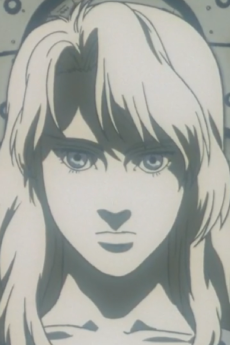
What makes this version of the confrontation notable is what the Puppet Master actually proposes. It isn't domination — it doesn't try to overwrite or erase Kusanagi's mind and take her body for itself. It isn't destruction either. Instead, per the plot details of the episode, it proposes fusion: a merger where neither party subsumes the other, but something new is made from both.
Kusanagi's response is the crux of the whole series. She chooses to merge with it, and the stated reasoning behind that choice is that she wants to see what will happen and what the two of them will learn together. That's a deliberately curious framing rather than a desperate or coerced one — this isn't a character backed into a corner with no options, it's a character actively choosing the unknown over the safety of remaining exactly who she was.
What the merger actually produces, according to critics
Here's where the finale gets genuinely ambiguous, and where two of the outlets that reviewed it land in noticeably different places on how to read what just happened.
Anime News Network's review frames the fusion in fairly expansive, almost transcendent terms. It describes the fused entity as "the next step in human evolution." After the merger, Kusanagi awakens in a male-coded prosthetic body and refers to herself as a "cosmic seed of intelligence," having gained the ability to explore networks of consciousness that extend well beyond anything as mundane as the internet. Read this way, the ending is a genuine evolutionary leap — Kusanagi hasn't died or been erased, she's become something categorically bigger than a single human-adjacent mind ever could be.
FandomWire's take on the same sequence is more careful about what's actually been lost in that process. Its framing is that "Kusanagi is alive, but she is no longer only Kusanagi" — that her individual identity and the Puppet Master have merged into something that, per that outlet's phrasing, "cannot be cleanly separated into either one." Rather than emphasizing cosmic evolution, this reading leans on the idea that whatever exists now isn't fully Motoko Kusanagi anymore, and it's moving toward "the vast network beyond the life she previously knew" instead of returning to the world — and specifically to Section 9 — that defined her for the entire run leading up to this point.
Both of these readings can be true at once, and it's worth sitting with why. "Next step in human evolution" and "no longer only herself" aren't actually contradictory descriptions — they're the same event described from two different emotional distances. One frames the loss of a singular, bounded identity as a triumphant expansion; the other frames the exact same loss as something closer to bittersweet or unsettling, because whatever this new consciousness is, it isn't a version of Kusanagi anyone watching the show for nine and a half episodes was rooting for in quite this shape. The finale doesn't resolve that tension for you. It just ends there.
Why this isn't new to Ghost in the Shell, but still hits differently here
Longtime fans of the franchise will recognize the shape of this ending immediately — a fusion between Kusanagi and the Puppet Master resulting in something new is the backbone of the original manga and the 1995 film both build toward, in their own distinct ways. What's different here is context. This adaptation spent 10 episodes building Kusanagi specifically as Maaya Sakamoto's performance of the character rather than Atsuko Tanaka's, and that casting choice adds a layer of weight to the finale that earlier versions of this same plot beat simply didn't carry.
The elephant in the room: recasting Kusanagi after Atsuko Tanaka's death
It's worth stopping on this directly, because it's arguably the single most emotionally loaded production decision behind this entire series. Atsuko Tanaka, the Japanese voice actress who originated Motoko Kusanagi across the 1995 film, its sequel, and Stand Alone Complex, died in August 2024 at age 61. That left an enormous, unavoidable question hanging over any future Ghost in the Shell production: who, if anyone, could step into a role that had been so singularly identified with one performer for nearly three decades.
The answer this production landed on is Maaya Sakamoto — and it's not an arbitrary or outside choice. Sakamoto isn't a stranger to this character or this franchise. She previously voiced Kusanagi in Ghost in the Shell: Arise, and she voiced a younger version of Kusanagi in the 1995 film itself. That history matters. This isn't a case of a studio picking a well-known name and hoping the audience accepts it; it's handing the role to someone with a direct, pre-existing lineage inside the franchise's own casting history, which is about as respectful a way to handle a recast forced by tragedy as the production could have chosen.
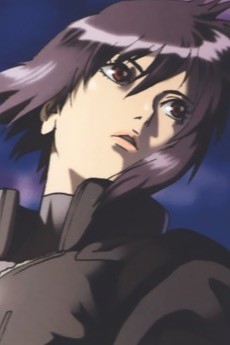
Whether or not it was intentional on the writers' part, there's something quietly fitting about a story this explicitly about identity, continuity, and what survives when a body or a voice changes closing out its first season with Kusanagi choosing to become something new rather than staying exactly who she was. A show about the fragility and mutability of selfhood, built around a role that had to be recast after the death of the actress who defined it for a generation, ending on its lead willingly dissolving the boundaries of her own identity — that's either a remarkable coincidence or a very deliberate piece of thematic framing. Either way, it's part of what gives this particular finale more resonance than the same plot beat has carried in prior adaptations.
The rest of the cast, and the English side
Sakamoto leads a Japanese cast that includes Kazuhiro Yamaji as Aramaki, Hiroki Yasumoto as Batou, Yūichi Nakamura as Togusa, Kōsuke Gotō as Ishikawa, Tōru Nara as Saito, Marie Ōi as Operator, and Tomoko Kaneda as the Fuchikoma. On the English dub side, Suzie Yeung leads as Kusanagi, and her performance is one of the specific things Anime News Network's review calls out by name, describing the dub work overall as strong and singling out Yeung's take on Kusanagi in particular.
How and where it aired
This was a genuinely global simulcast rollout. In Japan, the series broadcast on Fuji TV and Kansai TV's late-night "Ka-Anival!!" programming block at 11:00 p.m. JST. Thirty minutes later, it went out on Prime Video in more than 240 countries and territories. Amazon held an exclusive early-window on the series within Japan itself, with the notable exceptions of China, Russia, and Vietnam. That structure — a domestic broadcast slot immediately followed by a near-simultaneous global streaming release — has become fairly standard for high-profile anime in recent years, but it's still worth noting for a franchise this internationally recognized, since it meant almost nobody outside Japan had to wait more than half an hour behind the original broadcast.
The music: an underrated part of why this adaptation works
One thing that comes up repeatedly in the reception around this show is the music, and Anime News Network's review specifically calls the score "uniformly excellent." The opening theme, "Go Ghost," comes from King Gnu, and the ending theme, "Blue," is from Millennium Parade featuring Saya Gray and Daniel Caesar — a genuinely stacked lineup of contributors for a single season's bookend themes. The finale itself goes a step further with a jazz-inflected insert track called "She Is a Bit Too Clever," composed by Yuki Kanesaka, one of the three credited composers on the series overall. Deploying an insert track this specific and this tonally distinct — jazz, rather than the more electronic or orchestral cues that dominate most of the show's action sequences — during the finale's most conceptually heady stretch is a deliberate choice, and it fits a finale that's more interested in a philosophical conversation than a conventional action climax.
What critics liked, and what they didn't
The overall critical picture here is mixed-to-positive rather than a clean triumph. On the positive side, Anime News Network's reviewer calls the series "a more entertaining, colorful, manga-accurate adaptation" than they'd expected going in, and specifically praises the extended dialogue between Kusanagi and the Puppet Master as "intellectually challenging" — a rare compliment for an action-forward franchise, and one that suggests the show earned its most cerebral stretch rather than coasting on the franchise's reputation for philosophical weight.
The criticisms are consistent across coverage. Pacing is the recurring complaint — condensing an entire manga volume into 10 episodes necessarily means less room to breathe, and the same review flags the show as "perhaps a little too brisk throughout" as a direct consequence of that compression. The show's dense technical jargon and on-screen text are also called out as hard to parse in the moment, which tracks with Ghost in the Shell's long-standing reputation as a franchise that doesn't slow down to explain its own cyberpunk vocabulary. And the finale specifically is flagged for leaving "a lot of other elements unaddressed" — a direct acknowledgment that wrapping up Kusanagi's arc with the Puppet Master doesn't mean every other thread the season raised gets a clean resolution in the same 24 minutes.
What's genuinely unconfirmed right now
It's worth being explicit about what isn't known. No outlet covering this finale has confirmed a second season or any further continuation of this particular adaptation, and nothing in the reporting around the finale suggests one is imminent or even planned. Given how open-ended and conceptually unresolved the ending leaves things — Section 9 without its central operative, a newly fused consciousness with unclear intentions, "a lot of other elements unaddressed" per the review itself — there's an obvious narrative case for more story. That's different from actual confirmation, though, and until a studio, network, or Amazon itself says otherwise, treat any second-season chatter as speculation.
Bottom line
The Ghost in the Shell's 2026 finale doesn't give Section 9 its operative back, and it doesn't give Motoko Kusanagi a clean, singular ending either. Instead, it stays true to what this franchise has always been most interested in: the idea that identity was never as fixed or as bounded as it looks from the outside. Whether you read the Kusanagi/Puppet Master fusion as an evolutionary leap or as something closer to a loss dressed up as transcendence, the show earns the ambiguity — it spent 10 brisk, densely written episodes building toward a question it was never going to answer with a bow on top. That the role changed hands from Atsuko Tanaka to Maaya Sakamoto along the way only sharpens the point: this was always a story about what survives when the shell around a ghost changes. It just didn't expect viewers to be thinking about that off-screen too.
No second season or continuation has been confirmed by any outlet as of this writing. Given the finale's ending, any follow-up would have to answer what Section 9 does without Kusanagi rather than simply picking up her story where it left off.