Bleach TYBW Episode 12 Recap: "Everything But the Rain 'June Truth'" Explained
Full spoilers for Bleach: Thousand-Year Blood War Part 1, Episode 12, "Everything But the Rain 'June Truth,'" including backstory involving Isshin and Masaki Kurosaki. If you haven't watched, stop here.
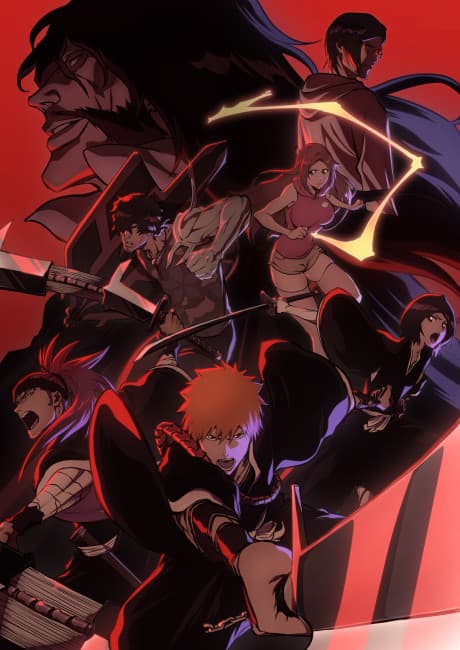
Episode 12 of Bleach: Thousand-Year Blood War Part 1 pumps the brakes on the present-day fight entirely and spends its runtime somewhere else: the past. "Everything But the Rain 'June Truth'" is a backstory episode built around Isshin Kurosaki and Masaki Kurosaki, and it's doing some of the heaviest retroactive lifting the season has attempted so far — reframing Ichigo's origins, his mother's death, and the mechanics of Yhwach's entire plan in one go.
A note on the title
Before anything else, it's worth flagging something that trips people up when they're scrolling through episode lists: this is not the same episode as Part 1, episode 11, which carries the similar and overlapping title "Everything But the Rain." Episode 12 adds the subtitle "June Truth," and per Wikipedia's official episode listing, the English title is rendered in full as "Everything But the Rain 'June Truth.'" These are two distinct episodes with two distinct sets of events — if you're trying to find coverage of one and land here instead, double-check which number you're looking for.
When and where to watch it
"Everything But the Rain 'June Truth'" aired in Japan on December 27, 2022, per Wikipedia's episode list. In the US, it streams on Hulu, with Disney+ handling the international release — not Crunchyroll, a platform mix-up that's tripped up viewers throughout this season given Bleach's history on other services. Studio Pierrot produced this run of the season, with Tomohisa Taguchi credited as director, though that particular credit is worth treating with slightly less certainty than the rest of the production details here.
RELATED: Bleach TYBW Episode 11 Recap: "Everything But the Rain" RELATED: Bleach TYBW Episode 13 Recap: "The Blade Is Me"
The episode steps out of the present entirely
Where most of Part 1 has been built around forward momentum — Ichigo racing toward Soul Society, the Wandenreich's invasion, the Soul King Palace's cosmology — episode 12 does something the season hasn't really done yet. It stops. The present-day fight, the Zero Squad, the fallout from Yamamoto's death, none of it appears here. Instead, the entire runtime is given over to a flashback focused on how Isshin and Masaki met, how their relationship developed, and how the events that eventually led to Masaki's death actually unfolded.
That's a significant structural choice this deep into a season built on momentum, and it signals that the show considers this backstory essential rather than optional connective tissue. According to coverage from both Wikipedia and Anime News Network, the episode is squarely focused on filling in a piece of Ichigo's family history that the story has referenced only in fragments up to this point.
Masaki's Quincy blood and the Grand Fisher attack
The backstory centers on a piece of information the season has been circling for several episodes now: Masaki Kurosaki was a Quincy. The episode dramatizes an attack by the Hollow known as Grand Fisher — a name longtime viewers of the franchise will recognize from Ichigo's own earlier confrontation with the same Hollow years later in the story's present-day timeline. In this flashback, Grand Fisher injures Masaki, and the wound doesn't just hurt her physically. It sets off Hollowfication, the same corrupting process that's shadowed multiple characters across the franchise whenever Hollow and Shinigami or Quincy physiology collide.
This is the seed of everything else the episode does. Masaki's injury isn't a throwaway detail — it's the mechanism the episode uses to explain how Isshin ends up losing his Shinigami powers and becoming human, and it's the mechanism that, decades later, ties directly into how Masaki actually dies.
Urahara's fix, and Isshin's sacrifice
With Masaki Hollowfying and no clean way to reverse it, Kisuke Urahara steps in with a solution: Isshin transfers his own Shinigami powers into a gigai, a human body, in order to stabilize Masaki's condition. The trade-off is total. Isshin doesn't just lend his powers temporarily — he becomes human himself in the process, giving up his identity as a Shinigami captain to save the woman he loves.
It's worth sitting with how much this reframes earlier context in the series. Isshin has spent the entire present-day story as, functionally, an ordinary human father with a mysterious past the show has only hinted at. This episode makes that mystery explicit: his humanity isn't incidental, it's the direct, deliberate result of a choice he made for Masaki. And it's a choice that, per the episode's framing, deepens the relationship between the two of them rather than existing purely as backstory mechanics — the episode spends real time on Isshin and Masaki simply being together, not just on the crisis that brings them together.
Yhwach's Auswählen, and the truth about Masaki's death
The episode's biggest reveal, and the one that recontextualizes the most going forward, involves Yhwach directly. According to the episode — cross-confirmed by both Wikipedia and Anime News Network's coverage — Yhwach engineered a mass power-extraction ritual known as Auswählen, targeted at Quincies the Wandenreich considered "tainted." Crucially, the episode ties the timing of that ritual directly to Masaki's encounter with Grand Fisher.
That's a substantial retcon of what viewers previously understood about Masaki's death. It wasn't simply an unlucky Hollow attack; per this episode, it's connected to Yhwach's larger scheme, woven into the same web of cause and effect that also touches Uryu Ishida's mother's death. For a franchise that's spent years treating Masaki's death as Ichigo's foundational tragedy — the event that kicked off his entire journey as a Shinigami substitute — tying it explicitly into Yhwach's long-game plotting is a significant piece of retroactive engineering, and it's the kind of reveal that changes how earlier arcs of the franchise read in hindsight.
Why this matters for Ichigo's identity
Stepping back from the plot mechanics, this episode functions as the season's clearest explanation yet for why Ichigo is built the way he is. His mixed heritage — Shinigami through Isshin, Quincy through Masaki, and Hollow through the Hollowfication that touched his mother — isn't a coincidence or a convenient plot device introduced late in the story. Per this episode's framing, it's the direct, traceable result of a chain of events that starts with Grand Fisher's attack and runs straight through Urahara's intervention and Yhwach's larger plan. Ichigo's entire identity across the franchise, in other words, is downstream of the events this episode dramatizes.
That's a lot of narrative weight to put on a single episode, and it's exactly the kind of ambitious, retroactive world-building that can either land as deeply satisfying or feel like it's overexplaining something that worked better as mystery. Reception to this episode has landed somewhere in between.
How the episode was received
Anime News Network's review of "Everything But the Rain 'June Truth'" was mixed. The outlet's reviewer described it as "a messy episode that, at times, is genuinely affecting and, at others, feels like a step above homework" — a characterization that captures the episode's core tension pretty precisely. There's real emotional material here in the Isshin-Masaki relationship, but there's also a lot of expository justification the episode has to work through to get Yhwach's plan and Masaki's death lined up the way it wants them to be.
The review was specifically critical of how the episode handles the retcon around Masaki's death, calling the lengthy expository justification awkward — "especially since it's meddling with Ichigo's most personal and significant motivation." That's a fair criticism to sit with. Masaki's death has functioned as bedrock motivation for Ichigo across the entire franchise, predating this season by years. Retroactively wiring it into Yhwach's master plan risks turning a personal tragedy into a plot mechanism, and whether that trade pays off depends heavily on what the story does with the reveal going forward, rather than how the reveal lands in isolation within this one episode.
Bottom line
"Everything But the Rain 'June Truth'" is a slow, backstory-heavy episode that trades the season's usual forward momentum for an extended look at where Ichigo's hybrid nature — and his mother's death — actually come from. It gives Isshin and Masaki real, human weight as characters rather than leaving them as background exposition, and it ties Yhwach's Auswählen plan directly into the tragedy that's shaped Ichigo's entire arc. Whether that retroactive connection strengthens the story or complicates something that worked fine as a simpler tragedy is still an open question — but there's no ambiguity about how much this episode is asking viewers to recontextualize. After twelve episodes of forward motion, Part 1 finally stops to explain its own foundations, for better and for worse.
With Yhwach's Auswählen plan now tied explicitly to Masaki's death and the origins of Ichigo's hybrid nature fully laid out, expect the story to pivot back to the present-day fallout in Soul Society and the Soul King Palace, setting up whatever confrontation closes out Part 1.