Bleach TYBW Episode 3 Recap: "March of the StarCross" Pits Ichigo Against a Quincy Who's Already Studied Him
Full spoilers for Bleach: Thousand-Year Blood War Part 1, Episode 3, "March of the StarCross." If you haven't watched it yet, stop here.
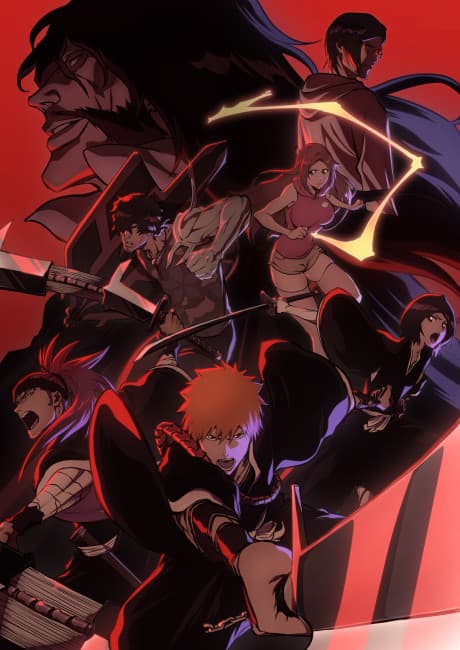
Bleach: Thousand-Year Blood War Part 1 continued its opening stretch with episode 3, "March of the StarCross," which aired in Japan on October 25, 2022, per aggregated broadcast listings (treat the exact date as reasonably but not perfectly precise). Studio Pierrot handled production, and the season streams on Hulu in the US and Disney+ internationally — not Crunchyroll, despite that platform's association with a lot of other current-season anime. Where episode 2 was largely about establishing the scale of the Wandenreich's invasion, episode 3 narrows back down to a single fight — Ichigo Kurosaki against the Quincy officer Quilge Opie — and uses that fight to deliver two of the season's more unsettling early revelations.
Where the episode picks up
The Soul Society is still reeling from the Wandenreich's opening assault, and Ichigo's confrontation with Opie — the Quincy assigned to guard one of the Soul King's palace gates — is already underway as the episode gets going. What separates this fight from a standard early-arc obstacle battle is how quickly it becomes clear that Opie isn't just a gatekeeper meant to slow Ichigo down. He's shown to already know things about Ichigo's abilities that he shouldn't, reacting to attacks with a kind of preparedness that reads as foreknowledge rather than improvisation. That detail recontextualizes the fight almost immediately — this isn't a soldier defending a post, it's someone who came into the confrontation having studied his opponent in advance.
Quilge Opie is a lot stronger than he looks
The episode spends real time undercutting the assumption that Opie is a lower-tier obstacle standing between Ichigo and the rest of the invasion. According to coverage from The Geekiary, Opie is depicted as significantly more powerful than his introduction suggested, and the fight escalates when he activates his Quincy: Vollständig transformation, unlocking a power called Sklaverei — described in the episode as letting him absorb Reishi from his surroundings by effectively "enslaving" it. That's a meaningful jump in the fight's stakes, turning what looked like a straightforward beatdown into something closer to an even, genuinely dangerous matchup.
What makes Opie stand out even more, per that same coverage, is his durability. Later in the episode, Ayon — the fused creature summoned by Nel and Pesche — lays into him with enough force that it looks like the fight should be over. Opie recovers from that punishment in a way the episode clearly frames as remarkable, underscoring that Vollständig hasn't just given him new offense, it's made him considerably harder to put down for good. It's an early, pointed signal about how dangerous the Wandenreich's rank-and-file officers actually are relative to what Soul Society expected going in.
Mayuri's secret: roughly 28,000 souls
The other major beat of the episode happens away from the fight entirely. Captain Mayuri Kurotsuchi is revealed to have been responsible for eliminating roughly 28,000 souls — a staggering number for a single revelation to land on this early in the season. According to The Geekiary's coverage, the act is framed in-story as something done to prevent the barrier between realms from collapsing, not as random cruelty. That framing doesn't make the number any less disturbing, and the episode doesn't seem interested in letting Mayuri off the hook for it just because there was a stated strategic justification behind it.
The scene plays out opposite Captain-Commander Yamamoto, and it's the exchange The Geekiary specifically calls out as one of the episode's strongest pieces of writing, given the two characters' long shared history within the Gotei 13. There's a weight to that conversation that comes from decades of institutional history between them — Yamamoto isn't hearing this news as a stranger reacting to a shocking confession, he's hearing it as someone who has presumably had to make his own share of difficult calls running Soul Society for over a thousand years. That context is what keeps the scene from playing as a simple villain reveal.
Ishida starts digging on his own
Away from both the fight and the Mayuri revelation, the episode also gives Uryu Ishida a quieter but consequential thread. He's shown independently researching the history between the Quincy and the Shinigami, and what he finds isn't reassuring: the Shinigami wiped out the Quincy community roughly 200 years prior to the story's present, an act that's framed within the story itself as protective or preemptive rather than purely aggressive. Whether that framing holds up under further scrutiny is very much an open question the season hasn't answered yet, but the important thing for episode 3 is that Ishida is the one doing the digging, on his own initiative, without anyone from Soul Society explaining it to him first.
That detail matters for how his character develops across the rest of Part 1. Ishida has always occupied a complicated middle position between the Quincy and the Shinigami-aligned cast around Ichigo, and having him actively pursue the history behind that divide — rather than just reacting to events as they happen — sets up the more personal stakes his arc leans into later in the season.
Yamamoto doesn't trust the five-day war
One more detail worth flagging from the episode: Yamamoto is shown openly distrusting the Wandenreich's declared timeline for the invasion — a stated "five-day war" — treating the promise as something not to be taken at face value. Given Yamamoto's history and his general refusal to underestimate threats to Soul Society, that skepticism reads less like paranoia and more like the show flagging, early, that whatever the Wandenreich says about its own plans shouldn't be trusted at face value either.
Urahara arrives, and the episode cuts out
The episode's final beat shifts to Kisuke Urahara, who's shown heading toward the battlefield after rescuing Dondochakka. "March of the StarCross" ends right as Urahara arrives at the fight, which functions as a clean, deliberate cliffhanger rather than a resolution to anything already in motion. With Opie's Vollständig active, Ayon already having thrown its best shot at him, and Ichigo presumably still in the fight, Urahara's arrival is set up to matter immediately rather than being a slow-burn subplot — the episode ends specifically to make viewers wonder what he does the moment he's actually there.
How the episode was received
Critical response, per The Geekiary, was largely positive, with particular praise for the fight choreography against Opie despite the fight having relatively few actual blade exchanges — a detail worth noting given how much of the confrontation is built around Sklaverei and Reishi absorption rather than straightforward swordplay. The same coverage credited the episode with successfully raising the stakes of the overall invasion while still finding room for meaningful exposition, specifically citing the Mayuri-Yamamoto exchange as compelling television precisely because of the decades of shared history informing it rather than in spite of it.
That's a fairly high bar for a third episode to clear — juggling an escalating action sequence, a genuinely dark institutional revelation, and a quieter character-development thread for a supporting cast member, all in a single episode, without any one of those threads feeling shortchanged. "March of the StarCross" mostly manages it, and it's part of why this stretch of Part 1 gets cited as some of the strongest table-setting in the whole adaptation.
Reading the episode's title
"March of the StarCross" is a title that leans more evocative than literal, in keeping with a pattern this season uses fairly often — naming episodes after an image or a phrase tied to their tone rather than spelling out the plot beat directly. The "StarCross" framing fits both Opie's Quincy iconography and the episode's broader sense of forces converging toward an inevitable collision — Ichigo and Opie, Mayuri and Yamamoto's shared history colliding with a fresh revelation, and Ishida's research colliding with the official Soul Society narrative he's grown up trusting. None of those threads resolve by the episode's end; they're all still marching toward something bigger, which is exactly what the title implies.
Why this episode matters for the rest of Part 1
Episode 3 doesn't function as a self-contained story so much as a pressure gauge for the rest of the season. Opie's unexpected strength establishes early that the Wandenreich's forces shouldn't be measured by rank alone — a lesson the Soul Society cast keeps relearning across Part 1. Mayuri's revelation plants a seed of institutional distrust that colors how viewers read every subsequent Soul Society decision, even the ones that look reasonable on the surface. And Ishida's independent research is the first real sign that his arc is going to be about more than picking a side — it's about him working out, on his own terms, what actually happened two centuries ago. Taken together, those three threads do a lot of the season's foundational work, which is why "March of the StarCross" holds up as more than just a placeholder episode between bigger set pieces.
Where things go from here
With Urahara now on the field, Opie's Vollständig still active, and Ayon's attack already spent, the next episode has an obvious, immediate question to answer: what does Urahara actually do when he steps into a fight this far along. Beyond the fight itself, the Mayuri revelation and Ishida's research both read as threads the season is going to keep pulling on rather than dropping after a single episode — neither is framed as a one-off shock, and both feel positioned to shape how the back half of Part 1 handles trust between Soul Society and the people fighting to defend it.
With Urahara now on the battlefield and Opie's Vollständig still active, expect the next episode to escalate the fight past what Ayon alone could finish — and to spend more time on what Ishida's digging into Quincy-Shinigami history means for where his loyalties end up.