Who Is 'Oldeus' in Mushoku Tensei Season 3? Episode 11's Mystery Visitor, Explained
Full spoilers for Mushoku Tensei: Jobless Reincarnation Season 3, Episode 11, 'Turning Point 4.' If you haven't watched it, stop here.
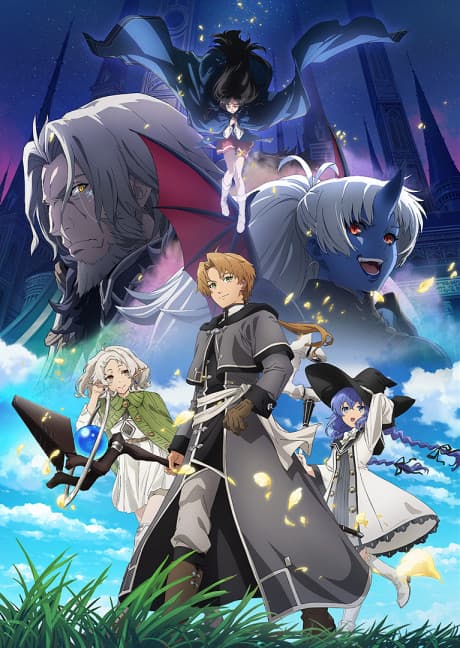
Mushoku Tensei: Jobless Reincarnation has spent three seasons being fairly disciplined about its central conceit: Rudeus Greyrat is a middle-aged man's consciousness reborn into a child's body, and the show has mostly kept that internal, using it for narration and hard-won maturity rather than visual tricks. Episode 11, "Turning Point 4," breaks that pattern. A second version of Rudeus — older, and very much a physical presence in the scene rather than a voice in his own head — shows up on screen, and the internet immediately needed a name for him. Here's what's actually been confirmed, and what's still just fan shorthand.

What happens in "Turning Point 4"
Episode 11 aired in Japan on September 6, 2026, continuing Season 3's adaptation of the light novels. According to the episode's official synopsis, Rudeus returns home after obtaining "Sokas Grass," a plant he needs to treat Nanahoshi's illness, acting on advice given to him by Hitogami, the enigmatic Man-God who has been steering Rudeus toward decisions throughout the series under the guise of helpful advice. It's on that return home that Rudeus encounters the mysterious figure at the center of this whole reveal: someone who looks like an aged version of himself.
The show doesn't spell out who this person is or why he's there within the episode itself. What it does is stage the encounter clearly enough that there's no ambiguity about the resemblance — this is framed as Rudeus meeting a future, older version of himself, not a lookalike or an illusion the show intends to wave away as a trick of the light.

Where "Oldeus" comes from — and why it isn't official
Almost immediately after the episode aired, fans started calling this character "Oldeus," a portmanteau that does the obvious job of distinguishing him from the present-timeline Rudeus without requiring a paragraph of clarification every time someone brings him up. It's a genuinely useful bit of shorthand, and it's likely to stick around in fan discussion regardless of what the show eventually calls him.
But it's worth being precise here: "Oldeus" has not been used by Studio Bind, the light novels, or any reporting outlet as an actual, in-universe name for this character. Anime News Network and Anime Corner, the two outlets covering this story, both treat the character by description — the older Rudeus, the mysterious visitor, the future self — rather than by any confirmed title. If the show or the source novels eventually give him a proper name, it's reasonable to expect it won't be "Oldeus." Until then, treat the term as exactly what it is: convenient fan terminology, not canon.
The Tomokazu Sugita confirmation
The more concretely reportable news out of episode 11 is the casting. Following the episode's broadcast, production confirmed that Tomokazu Sugita voices this older Rudeus. That's a notable detail for a specific reason: Sugita isn't a new addition to the cast being brought in for a new character. He's the actor who has voiced Rudeus's adult, previous-life consciousness — the mental voice of the 34-year-old man whose personality carried over into this fantasy world's infant body — since Mushoku Tensei began.
In other words, this isn't Sugita joining the show to play someone new. It's Sugita's existing role expanding to include a physical, on-screen version of the character whose interior voice he's already been performing for years. That framing matters for how the reveal reads: the show isn't introducing an unrelated character who happens to look like Rudeus, it's using an actor the audience already associates with Rudeus's adult mind to voice a version of him who exists, however briefly, as a tangible presence in another Rudeus's timeline.
Why the casting choice reinforces the reveal
There's a reason production would bother confirming this casting detail publicly rather than letting it stay ambiguous. Sugita's voice has functioned almost like a second narrator throughout Mushoku Tensei — every time young Rudeus's older, more world-weary thoughts interrupt a scene, that's Sugita. Having him voice the physical older Rudeus in episode 11 closes the loop in a way that would feel off if a different actor had been cast instead. It tells the audience, through voice alone, that this figure isn't a stranger wearing Rudeus's face; whatever he is, he's connected closely enough to the "real" Rudeus that reusing the same voice actor is the correct call rather than a coincidence.
It's also a fairly clean piece of production discipline. Studio Bind has built three seasons of goodwill by treating Rudeus's internal voice as a consistent, load-bearing element of the show's tone — equal parts self-aware humor and hard-earned regret from a man who died once already and knows exactly how badly he can still mess things up. Bringing that same voice into a literal on-screen encounter, rather than introducing a new actor's take on an "older Rudeus," keeps that tonal throughline intact at a moment when the show could easily have muddied it.
What's deliberately left out here
It's worth being upfront that there's a fair amount of fan theorizing already circulating about who this older Rudeus is, why he's appeared now, and what specifically happens to present-day Rudeus's world before that point. None of that has been corroborated by Anime News Network, Anime Corner, or any other outlet with direct access to production, and repeating it here as if it were confirmed would be doing readers a disservice. The honest state of things as of this writing is narrower than the fan discussion suggests: an older version of Rudeus appeared on screen in episode 11, Tomokazu Sugita voices him, and the show has not yet explained the mechanism, the timeline, or the stakes behind his appearance. Everything past that is speculation, and it should be treated as speculation until the show or a verified source says otherwise.
That restraint matters more than usual here because Mushoku Tensei has a history of setting up long-game reveals — Hitogami's true motives chief among them — that only pay off once the story is good and ready. Jumping ahead of what's actually been shown risks getting the specifics wrong before the anime has even had the chance to get them right on screen.
How this fits into Season 3 so far
Season 3 premiered July 5, 2026 on Tokyo MX and BS11, with Crunchyroll carrying both the subtitled and dubbed simulcast internationally. The season opened by adapting the "Eris Training Arc," picking up from Volume 13 of Rifujin na Magonote's original light novels, before shifting into a second arc partway through — episode 8, which aired August 16, 2026, introduced what's being referred to as the "Chaos Breaker" arc, bringing in Rikiya Koyama as Perugius Dola, Nanako Mori as Atoferatofe Rybak, and Ayumi Tsunematsu as Sylvaril of the Void.
That structure — two arcs stitched into a single cour, with new cast members arriving mid-season — is worth keeping in mind heading into episode 11's reveal. Mushoku Tensei's storytelling has consistently used arc transitions to escalate what's at stake for Rudeus personally, and a literal older version of him showing up right as the "Chaos Breaker" material is still unfolding suggests the show is building toward something that ties these threads together rather than treating the older-Rudeus encounter as a standalone curiosity.
Studio Bind continues to handle animation for the season, with Ryosuke Shibuya directing, Sanae Shimada and Ryota Furukawa on character designs, and Yoshiaki Fujisawa composing the score. Yuiko Ōhara performs the season's opening theme, with Mika Nakashima on the ending theme — the same production core that's carried the adaptation since it began, which is worth noting given how much of episode 11's impact depends on continuity of voice, tone, and craft rather than any single new flashy addition.
The bigger question the show still hasn't answered
What makes episode 11 land as more than a gimmick is that Mushoku Tensei has earned a level of trust with viewers that a random "meet your future self" scene from a lesser show wouldn't get. This is a series that has been extremely intentional about Rudeus's psychology — his guilt, his growth, his relationship to the life he lived before this one — for three full seasons. An older version of him showing up, tied physically to Hitogami's guidance and Nanahoshi's illness in the same scene, reads like a deliberate structural choice rather than a shock beat thrown in for its own sake.
None of that answers the actual question the episode raises, though: who is this person, in what sense is he "Rudeus," and what does his appearance mean for the timeline the show has been building for three seasons. Sugita's casting confirms the show wants audiences to hear this figure as connected to Rudeus at the deepest level available to it — the same voice that's narrated his innermost thoughts since episode one. Everything else about who "Oldeus" actually is remains, for now, exactly as unresolved as the show has left it on screen.
With the mystery visitor's casting locked in but his identity and motives still unexplained on screen, expect Season 3's remaining episodes to start unpacking why an older Rudeus is turning up in the present timeline — and what that means for Nanahoshi's illness and Hitogami's guidance.