Sparks of Tomorrow: Everything to Know as Kyoto Animation's Meiji-Era Original Heads Into Its Finale
This post discusses plot and character beats through episode 10 of Sparks of Tomorrow, including its ending. If you're not caught up, stop here.
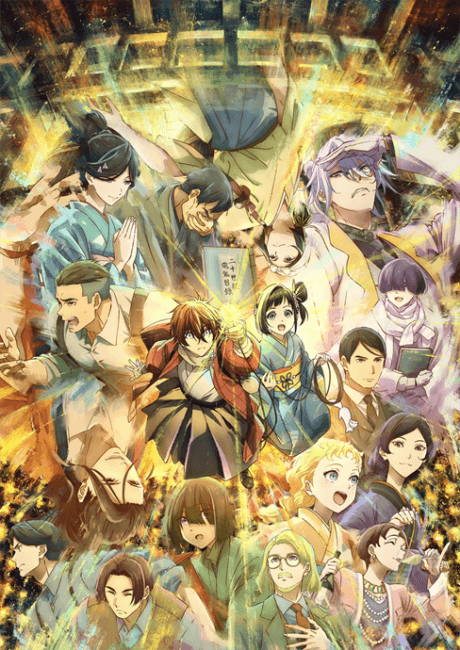
Kyoto Animation's original summer 2026 series has quietly become one of the season's most talked-about shows, and it's now three episodes away from wrapping up. Sparks of Tomorrow — known in Japan as 20 Seiki Denki Mokuroku, or "20th Century Electrical Catalog" — premiered July 5, 2026, and has been airing weekly on Netflix every Sunday since. As of September 10, 2026, episode 10, titled "Engagement Trouble," aired September 6. Episode 11 is scheduled for September 13, episode 12 for September 20, which puts the finale of this 13-episode season around September 27. Here's what the show actually is, who's at the center of it, and where the critical conversation around it stands heading into the home stretch.
The setting: Meiji-era Kyoto, and a book about electricity
Sparks of Tomorrow is set in the summer of 1907 — Meiji 40 by the Japanese era calendar — in the Fushimi area of Kyoto. That's a deliberately specific choice of period and place. Fushimi has long been known as a sake-brewing district, and the show leans directly into that history: its female lead, Inako Momokawa, is the second daughter of a family running a sake brewery. The Meiji era itself is a natural setting for a story about electricity and modernization colliding with tradition — it's the period when Japan was rapidly absorbing Western technology and industrial infrastructure, electricity included, while older social structures like arranged marriage were still very much intact. The show's steampunk-adjacent visual identity and its alternate-history undertones both grow directly out of that tension.
Meet Inako and Kihachi
The show's two leads sit on opposite sides of that old-versus-new divide. Inako Momokawa, 15 and voiced by Sora Amamiya, is being pushed toward an arranged marriage as the second daughter of her family's sake-brewing business — a fairly conventional fate for a girl in her position at the time. Kihachi Sakamoto, voiced by Yūma Uchida, is anything but conventional. He's openly dismissive of tradition and fixated on electricity, a technology still treated with suspicion and novelty by much of the world around him.
The two are drawn together by a shared goal: tracking down a mysterious book called the Electrical Catalog, which turns out to have been written by Kihachi himself as a child. The hunt for that book sends them traveling across Kyoto and Shiga prefectures over the course of the season, and for Inako specifically, the search doubles as a way to delay — or possibly avoid entirely — the marriage she's been steered toward. It's a setup that lets the show function simultaneously as a road story, a coming-of-age drama, and a loose mystery about what Kihachi's younger self actually put into that book and why it matters now.
Who's making it
Sparks of Tomorrow marks the directorial debut of Minoru Ōta, a notable choice for a studio as historically selective about who it hands its original productions to as Kyoto Animation. Series composition comes from Tatsuhiko Urahata, character designs and chief animation direction from Kohei Okamura, and the score from Hitomi Kotō. It's an original production rather than a manga adaptation, but it isn't built from nothing — it's based on a light novel of the same name written by Hiro Yūki, published under Kyoto Animation's own KA Esuma Bunko imprint in August 2018. The novel itself has a bit of pedigree behind it: it received an honorable mention at the 8th Kyoto Animation Awards back in May 2017, meaning this story was already recognized internally by the studio's own award program roughly nine years before the anime it inspired finished airing.
Kyoto Animation has, over its history, built a reputation for original and semi-original productions with a strong emphasis on craft and atmosphere over pure spectacle. Sparks of Tomorrow fits squarely into that lineage — a quieter, character-driven story built around a specific historical setting rather than an action-forward premise, which tracks with the kind of material the studio has generally gravitated toward.
A strong start, critically
For most of its run, Sparks of Tomorrow has been reviewed well — and not in a lukewarm, politely-positive way. Reviewers have described it as "a stunning tribute to the wonder of electricity" and, more emphatically, as "one of the single most stunning anime adaptations of the year." That's high praise for an original series airing in a season stacked with adaptations of long-running, pre-established franchises, and it points to the show doing something reviewers have found genuinely distinctive: using its historical setting and its central metaphor — electricity as a stand-in for progress, curiosity, and the unknown — as more than just set dressing.
Much of that praise has centered on execution rather than plot mechanics alone: the way the show renders its Meiji-era setting, the texture of its period detail, and the way it frames Kihachi's fascination with electricity as something closer to wonder than obsession. For a studio whose original productions tend to live or die on atmosphere and craft, that's the kind of reception Kyoto Animation would want going into a season's back half.
Episode 10 and the mixed reaction
That said, the critical consensus hasn't been uniform across all ten episodes, and episode 10 — "Engagement Trouble," which aired September 6 — is the clearest example of where opinions have split. One review from Anime News Network described the episode as a "slog," criticizing it for repeating a theme the show had already established rather than pushing the story or its ideas forward. That's a fair critique to flag heading into the final stretch: with only three episodes left after it, an episode that reviewers feel is treading water is a notable speed bump, whatever the reason behind it.
Not every reaction to episode 10 was negative, though. Another take on the same episode found real value in its comic relief, specifically singling out scenes involving the character Yosuke for praise — both the animation work and the music accompanying those beats were called out as highlights, suggesting the episode worked better as a change of pace and tone than as a plot-advancing chapter. The episode reportedly closes on a cliffhanger, which — combined with the "engagement" of its title — suggests the marriage plot that's been hanging over Inako for the whole season is coming to a head just as the show heads into its final three episodes.
Taken together, the two reactions to episode 10 aren't really contradictory so much as they're evaluating different things: one is judging the episode on whether it moves the season's central themes forward, and finding it repetitive; the other is judging it on individual scene execution, and finding plenty to like. Both readings can be true of the same episode, and it's worth keeping both in mind rather than treating episode 10 as either a disaster or a non-event.
Why the mixed episode matters for the finale
Heading into a three-episode home stretch, an episode that some critics read as circling back on established ground rather than escalating puts real pressure on episodes 11 through 13 to deliver both the emotional payoff the season has been building — Inako and Kihachi's relationship, the fate of her arranged marriage, and whatever the Electrical Catalog ultimately turns out to mean — and enough forward momentum to justify the slower pacing of the episode right before it. Cliffhanger endings tend to work best when what follows actually capitalizes on the tension they create, and episode 10 leaving the "engagement trouble" of its title unresolved gives episode 11 an immediate, concrete thread to pick up rather than a vague thematic one.
What's genuinely still unknown
It's worth being upfront about what hasn't been confirmed anywhere in the reporting around this show. There's no confirmed correspondence between specific episodes and specific volumes or chapters of Hiro Yūki's original light novel, so viewers shouldn't assume the anime is tracking the book beat-for-beat at any given point — the adaptation could be compressing, expanding, or rearranging material in ways that simply haven't been detailed publicly. Similarly, while Kyoto Animation's broader history is well known, there's no reporting tying Sparks of Tomorrow specifically to any deliberate narrative about the studio's recovery in the years since 2019 — it's an original production from a studio with a long, well-documented history, not a project that's been explicitly framed around that history by the people making it.
Catching up: what you need to know if you're jumping in now
If you haven't watched any of Sparks of Tomorrow yet and are considering starting now, three episodes from the finale isn't necessarily too late — this is a character-driven story more than a heavily serialized plot-mystery, and the core hook (Inako facing an arranged marriage, Kihachi chasing the Electrical Catalog he wrote as a child, the two of them crossing Kyoto and Shiga together) is easy to pick up without a decade of prior lore. That said, given how strongly the show has been reviewed through most of its run, starting from episode 1 rather than jumping in mid-season is going to be the better experience for actually feeling the payoff the finale is building toward.
Bottom line
Sparks of Tomorrow has spent most of its 13-episode run earning some of the strongest critical praise of any original anime this year, built on its Meiji-era setting, its central electricity metaphor, and the dynamic between Inako Momokawa and Kihachi Sakamoto. Episode 10 introduced the first real crack in that consensus — a "slog" to one reviewer, a showcase for strong comic-relief execution to another — but it also set up the engagement-focused cliffhanger that episodes 11 and 12 will need to pay off before the season closes out around September 27. Whether the finale sticks the landing on both the romance and the mystery of the Electrical Catalog is the last open question of the season, and it's one only three more Sundays away from being answered.
Episode 11 airs September 13, episode 12 on September 20, and the 13-episode season is set to close out around September 27 — likely resolving whether Inako's arranged marriage goes through and what's actually inside the Electrical Catalog.