Bleach TYBW Part 3 Episode 13 Recap: "The Visible Answer" Explained
Full spoilers for Bleach: Thousand-Year Blood War Part 3 ("The Conflict") finale, Episode 13, "The Visible Answer," the first half of the two-episode finale special. If you haven't watched, stop here.
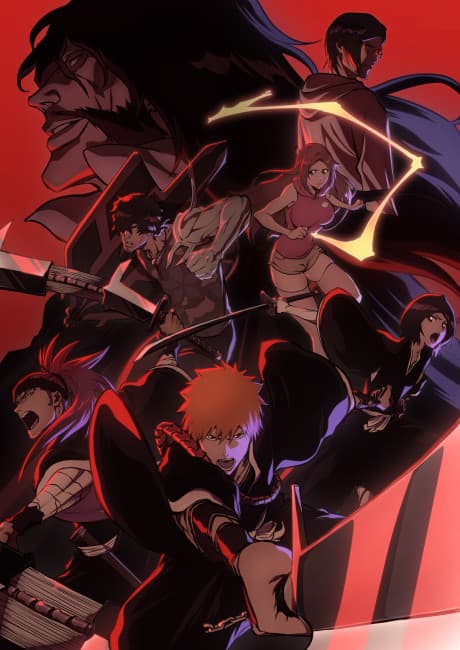
Part 3 of Bleach: Thousand-Year Blood War closes out with a finale that Studio Pierrot and the streaming platforms promoted as a "one-hour special." What actually aired was two distinct episodes — "The Visible Answer" and "My Last Words" — broadcast back to back on the same day rather than stitched together into a single, oversized episode file. That distinction matters for how this recap is structured, and it's worth understanding before diving into what happens here, because "The Visible Answer" is a complete half of the finale in its own right, with its own pacing, its own cliffhanger, and its own critical reception.
When and where to watch it
"The Visible Answer" is the thirteenth episode of Bleach: Thousand-Year Blood War Part 3, "The Conflict," which ran weekly in Japan from October 5 through December 28, 2024, closing out with this episode and "My Last Words" airing together as the season's finale event. Tomohisa Taguchi remains Chief Series Director for the cour, with Hikaru Murata credited on episode direction, Masashi Kudo on character designs, and Shirō Sagisu again scoring. As with the rest of this adaptation, it isn't on Crunchyroll — it streams on Hulu in the US, with Disney+ carrying the international release.
The "one-hour special" framing is worth clarifying up front. Anime News Network's Kennedy, reviewing episodes 13 and 14 jointly, noted she was "glad episodes 39 and 40 weren't smashed together into one rushed episode" — referencing the franchise's continuous episode count across both broadcast eras. That's a meaningful production choice, and one that reportedly differs from how Part 2 handled its own finale stretch, where content was compressed more tightly into fewer discrete half-hours. Here, each episode gets to breathe as its own unit, even while functioning as two halves of a single story beat.
Askin's Deathdealing takes out three fighters at once
The episode opens on the fallout of Askin Nakk le Vaar's fight against Ichigo Kurosaki, Chad, and Orihime Inoue, and it's not a fight so much as a demonstration of just how dangerous Askin's Schrift actually is. His power, "Deathdealing," lets him convert essentially anything — including ambient Reishi itself — into a lethal poison specifically calibrated to whichever opponent he's facing, while simultaneously rendering himself immune to any attack that connects with him. Against three fighters who've spent this entire war relying on raw power and improvisation, that combination is close to unbeatable. Ichigo, Chad, and Orihime are all incapacitated in fairly short order, and the episode doesn't pretend otherwise — this is presented as a genuine, unambiguous defeat rather than a temporary setback they claw their way out of within the same episode.
It's a bleak turn for three characters who've carried much of Part 3's earlier momentum, and it sets up exactly the kind of gap that needs a big name to step into.
Yoruichi's long-awaited entrance
That big name is Yoruichi Shihoin, and her arrival is the episode's clear emotional and structural centerpiece. She steps into the fight against Askin and immediately activates Shunko, her signature technique fusing Hakuda and Kido into a single offensive form. This is a moment the fanbase has been anticipating for a long stretch of the adaptation, and critics singled it out specifically — GameRant's Naledi Ramphele praised the animation in this sequence as "brilliant" and "incredibly flashy," and it's easy to see why. After an episode spent watching Askin dismantle three of the show's leads with barely any resistance, Yoruichi's entrance functions as the visual and tonal reset the story needs before the finale can escalate any further.
Yushiro joins in, and Askin adapts fast
Yoruichi isn't alone for long. Her younger brother, Yushiro Shihoin, enters the fight as well, bringing his own version of Shunko to bear against Askin in a large, decisive-looking attack. For a moment, it looks like the siblings together might simply overwhelm him.
Askin's power doesn't allow for that kind of moment to last, though. After nearly being killed by Yushiro's Reiatsu, Askin's Deathdealing lets him adapt — he becomes immune to that specific type of Reiatsu going forward, closing off the exact tool that almost finished him. When Yushiro pushes forward with another attack anyway, against Yoruichi's explicit warning not to, Askin punishes the mistake immediately, shooting him through the chest with a Heilig Pfeil. It's a sharp, unsentimental beat — the kind of moment where the story makes clear that Askin's power isn't just strong, it's actively adaptive, and repeating a technique against him is a losing strategy no matter how powerful that technique is.
Uryu returns to the Wahrwelt, and something's changed in Jugram
While the Askin fight dominates the episode's action, its more consequential material happens back in the Wahrwelt, where Uryu Ishida returns to confront Jugram Haschwalth directly. The official pre-air synopsis for this episode described Jugram as seeming "different than before," and the episode backs that framing up — this isn't the same steady, controlled Jugram viewers have seen up to this point. Something in him has shifted, and the show is deliberately withholding exactly what that means until the confrontation plays out further.
Part of what makes this scene land is a retroactive reveal buried inside it: Uryu, we learn, deliberately avoided striking Renji Abarai's actual spiritual-power centers during their earlier fight back in Episode 7. At the time, that fight read as a fairly conventional, high-stakes duel between two combatants pushed to their limits. Recontextualized here, it becomes something else entirely — a fight Uryu was, on some level, never trying to win in the way it looked like he was. ANN's Kennedy called this "so much more believable a source of motivation for Uryu than, say, an overwhelming love for his friends," and it's a sharp read on why the reveal works as well as it does. It doesn't retroactively soften Uryu into a straightforward hero; it recontextualizes him as someone who's been playing a longer, more calculated game than the story let on in the moment.
The episode adds one more piece to that puzzle: Uryu is shown lacking the "Heiligenschein," the halo-like marker that other Sternritter visibly display. It's a small visual detail, but the show is clearly using it as a hint pointing toward Uryu's true nature and divided loyalties — the kind of detail that rewards close attention without the episode needing to spell it out directly.
Jugram, notably, seems to already know more than he should. The episode ties this back to his own ability — he's revealed to be holding onto Yhwach's precognitive "Almighty" foresight while Yhwach himself sleeps, which is how Jugram was able to see through Uryu's intentions all along. It reframes their entire confrontation: this isn't two allies drifting into conflict by surprise, it's Jugram having already known where this was headed.
Gerard's transformation and a line worth remembering
Elsewhere, Gerard Valkyrie gets his own spotlight. After sustaining serious wounds earlier in the war, his "Miracle" Schrift transforms and enlarges him, and he throws himself into battle against a group of Shinigami. The episode gives him a line that sums up how his power fundamentally works: a miracle, as he puts it, is only a miracle if it occurs in a moment of crisis. It's a fitting piece of characterization for a Schrift built entirely around turning near-death into strength, and it slots Gerard in as one more escalating threat still active while the episode's bigger storylines play out elsewhere.
How it was received
Reception to this half of the finale was strongly positive, even accounting for the fact that most outlets reviewed episodes 13 and 14 as a joint pair rather than separately. Anime News Network's community score for the two-episode finale sat at 4.2 out of 5, with Kennedy calling it her "favorite yet of the three" cours and praising the animation and fight choreography as "some of the all-time best looking fights I've seen in anime." CBR scored the finale pair 9 out of 10, writing that it "blew almost everything that came before it away," and specifically calling out the anime-only flashback material added to flesh out Uryu's defection — a contrast to the manga, where CBR noted "Ishida just gave a few throwaway lines to confirm his true allegiances before his duel with Haschwalth commenced." GameRant's coverage focused heavily on the Yoruichi-Askin fight, praising its animation as genuinely standout even within a season that's had no shortage of high-profile action sequences.
Bottom line
"The Visible Answer" earns its place as the first half of a genuine event finale rather than functioning as filler before the real ending. Askin's Deathdealing establishes him as a legitimate threat capable of sidelining three of the show's leads in one stroke, Yoruichi's entrance delivers on a long-building fan expectation without undercutting the tension Askin's power creates, and the Uryu-Jugram material recontextualizes an entire earlier fight in a way that makes Uryu's arc feel more deliberate than it initially appeared. None of it resolves here — Askin is still standing, Yushiro is down, and Uryu and Jugram's confrontation is only just getting started. All of that carries directly into "My Last Words," the second half of this same finale event, which aired the same day and picks up every one of these threads without a week's gap in between.
This episode runs directly into Episode 14, "My Last Words," which aired the same day and picks up Uryu and Jugram's confrontation along with whatever's left of Askin, Yoruichi, and Yushiro's fight.