Bleach TYBW Episode 1 Recap: "The Blood Warfare" Kicks Off the Final War
Full spoilers for Bleach: Thousand-Year Blood War Episode 1, "The Blood Warfare." If you haven't watched it yet, stop here.
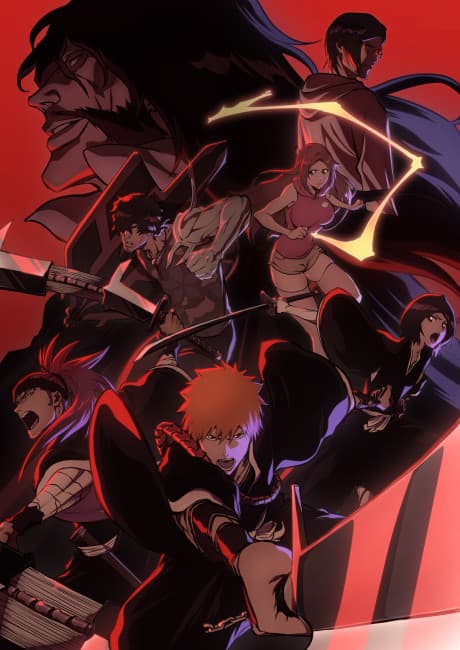
Bleach's final act didn't waste time easing viewers back in. "The Blood Warfare," the premiere episode of Bleach: Thousand-Year Blood War, opens with a burst of reintroduction and then spends its second half undercutting all of it, closing on an invasion the Soul Society never saw coming. For a season built on adapting Tite Kubo's finished ending, it's a premiere that plays its hand carefully — establishing just enough dread to make clear this isn't a continuation of the same rhythms the series had settled into before its hiatus.
When and where it aired
"The Blood Warfare" premiered in Japan on October 11, 2022, in its late-night broadcast slot, according to Wikipedia's episode listing for the season. International viewers got access shortly after, with the episode rolling out on Hulu in the US and Disney+ internationally starting around October 10, 2022 depending on region and time zone, per Dualshockers' coverage of the premiere's release schedule. Worth flagging clearly for anyone trying to track this down: this series streams on Hulu and Disney+, not Crunchyroll — a distinction that trips up a fair number of viewers used to finding seasonal anime on Crunchyroll by default.
Who made it
Thousand-Year Blood War is a Studio Pierrot production, with Tomohisa Taguchi serving as director and series composer — meaning he's responsible for both the overall visual direction and the structural decisions about how the manga's final arc gets broken into episodes and seasons. Masashi Kudo handled character designs for the adaptation, translating Kubo's late-series art style into something workable for consistent animation across a long final run. On the score, Shiro Sagisu returned as composer, the same role he held on the original Bleach anime — a detail that matters more than it might initially seem, since Sagisu's music is deeply tied to how longtime fans experience the franchise's biggest moments. Having him back for the ending rather than handing the score to someone new is one of the clearer signals that this adaptation was built with continuity, not reinvention, as the priority.
What actually happens in the episode
The Japanese title for this arc is BLEACH 千年血戦篇 (Burīchi: Sennen Kessen-hen), and the premiere spends its first stretch doing what most long-running shonen premieres after a hiatus tend to do: reintroducing the cast through action. Ichigo Kurosaki and his circle of friends get reestablished through a series of combat-driven sequences rather than a slower character-catchup approach, which sets a tone the rest of the season mostly sticks to — show, don't recap.
That reintroduction gets interrupted almost immediately by the episode's actual inciting threat. A new Quincy antagonist confronts Ichigo directly, and the confrontation isn't framed as a casual skirmish — it's specifically built around an attempt to seal his Bankai, which is about as direct a statement of intent as an enemy can make against a Soul Reaper. Sealing a Bankai isn't a side objective; it's an attack on the core of what makes a Soul Reaper dangerous in the first place, and opening the season with that specific threat immediately reframes the stakes for anyone who remembers how central Bankai has been to every major fight Ichigo's had up to this point.
The Hollow disappearances
Running in parallel to Ichigo's confrontation is a second thread: the Soul Reapers investigating a wave of mysterious Hollow disappearances. On its own, this could read as a minor mystery-of-the-week hook, but placed next to everything else happening in the episode, it functions as the first piece of evidence that something larger and more coordinated is moving against the Soul Society before anyone in it has a name to put to the threat. It's a classic setup device — seed the unease early, let the audience notice something's wrong well before the characters have the full picture — and the episode uses it efficiently rather than dwelling on it.
The invasion that closes the episode
The premiere's back half pivots to the Soul Society itself, where the Wandenreich — the Quincy faction driving the season's entire conflict — infiltrates directly. Rather than opening with a straightforward battle, the infiltration is staged as a message: the Wandenreich deliver a dying Soul Reaper lieutenant into the Soul Society as a warning. It's a brutal, efficient way to establish a new villain faction's credibility without spending an entire episode on exposition — showing what they're capable of tends to land harder than having a character explain it. That the Wandenreich can reach a lieutenant, kill or gravely wound them, and deliver the body as a statement all within the walls the Soul Society is supposed to be able to defend is the episode's clearest signal that this war isn't going to play out on the Soul Reapers' terms.
It's worth being precise here about what the episode does and doesn't confirm. Several secondary aggregator summaries covering the premiere have suggested the Quincy King — later revealed as Yhwach — is glimpsed or introduced within episode 1 itself. That's not something strongly confirmed by Anime News Network's review coverage of the episode specifically; the King-focused commentary in ANN's writeup is more clearly tied to episode 2's content rather than episode 1's. Given that, it's more accurate to treat any King appearance in the premiere as reportedly included by some secondary sources rather than to state it as a confirmed episode 1 beat.
How it was received
There isn't a standalone Anime News Network review for episode 1 on its own — critic Nicholas Dupree covered it together with episode 2 in a combined review published October 18, 2022, a week after the premiere aired. That pairing is worth keeping in mind for anyone searching for episode-specific critical reaction: most contemporary coverage of "The Blood Warfare" treats it as half of a two-episode opening statement rather than an isolated unit. The overall tone of that combined review leaned positive, with the premiere generally read as a competent, high-energy reintroduction that trusted action and a cold open on the invasion to do the work of hooking viewers rather than leaning on a slower table-setting approach.
Why the structure of this premiere matters
Thousand-Year Blood War had one of anime's longer hiatuses behind it — Bleach's original run ended in 2012 without adapting Kubo's finale, and the wait for this final arc stretched a full decade. That gap puts unusual pressure on a premiere: reintroduce a cast some viewers haven't thought about in years, signal that the new threat is legitimately dangerous, and do it all without the show feeling like it's stalling before getting to the "real" story. "The Blood Warfare" handles that pressure by refusing to slow down. Instead of a clip-show-style catchup or a talky info dump about the Wandenreich's history, it lets a Bankai-sealing threat and a dying lieutenant's body do the explaining. Viewers don't need a lecture to understand the Wandenreich are dangerous; they've just watched proof.
Setting up the season's structure
Because this adaptation is working from a manga arc that was already complete on the page, the premiere's choices read less like reactive pacing decisions and more like a production team that knew exactly how much groundwork it needed to lay before the story could start paying things off. The Hollow-disappearance mystery, the Bankai-sealing Quincy, and the infiltration of the Soul Society aren't three unrelated hooks — they're the same threat approached from three different angles, all converging on the same unanswered question the episode deliberately leaves open: who exactly is behind this, and what do they actually want.
Bottom line
"The Blood Warfare" isn't trying to be a standalone showcase episode the way some season premieres are. It's closer to a controlled fuse — reestablish the cast fast, plant three separate threads pointing at the same unseen threat, and end on the single most alarming image it can manage without overcommitting to reveals the story isn't ready to make yet. Combined with returning production talent across direction, character design, and score, it's a premiere built to reassure longtime fans that the adaptation understands what it's inheriting, while still holding back enough that episode 2 has real work left to do.
Episode 1 ends with the Soul Society staring down an enemy it can't yet identify. Expect episode 2 to dig into who the Wandenreich actually are, put names to the Quincy already shown, and start pulling Ichigo Kurosaki back into a war he thought was finished.