'Primetime' Has a Problem: The Real Chris Hansen Won't Sign Off on A24's Movie About Him
This piece discusses the real-life events the film dramatizes, including Bill Conradt's death, and describes plot and character details from reviews of the finished film.

Most awards-season dramas about real people get some kind of blessing, or at least silence, from the person they're depicting. "Primetime" is not getting that. A24's Venice competition title about Chris Hansen and the making of "To Catch a Predator" premiered on September 5, 2026, to strong reviews and a lengthy standing ovation. It's also currently being publicly disowned by its own subject, who is running an actual advertising campaign inside the theaters that will show it.
That's an unusually messy real-world subplot for a film to be carrying into its September 25 US theatrical release, and it's worth separating from the movie itself — because the two stories, the film's quality and the fight over its existence, are genuinely different conversations.
What "Primetime" Actually Is
"Primetime" is directed by Lance Oppenheim, making his narrative feature debut after building a reputation in documentary and hybrid nonfiction filmmaking, and written by Ajon Singh. The film is inspired by Luke Dittrich's 2007 Esquire article "Tonight on Dateline This Man Will Die," which reconstructed the 2006 case of Bill Conradt, a Texas assistant district attorney who died by suicide after a "To Catch a Predator" sting targeted him and a SWAT team moved in on his home while NBC's cameras rolled.
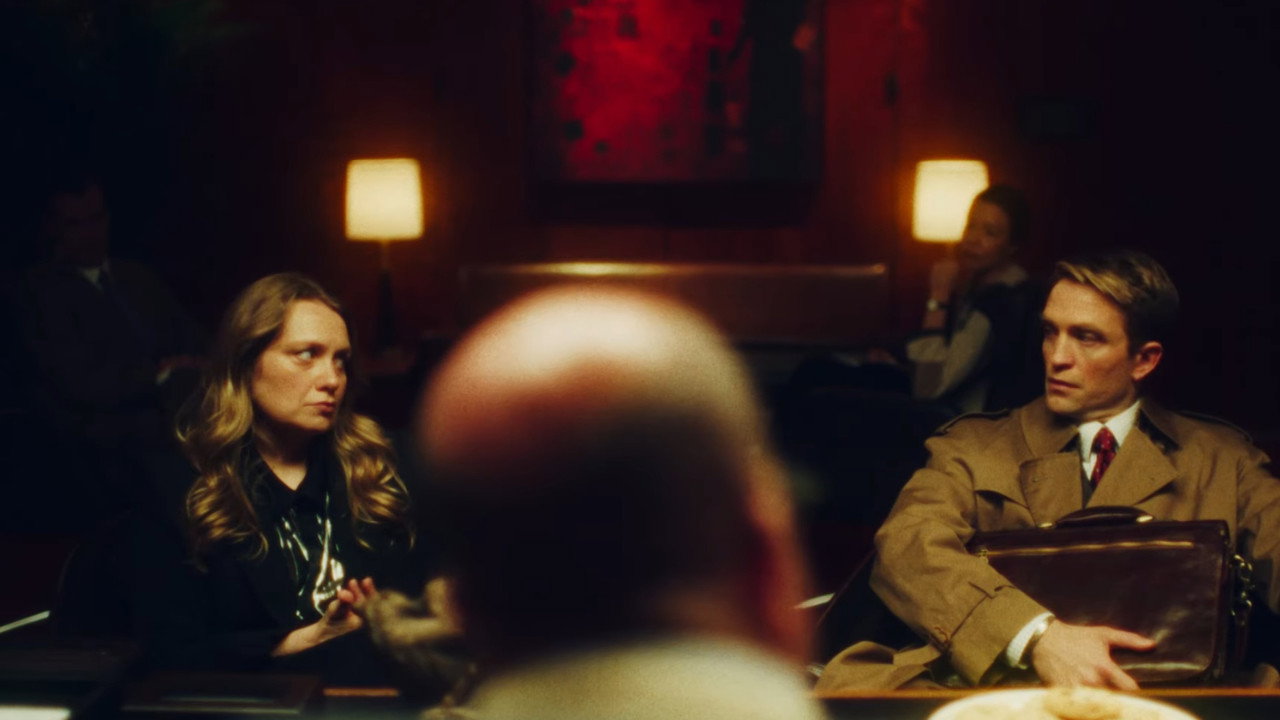
Robert Pattinson plays Hansen. Alex Winter plays Conradt. The supporting cast includes Merritt Wever, Skyler Gisondo, Anna Faris, and Phoebe Bridgers in her acting debut, with Jeff Zucker — the real former NBC Universal executive — appearing as himself. Pattinson and Ari Aster both produced. The film runs 110 minutes and dramatizes not just the Conradt case itself but the internal machinery of NBC building "To Catch a Predator" into a ratings hit, which is the more unusual angle here: this isn't a straightforward Hansen biopic, it's a film about how a network turned a moral panic into appointment television.
That framing matters for understanding why the real Hansen is furious. A film about the show's production apparatus, rather than a hagiography of its host, was never going to be flattering.

Venice: A Long Ovation and Solid Numbers
"Primetime" premiered in competition for the Golden Lion at the 83rd Venice International Film Festival on September 5, 2026. As covered in our roundup of this year's Venice lineup, it was one of the stranger, more unpredictable swings in a stacked competition slate that also included Danny Boyle's "Ink" and Martin McDonagh's "Wild Horse Nine." It turned out to be one of the better-reviewed swings, too.
The standing ovation that followed the premiere is one of those festival details that gets reported with suspiciously precise but conflicting numbers. Variety, The Hollywood Reporter, and Yahoo Entertainment all describe it as running "nearly eight minutes" or roughly seven minutes, while Deadline puts it at nine minutes. Nobody appears to have actually timed it with a stopwatch and published footage with a running clock, so treat the exact figure as contested rather than settled — what's consistent across every outlet is that it went on long enough to be worth reporting as a headline detail, which by Venice standards signals a genuinely strong room reaction.
The review aggregates back that up. Rotten Tomatoes has the film sitting around 93 to 94 percent based on 33 critic reviews as of this writing, and Metacritic has it at 73 out of 100 — a healthy, if not universally rapturous, critical consensus. Critics have singled out Pattinson's performance and Oppenheim's direction specifically, with multiple reviews framing this as a genuine leap for Oppenheim moving from documentary work into narrative filmmaking.
The Dissent: Is It Actually Saying Anything?
Not every review has been a rave, and the more interesting criticism isn't about craft — it's about what the film is actually arguing. Awards Watch's review flagged "Primetime" as morally shallow: skilled at recreating the internal machinery of "To Catch a Predator" and NBC's production process, but reluctant to actually interrogate it. The critique, in short, is that the film functions more as an entertaining thriller about spectacle than as a real critique of the spectacle itself.
That's a meaningful distinction for a film built around a case that ended in a real man's death. A movie that recreates the mechanics of a reality-TV sting with technical precision but stops short of asking hard questions about why it happened, or what it says about the media apparatus that produced it, risks becoming the thing it's ostensibly examining. Whether "Primetime" clears that bar or not seems to be exactly where critical opinion splits — the film is broadly well-reviewed, but the dissenting voices are dissenting on a substantive point, not a surface-level one.
Then the Real Chris Hansen Showed Up
Here's where the story stops being about the movie and starts being about the mess around it. The real Chris Hansen has publicly called "Primetime" an "insult" and a "complete work of fiction." He's said the film turns his work into "essentially a horror film," and described Pattinson's performance as "overly dramatic" — while still conceding, based on the trailer alone, that it's "a pretty good imitation."
That last detail is the crux of the problem: Hansen is criticizing a film he says he hasn't actually seen.
The NDA Fight
According to Hansen's own public account, he was invited to an advance screening of "Primetime" ahead of its release. He says he refused to sign what he called a "very restrictive agreement," which he claims would have forced him to "sign away my rights to my name, image and brand." A24 and sources close to the production have pushed back on that characterization, saying the NDA was a standard advance-screening confidentiality agreement and did not require Hansen to waive rights to his name, image, or brand.
There's no way to independently adjudicate that dispute from the outside — it comes down to the actual language of a document neither side has published. What's clear is that the two sides have irreconcilable accounts of the same piece of paper, and the practical result is that Hansen has spent weeks publicly criticizing a film in detail without having watched it. That's an unusual position for a real person depicted in a based-on-true-events drama to put themselves in, and it's arguably done more to keep "Primetime" in headlines than any conventional marketing push A24 could have bought.
Hansen's Counter-Programming Stunt
Hansen didn't stop at press statements. He reportedly purchased preshow theater advertising on every screen showing "Primetime," using the ad slots to promote his own streaming service, TruBlu, and leaning on his original "To Catch a Predator" catchphrase in the ad copy.
It's a genuinely clever, slightly absurd move — the subject of a movie buying ad space inside the theaters screening it, to advertise a competing product built on the same persona the movie is dramatizing. It also means that audiences walking into "Primetime" on opening weekend will, by design, see Hansen's own pitch for himself immediately before watching Pattinson's version of him. Whether that helps or hurts the film's reception is genuinely unclear — it could read as a petty stunt that reinforces the film's central point about media self-mythologizing, or it could give Hansen the last word right before the lights go down.
Pattinson's Response
Robert Pattinson has been notably even-keeled about the whole thing. He's said he hopes Hansen will like the movie, calling him "magnetic," and offered this framing: "I would hope the amount of inspiration his character has given a lot of people for years is some kind of compliment." It's a diplomatic answer that sidesteps the NDA fight entirely and reframes Hansen's cultural footprint — someone who inspired a persona significant enough to build a film, a performance, and now a genuine public dispute around — as a form of flattery rather than an insult.
A24 has kept its own public comment minimal, beyond confirming that the screening agreement offered to Hansen was standard. That's a fairly typical studio posture in a dispute like this: don't escalate, don't concede, let the film's reception speak for itself once it's actually in theaters.
Why This Kind of Fight Keeps Happening
"Primetime" isn't the first based-on-a-real-person film to run into resistance from its subject, and it won't be the last. Biographical and true-crime-adjacent dramas sit in an uncomfortable legal and ethical space: filmmakers generally don't need a subject's permission to dramatize publicly reported events and public figures, but that legal reality doesn't stop subjects from feeling entitled to control their own image, especially when the resulting film isn't flattering. Hansen built an entire second career — books, public appearances, and now TruBlu — on the "To Catch a Predator" persona. A film that recasts that persona as the engine of a story that ends in a real death is always going to threaten the version of the narrative he's spent two decades building around himself.
What makes this case sharper than the usual pre-release grumbling is the specificity of the fight. This isn't a vague statement about creative liberties. It's a concrete, documented dispute over a legal agreement, a refusal to watch the finished film, and a direct-response advertising campaign aimed at the exact audience walking into theaters to see it. That's an escalation most subjects of based-on-true-events films don't bother with, and it says something about how seriously Hansen is treating the reputational stakes here.
The Real Case Underneath All of This
It's worth not losing sight of what "Primetime" is actually dramatizing underneath the marketing fight. Bill Conradt was a real assistant district attorney in Rockwall County, Texas, who died by suicide in November 2006 after "To Catch a Predator" producers, working with local police, targeted him in a sting and a SWAT team surrounded his house while NBC's crew filmed. Luke Dittrich's Esquire article, published in 2007, is widely regarded as one of the more clear-eyed pieces of journalism examining what happened — not just to Conradt, but inside the production of the show itself, including the pressure NBC and Dateline were under to keep generating ratings-driving segments.

That's genuinely heavy source material for a film to adapt, and it's a large part of why the "morally shallow" critique from Awards Watch carries weight. A film built around a real man's death, produced by a network chasing ratings, has an obligation to reckon with that weight rather than simply restaging it as tense, well-crafted drama. Whether "Primetime" clears that bar is a question audiences and critics will keep arguing about well past its Venice premiere and into its wide theatrical run.
What Happens Next
"Primetime" opens theatrically in the US on September 25, 2026, via A24. Hansen's TruBlu ad campaign is expected to keep running in theaters showing the film through that window, which means the real-world dispute isn't fading before release — if anything, it's built to peak right as general audiences start buying tickets. Expect Hansen to keep commenting publicly as reviews and audience reactions roll in, particularly if the film performs well at the box office or becomes part of the awards conversation coming out of Venice.
The more interesting long-term question is whether Hansen ever actually watches the finished film. If he does, and his position softens or hardens in response to the real thing rather than the trailer, that's a genuine second act to this story. If he doesn't, "Primetime" will keep existing in the strange position of being praised by critics for accuracy and craft while its real-life subject insists, without having seen it, that it's fiction.
'Primetime' opens theatrically in the US on September 25, 2026, with Hansen's counter-marketing campaign for TruBlu running in the same theaters showing it.