Mahaprabhu Jagannath Review Roundup: A 4.5-Star Rave Couldn't Stop a ₹1.23 Crore Opening
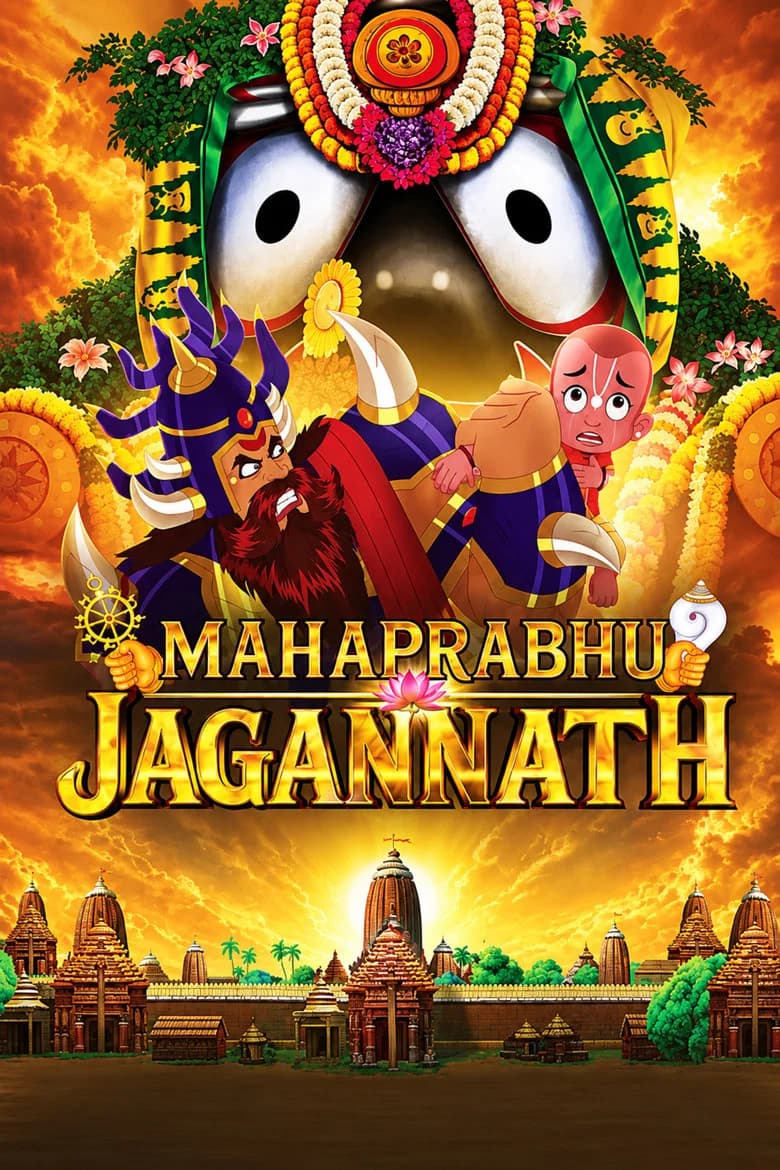
Mahaprabhu Jagannath opened in theatres on September 4, 2026, released simultaneously in Hindi, Odia, and Telugu through Cinepolis India. It's a rare thing on the Hindi release calendar: a fully animated mythological film, aimed squarely at the festive-season family audience and built around a deity whose iconography — the Jagannath temple in Puri, the annual Rath Yatra — is instantly recognizable to a huge swath of the country, even if the character has almost never anchored a mainstream animated feature before. Two weeks on, the film has a genuinely split critical reception on record and a box office outcome that neither side of that split predicted: a worldwide gross, according to trade tracker Sacnilk, of just ₹1.23 crore.
What the film actually is
Mahaprabhu Jagannath is directed by Shripad Warkhedkar, with story and screenplay credited to Pallavi Sharma. Music comes from Aviral Kumar and Arjit Shrivastava, and the film is produced by Ele Animations. It runs 1 hour and 44 minutes — a lean runtime for a mythological, closer to the length of a well-paced animated feature than the sprawling multi-hour epics Hindi mythological cinema sometimes stretches toward.
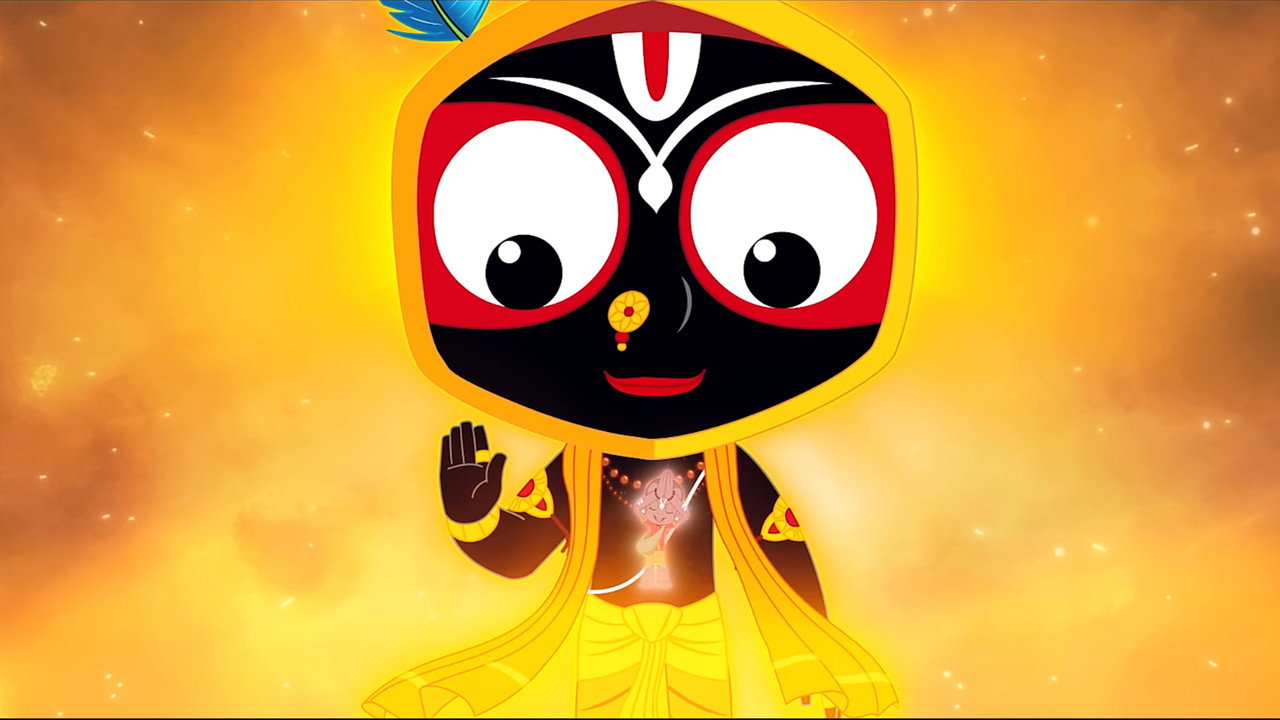
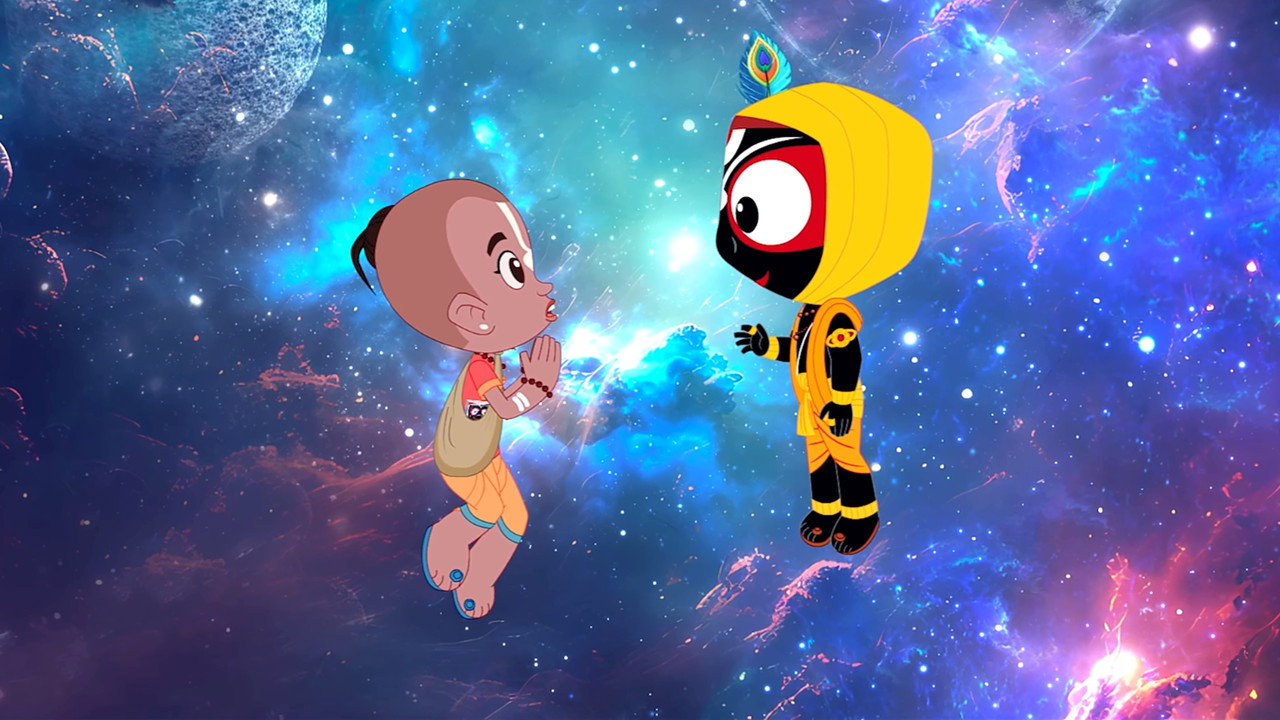
The story is set in Kalyug and centers on Lord Jagannath — referred to in the film as "Jagan" — alongside his companions Balaram and Garud, as they confront an asura named Ahamasur. Ahamasur was once a boy named Aham Kumar, and the film's central threat is his creation of "Ahamlok," a mercury-like realm where he traps devotees and divine beings alike. Getting anyone out means passing through three other realms in sequence — Naag Lok, Paataal Lok, and Swarg Lok — before a climactic confrontation between Jagan and Ahamasur. What distinguishes the resolution, per the film's own framing, is that Jagannath doesn't defeat Ahamasur through weapons or destruction, but through wisdom — a deliberate departure from the battle-driven climaxes that dominate most mythological adaptations, animated or otherwise.
The voice cast is led by Prachi Save Saathi as Lord Jagannath, with Sonal Kaushal voicing Balaram and Aadityaraj Sharma voicing Ahamasur.
A release date that isn't fully settled
Before getting into the reception, there's a wrinkle worth flagging plainly rather than smoothing over. The wide Hindi/Odia/Telugu release through Cinepolis India is dated September 4, 2026, and that's the date this piece is treating as the film's actual theatrical opening. But at least one box-office tracker lists the film's run for its "Odia" version specifically as starting July 17, 2026 — nearly seven weeks earlier than the wide release. Nothing in the available reporting resolves that discrepancy. It's possible Mahaprabhu Jagannath had a standalone, more limited Odia-language release ahead of the broader multi-language rollout, which would make some sense given the film's subject matter and Odisha's specific connection to the Jagannath temple. It's also possible the tracker simply has an error. Either way, treat the July date as unconfirmed and unreconciled rather than established fact.
The positive review: a 4.5-star rave
The clearest endorsement Mahaprabhu Jagannath received came from Cine-Tales, where critic Praneet Samaiya gave the film 4.5 out of 5 stars and called it "a must-watch animated film for both kids and adults." That's about as strong a positive as a review gets, and the review backs it up with specifics rather than just a high number.
Samaiya praised the film's "strong screenplay" and brisk pacing, describing a story that moves through its mythology, adventure, humour, and spirituality without dragging. The review singled out the film's use of pure Hindi dialogue as "beautiful" — a notable detail, since a lot of contemporary Hindi animation leans on a more colloquial, code-switched register aimed at younger audiences, and a film choosing to commit to fuller, more classical Hindi for a mythological subject is a specific stylistic choice rather than a default. The climax — the wisdom-over-weapons confrontation between Jagan and Ahamasur — is described as "visually striking and emotionally powerful," suggesting the film's resolution lands as more than just a thematic statement on paper.
Prachi Save Saathi's voice work as Jagannath gets specific praise as a standout, and the review names the song "Jai Jai Jagannath" as a highlight of the soundtrack. Even this positive review isn't a completely uncomplicated rave, though — the same piece concedes that the animation quality "could have been better in places," a caveat that matters more than it might in an isolated review, because it's a criticism that resurfaces, in a much harsher form, in the film's other major review.
The negative review: "too ordinary to make a mark"
The other review on record, from Free Press Journal, also appearing on Film Information, lands in almost the opposite place. Its verdict sums the film up as "too ordinary to make a mark at the ticket windows" — a headline judgment that's as much a box-office prediction as it is a critical assessment. The review argues the script "does not give the viewers a high," and that the film is short on genuinely elating moments, the kind of standout scenes or beats that stick with an audience walking out of a theatre. Both the dialogue and the animation are described as simply "ordinary" — not broken or embarrassing, just unremarkable, which is arguably a harder thing for a film to recover from critically than being actively bad.
Worth noting: because this review appears in essentially the same form on both Free Press Journal and Film Information, it reads as a single syndicated verdict circulating across two outlets rather than two independent critics arriving at the same conclusion. That matters for how much weight to give the negative side of this split — it's one critical voice, not two.
That same review frames Mahaprabhu Jagannath explicitly as a box-office rival to Hanuman Ansh, another spiritually themed film occupying the same release window. It's a useful piece of context for understanding how the review positions the film competitively, but Hanuman Ansh's own trajectory — a film that turned a tiny opening into one of the year's most profitable Hindi releases by percentage return — is its own story, not this one.
Two reviews, one recurring thread
Set side by side, these two reviews disagree about almost everything — whether the screenplay works, whether the dialogue lands, whether the film has any moments that actually elevate it above competent execution. But there's one point of overlap worth naming: both reviews touch on the animation, and neither is fully satisfied with it. Cine-Tales, in the middle of an otherwise glowing 4.5-star review, still flags that the animation "could have been better in places." Free Press Journal goes considerably further, calling it flatly "ordinary." That's not nothing — when a rave review and a pan both find room to note the same weak spot, it's a reasonably strong signal that the animation itself, regardless of how the surrounding story and voice work land for a given critic, is the film's most consistently flagged shortcoming.
Everything else in the two reviews reads like a genuine values disagreement rather than two critics quibbling over degree. Cine-Tales is responding to the film as a piece of family-friendly mythological storytelling, crediting it for pacing, tone, the specific choice of classical Hindi dialogue, and an emotionally resonant climax. Free Press Journal is responding to the same film and finding none of that — describing a script that doesn't build to anything and dialogue that doesn't distinguish itself. It's the kind of split where a reader genuinely can't average the two reviews into a single "it's decent" takeaway; they're describing what read as two different viewing experiences.
The box office reality
Whatever the critical split suggests about who's right, the box office has already rendered its own verdict, and it's not close. According to Sacnilk's tracking, Mahaprabhu Jagannath has grossed a total of ₹1.23 crore worldwide — all of it from India, with zero reported overseas collection. The India gross breaks down to a net of ₹1.13 crore, split across the three languages it released in: ₹0.98 crore from the Hindi version, ₹0.11 crore from Odia, and just ₹0.04 crore from Telugu, net figures in each case.
Daily collections tell the story of a film that never found any real momentum. Per Sacnilk's day-by-day tracking, individual days ranged as low as ₹0.01 crore up to a peak of ₹0.31 crore — numbers that would be modest for a single strong Saturday at a handful of screens, let alone for a wide, three-language theatrical release backed by a major distributor like Cinepolis India. These are tracker-reported estimates rather than studio-confirmed figures, worth flagging as the standard caveat that applies to Sacnilk numbers generally, but there's no ambiguity in the overall shape: this is a film that opened wide and never built an audience, regardless of what any individual review said about it.
Why the rave didn't move the needle
It's worth sitting with the gap here, because it's a genuinely instructive one. A 4.5-star review from Cine-Tales — praising the screenplay, the pacing, the dialogue, the climax, and the lead voice performance — is about as strong an endorsement as an animated mythological film can get from a single outlet. And it did essentially nothing to move box office collections that stayed in the range of a few lakh rupees on most days. That's not a knock on the review's honesty; there's no reason to doubt Samaiya's assessment of what's actually on screen. It's a reflection of how little a single positive review, even an enthusiastic one, can do against a release with limited marketing reach, competing directly for the same audience as other spiritually themed titles in the same window, and going up against whatever critical noise the "ordinary, no elating moments" verdict generated elsewhere.
Animated Hindi mythologicals occupy a strange space in the market. There's clearly an audience for the subject matter — Rath Yatra and the Jagannath tradition carry enormous devotional weight for millions of people — but that devotional interest hasn't reliably translated into theatrical turnout for animated treatments the way it sometimes has for live-action mythological epics with major stars attached. Mahaprabhu Jagannath had no big-name cast to lean on; its voice cast, while apparently well-reviewed individually, isn't made up of names that pull in audiences on recognition alone. Without that, and without a review consensus clean enough to generate strong word of mouth, a film can end up exactly where this one has: genuinely praised by at least one critic, genuinely dismissed by another, and functionally invisible at the box office either way.
Reading the reviews and the numbers together
The honest summary of Mahaprabhu Jagannath right now is that it's a film whose critical reception and commercial reception don't line up with each other in either direction. If the only available review had been Free Press Journal's, the box office outcome would look like simple cause and effect: a critic calls a film "too ordinary to make a mark at the ticket windows," and the ticket windows duly fail to register a mark. But Cine-Tales' 4.5-star review complicates that story. A film that a critic calls a "must-watch... for both kids and adults," with a screenplay, pacing, dialogue choices, and climax all singled out for praise, still collected less in its entire run than some films make in a single matinee show. That's not a story about a bad film failing. It's a story about how disconnected theatrical performance can be from critical merit when a release lacks the marketing muscle, star power, or word-of-mouth runway to convert good reviews into ticket sales.
What to watch next
A few threads are worth tracking from here. First, whether any more reviews surface beyond the two currently on record — a sample of exactly one rave and one pan is a genuinely thin basis for calling this a settled critical consensus, and a wider spread of opinion could tilt the overall picture either way. Second, whether the July 17 Odia-release date on trade trackers ever gets reconciled with the September 4 wide release, since right now it's an open discrepancy rather than a resolved fact. And third, whether Ele Animations or the film's team offer any public accounting of what went wrong commercially, given the contrast between at least one strongly positive review and a box office outcome that barely registers by any standard measure. For now, Mahaprabhu Jagannath sits as a film that earned a genuine advocate in Cine-Tales, a genuine detractor in Free Press Journal, and almost no audience in theatres either way.
Watch whether word of mouth around the positive review pulls in any late audience, and whether the Odia-release discrepancy on trade trackers ever gets reconciled.