'I Play Rocky' TIFF Premiere: Is the Oscar Buzz Around Peter Farrelly's Stallone Biopic Justified?
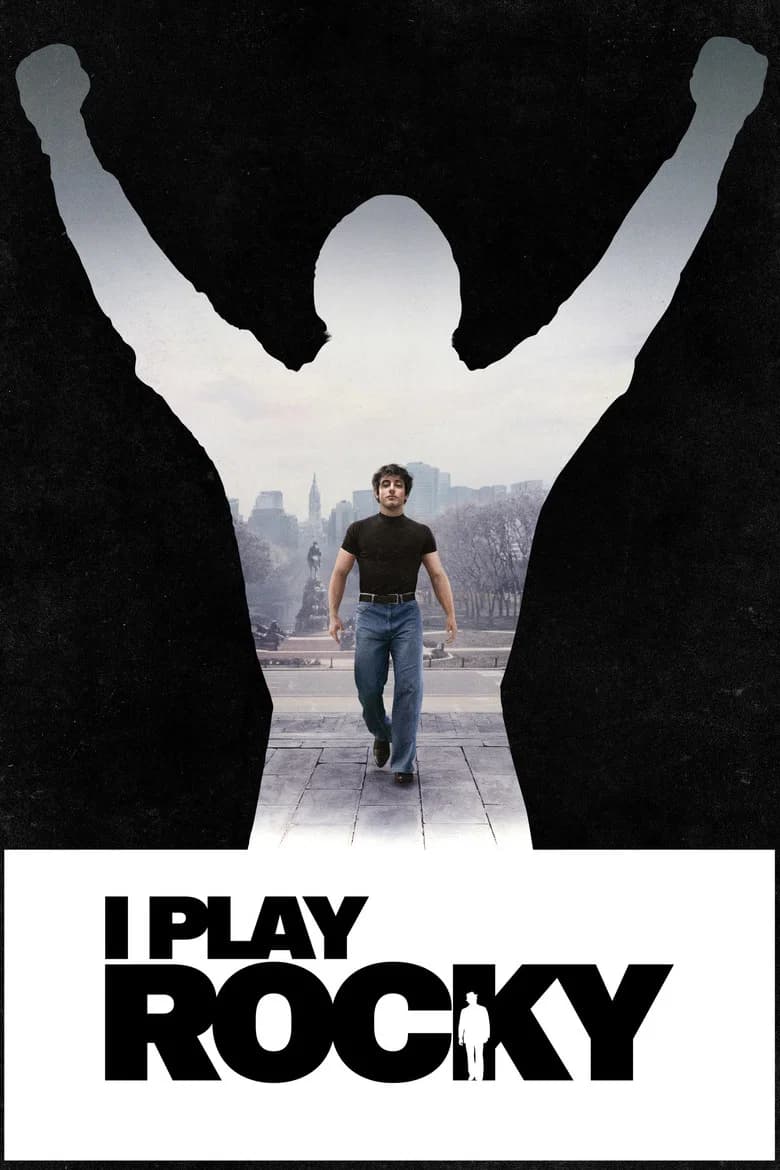
Peter Farrelly has apparently found his festival. Six years after "Green Book" won the People's Choice Award at the Toronto International Film Festival and went on to take Best Picture, Farrelly returned to TIFF on September 12, 2026, with "I Play Rocky" — a biopic about Sylvester Stallone's fight to write and star in the original "Rocky" — and walked away with a standing ovation and a fresh round of Oscar speculation. The question worth actually sitting with is whether that reaction reflects a genuinely strong film or just the specific kind of goodwill a scrappy underdog story about an underdog story tends to generate in a packed theater.
What Happened at the Princess of Wales Theatre
The film had its world premiere on Saturday, September 12, 2026, at the Princess of Wales Theatre, playing as part of TIFF's Special Presentations program. Reports describe the crowd giving it a "rousing standing ovation" — the kind of festival moment that immediately gets treated as a data point in the awards conversation, even though a single enthusiastic TIFF crowd has historically been an imperfect predictor of how a film performs once general audiences and the full critical pool weigh in.
Farrelly himself drew a direct line between this premiere and his last big TIFF night. Speaking to CP24, he noted his two best experiences at the festival have both happened here: "Green Book" taking the People's Choice Award in 2018, and now "I Play Rocky" getting a similar response. That's Farrelly's own framing, not an independent assessment, but it's a useful signal of how the film's team is positioning it heading into the fall — as a People's Choice contender first, with a Best Picture push riding on however that plays out.
The Story Being Told
"I Play Rocky" dramatizes a specific, fairly well-known chapter of Hollywood mythology: a broke, largely unemployed Sylvester Stallone — reportedly sleeping on the street at points — writes his own leading-man vehicle after failing to get cast in anything else. Sasha Czack, a photographer who would go on to marry Stallone, is depicted encouraging him to write himself a starring role rather than keep waiting to be picked for someone else's. Once the script for "Rocky" existed, producers wanted to buy it and cast a recognizable actor in the lead. Stallone reportedly turned down a six-figure buyout specifically because it would have meant someone else playing Rocky Balboa. He held out, and won.
Anthony Ippolito, 27, plays Stallone, opposite AnnaSophia Robb as Czack. Jay Duplass plays "Rocky" director John G. Avildsen, Matt Dillon plays Frank Stallone Sr., P.J. Byrne plays producer Irwin Winkler, Toby Kebbell plays producer Robert Chartoff, and Stephan James plays Carl Weathers. That's a deep, character-actor-heavy supporting cast built around a lead nobody outside industry-watchers had heard of before this year — which, given the subject matter, is either a coincidence or a very deliberate bit of thematic mirroring.
Ippolito's Performance Is the Thing Everyone Agrees On
Whatever disagreement exists around the film as a whole, the reaction to Anthony Ippolito specifically has been described as unusually consistent. His performance is being called "masterful," with reporting specifically noting he captures Stallone's mannerisms "without mere mimicry" — an important distinction for a role like this, where the easy failure mode is a Saturday Night Live impression stretched to feature length instead of an actual character performance. Playing a guy this famous, whose voice and posture are practically cultural shorthand at this point, without collapsing into parody is a genuinely hard needle to thread, and early word suggests Ippolito threads it.
That's the kind of praise that tends to travel on its own, separate from however the film overall is received. Plenty of biopics have gotten a mixed-to-negative overall response while their lead performance still ended up in the Best Actor conversation come January — "Bohemian Rhapsody" is the standard example, and it's not hard to see "I Play Rocky" following a similar shape if the film's reception softens but Ippolito's notices hold.
The Making of the Movie Mirrors the Movie
Farrelly and the production leaned hard into making "I Play Rocky" formally resemble the scrappy circumstances it depicts. The film was reportedly made on a budget of roughly $1 million — deliberately mirroring the original "Rocky," which was itself famously shot on a shoestring budget in 1976. Production also reportedly used a Steadicam for tracking shots, a device that had only just been invented around the time the real "Rocky" was made, which lines up with the era the film is recreating rather than being purely a modern stylistic choice.
The production also reportedly dealt with real time constraints during filming, including a detail that's hard not to find a little funny given the subject matter: shooting scenes involving frozen meat, which echoes the meat-locker scenes from the original "Rocky" that have become one of that film's most iconic images. Whether that was a genuine budget-and-schedule crunch or a bit of self-aware homage that happened to also solve a logistical problem, it's the kind of production trivia that tends to get repeated in every piece written about this film from here to the Oscars, because it fits the story a little too neatly.
Farrelly on the Risk of Touching Beloved Lore
Remaking the origin story of one of the most beloved underdog films ever made is not a low-risk swing. Farrelly acknowledged that directly, describing the decision to make the film as "a slippery slope" — the kind of project that can easily curdle into hagiography or feel like it's trading on nostalgia rather than earning its own reason to exist. What convinced him to actually make it, in his own words, was that the script "was so good."
More interesting is what Farrelly said about how he wants audiences to experience the two films together: "After you've seen this, and then watch 'Rocky,' 'Rocky's' better, knowing what he went through." That's a specific, fairly humble framing for a director to take with his own movie — explicitly saying the original film should get better in hindsight because of what his biopic adds, rather than positioning "I Play Rocky" as something that stands taller than or competes with the film it's about. It also doubles as a pretty direct pitch for why this story is worth telling at all: not to replace "Rocky" in anyone's affections, but to make the underdog story behind the underdog story visible.
What the Reviews Actually Say — Not Just the Standing Ovation
A standing ovation is a crowd reaction, not a review score, and it's worth separating the two here. Collider's own review of the film calls it "feel-good" and "schmaltzy" but says it has real heart, landing at 8/10. That's a meaningfully specific verdict: it's not pretending the film avoids sentimentality, it's arguing the sentimentality earns its keep. Given the subject — a scrappy true story about believing in yourself against a wall of no's — schmaltz was never really avoidable. The question was always whether it would feel manipulative or feel true, and Collider's take lands on the latter.
The film runs 127 minutes and is rated PG-13, which puts it comfortably in mainstream, date-night biopic territory rather than anything more grueling — a contrast worth noting against something like "Fjord," which premiered at the same festival covering much heavier, more ambiguous material at nearly 20 minutes longer.
It's also worth being upfront that the picture isn't entirely uniform. Fan-facing outlets have largely reported the reaction as close to universal acclaim, but at least one outlet has framed the aftermath in "critics sharpen knives" terms, suggesting some pushback may be forming underneath the standing ovation. The detail here isn't fully fleshed out — some reviews weren't accessible at the time of this writing — so rather than asserting a single clean consensus, the honest read is that the loudest early reaction skews positive, with some dissent reportedly emerging that hasn't yet been fully documented in detail.
Where and When You'll Actually Be Able to See It
The release picture has a genuine discrepancy worth laying out plainly rather than flattening into one date. Amazon MGM Studios is distributing in the US, with a limited release beginning November 6, 2026, expanding wide on November 20, 2026 — timing that puts it right in the thick of Thanksgiving-adjacent awards-season counterprogramming. A Canadian release date is separately cited as November 13, 2026, sitting between the two US dates rather than lining up with either. Entertainment Film Distributors is handling the UK and Ireland release, with no specific date confirmed in reporting so far.
That staggered rollout — limited, then Canada, then wide — is a fairly standard platform strategy for an awards-conscious biopic: get it in front of Oscar voters and press in a handful of markets first, let the reviews and word of mouth build, then widen once the film has some momentum behind it rather than dumping it into thousands of screens on day one.
How This Fits the Broader Farrelly Story
It's worth remembering what Peter Farrelly's career actually looks like before "Green Book." He spent decades as one half of the Farrelly brothers, making broad, gross-out studio comedies like "Dumb and Dumber," "There's Something About Mary," and "Kingpin" — not exactly the résumé that predicts a Best Picture win. "Green Book" was a genuine pivot into prestige drama, and it worked, controversially in some corners but decisively in terms of hardware. "I Play Rocky" reads as Farrelly doubling down on that same lane: a crowd-pleasing, big-hearted true story about a scrappy underdog, told in a way that's clearly aiming for the same TIFF-to-Oscars pipeline that worked for him once already.
Whether that pipeline works twice is the real open question here, and it's one TIFF's opening reaction can only partially answer. People's Choice voting at TIFF happens across the whole festival, decided by the paying public rather than critics, which historically has made it a reasonably strong predictor of a film's broad commercial and awards-season appeal — "Green Book," "Jojo Rabbit," and "12 Years a Slave" all won it on their way to major Oscar attention. If "I Play Rocky" is genuinely in that conversation, the People's Choice result, whenever TIFF announces it, will matter more than a single opening-night ovation.
The Bigger Test Is Still Coming
A hometown-crowd standing ovation and a single 8/10 review are both real data points, but they're also both early ones. The film hasn't yet faced the wider critical pool that will pick apart the schmaltz question Collider already flagged, and it hasn't faced general audiences who won't necessarily walk in primed to love a movie about the making of a movie they already love. The Ippolito performance looks like the safest bet in the whole conversation right now — that kind of transformation-plus-substance notice tends to hold up even when a film's overall reputation softens on a wider release. Whether "I Play Rocky" itself becomes a genuine Best Picture contender or settles into "well-liked crowd-pleaser that came up short" territory is going to depend on what happens over the next two months, as more reviews land and the film actually reaches the audiences who'll decide whether that Thanksgiving-adjacent release date pays off.
A limited US release begins November 6, 2026, expanding wide November 20, with more reviews likely to firm up the current acclaim-versus-pushback split before any awards nominations land.