Lust Stories 3 Review Roundup: Shakun Batra's Divorce Segment Carries a Bloated Anthology
This roundup describes the setup and twist of each segment, including the ending of Kiran Rao's story.

Lust Stories 3 landed on Netflix India on September 18, 2026, the third go-round for an anthology franchise that's built its identity on rotating a handful of directors through short, relationship-focused films under one shared title. This time the lineup is Vikramaditya Motwane, Kiran Rao, Shakun Batra, and Vishal Bhardwaj, each handling one segment, with a combined runtime of 165 minutes — two hours and forty-four minutes for four stories, a length that's already drawing complaints from reviewers before you even get to what's actually in those stories. The reviews landing since premiere are unusually aligned on a single number, 3 out of 5, even as they diverge on which segment earns that score and which one is dragging the average down.

The franchise pivoting away from shock value
The first two Lust Stories installments built a reputation, fairly or not, on being the anthology that got talked about for how far it pushed content rather than for its writing. The reception around this third installment reads like a fairly deliberate correction. Scroll.in describes the new film as "mildly risky rather than boldly risque," a phrase that captures the general critical read: this is an anthology more interested in the mechanics of desire inside long relationships — who has power in a marriage, who's performing contentment, who's quietly negotiating for something they can't say out loud — than in provocation for its own sake. That's a real shift in ambition, and it's one reviewers seem broadly receptive to, even when they think individual segments don't fully deliver on it.
It's worth sitting with why that pivot matters beyond just tone. An anthology that's trying to say something about female agency and the unspoken terms of modern marriage is doing a harder, more exposed kind of storytelling than one that's just trying to generate headlines. It means each segment has to actually work as a piece of character writing, because there's no shock value left to paper over a thin idea. That's the standard critics are holding all four segments to here, and it's why the reviews land as genuinely evaluative rather than just reactive to content.
Segment one: Vikramaditya Motwane's partner-swap story
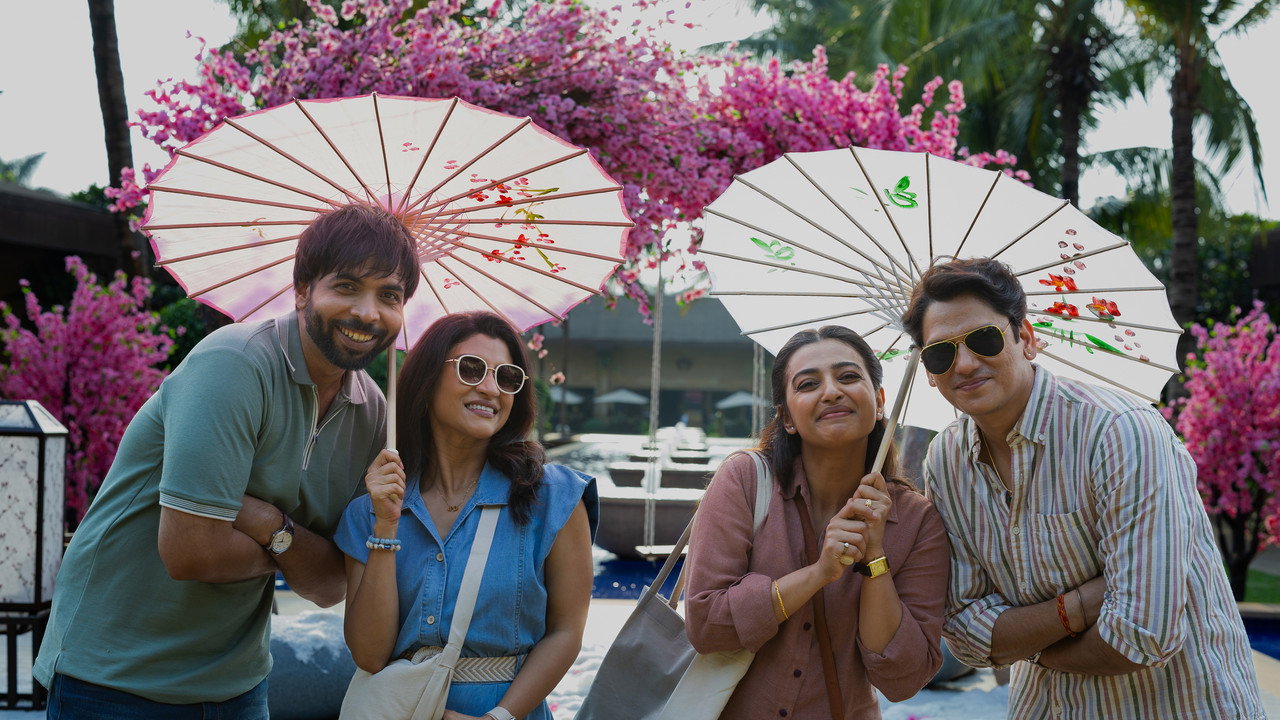
Motwane's segment — referred to by Leisurebyte under the title "Goonay Goonay," though that naming appears to be that outlet's own label rather than an officially credited segment title — centers on two married couples weighing the idea of swapping partners. The cast here is stacked: Radhika Apte, Konkona Sen Sharma, Vijay Varma, and Abhishek Banerjee, four actors who between them have carried a decent chunk of prestige Hindi streaming content over the last several years.
The performances are where this segment earns its keep. Nobody reviewing it seems to doubt that the four leads are doing real work, navigating a premise that could easily tip into either farce or melodrama with something more controlled than that. Where it loses people is the ending. Leisurebyte's review specifically flags "a lot of questions unanswered," and India TV News independently describes the segment as feeling "underwhelming" by its close. Two outlets converging on the same complaint — a story that sets up a genuinely loaded premise and then doesn't commit to resolving it — suggests this isn't just one critic's pacing preference but a real structural shortfall in how the segment closes itself out.
Segment two: Kiran Rao's pizza delivery twist
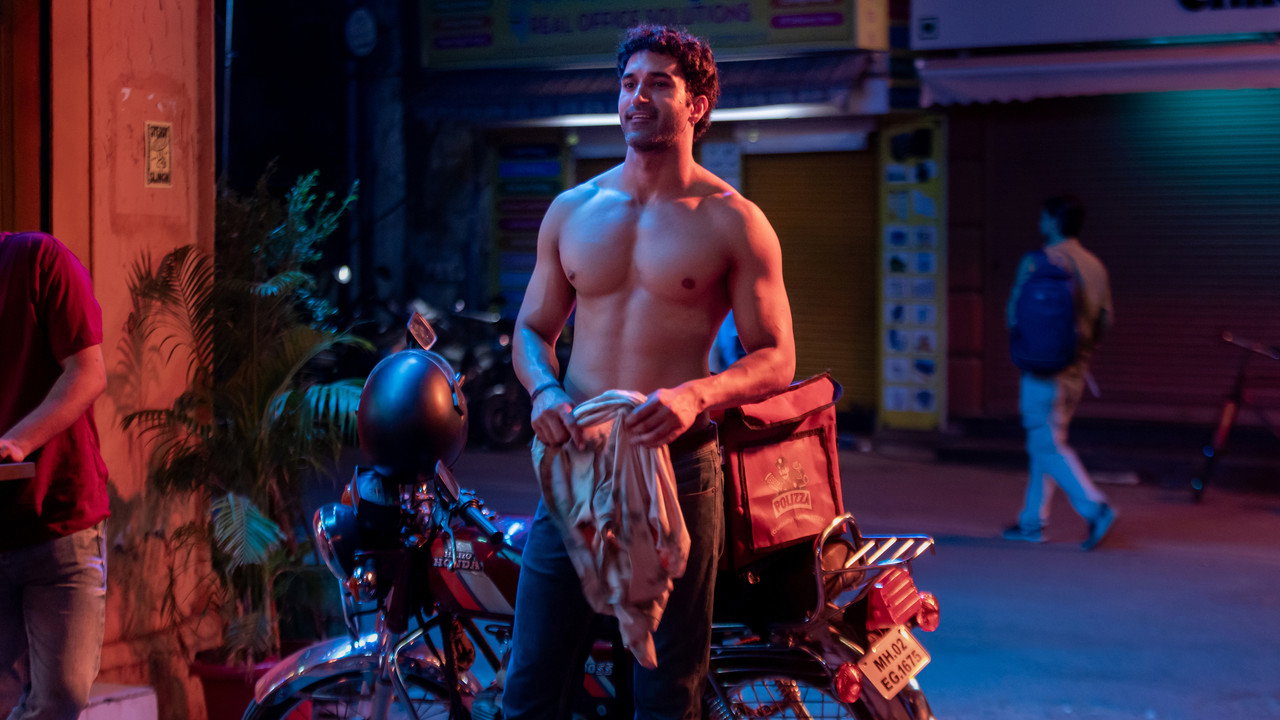
Rao's segment, labeled "One By Two" per Leisurebyte, follows a pizza delivery boy and a nail artist whose story turns on a dark secret. Gurfateh Pirzada plays a dual role opposite Sana Thampi, and this is the segment reviewers seem most pleasantly surprised by. Leisurebyte calls it "extremely entertaining" and credits real chemistry between the two leads. India TV News is a little more qualified, describing the opening stretch as "slightly confusing" — a fair warning for anyone going in expecting an immediately legible setup — but adds that the segment "rewards patience," implying the eventual reveal of the secret at its center justifies sitting through some initial disorientation.
The bigger individual takeaway from this segment is Pirzada. Bollywood Hungama singles him out directly as "an actor to watch out for," which is a notable line to land in the middle of an anthology stacked with far more established names like Apte, Sen Sharma, and Ali Fazal. A dual role is also a specific kind of technical showcase — it's the sort of assignment that either exposes an actor who's coasting on one register or demonstrates real range, and per the reviews here, it's landing as the latter.
Segment three: Shakun Batra's divorce story, the consensus standout
If there's one thing every review of Lust Stories 3 seems to agree on, it's that Batra's segment is the strongest thing in the anthology. Titled "Can't Get Enough" per Leisurebyte, it follows a separating couple, played by Ali Fazal and Radhika Madan, sitting in the emotional limbo between deciding to split and actually being apart. Leisurebyte calls it "one of the most vulnerable stories" in the film, and India TV News goes further, naming it the strongest segment outright and specifically crediting its "subtle visual storytelling" — a compliment about restraint and craft rather than plot mechanics, which tracks with what Batra has built a reputation for across his filmography, examining relationships that are quietly coming apart rather than exploding.
That vulnerability is worth dwelling on given the franchise's history. A segment about a couple navigating divorce isn't the kind of premise that generates a trailer moment or a viral clip — it's slower, sadder, and more internal than that. The fact that it's the segment reviewers keep returning to as the anthology's best work says something about where Lust Stories 3 is actually succeeding: not in whatever provocation the franchise name still implies, but in exactly the kind of quiet emotional observation that requires strong writing and stronger performances to pull off. Fazal and Madan, per the reviews, are doing that work.
Segment four: Vishal Bhardwaj's period piece that overstays its welcome
The closing segment, "Chulbuli Begum" per Leisurebyte, is Bhardwaj's, set in 1987 Hyderabad and centered on a woman seeking unconventional solutions to marital dissatisfaction, built around a stolen journal as a plot device. Aditi Rao Hydari and Siddharth lead it. The reviews here split along a fairly familiar axis for a period piece: strong on craft, weaker on pacing. India TV News ranks it highly among the four segments and singles out its visual quality. Leisurebyte is considerably less forgiving, calling it "far too long for the subject matter" and describing the resulting pacing as "sluggish."
That disagreement is worth flagging rather than smoothing over, because it's not really a disagreement about whether the segment looks good — both outlets seem to agree it does, given the period setting and Bhardwaj's track record for atmosphere. It's a disagreement about whether that visual craft is enough to justify the segment's length, and it lines up with the broader complaint running through this anthology's reception: the 165-minute runtime isn't evenly distributed goodwill, and Bhardwaj's segment, along with Batra's, is one of the two specifically named by Bollywood Hungama and Leisurebyte as running longer than its material needs.
The runtime problem, and where it actually hurts
It's worth being direct about the recurring criticism here rather than letting it sit as background noise: multiple reviewers, specifically Bollywood Hungama and Leisurebyte, call out the film's 165-minute total runtime as excessive, and both point at the Batra and Bhardwaj segments as the ones carrying that extra weight. That's a genuinely interesting split from the segment-by-segment reviews, because Batra's segment is also the one nearly everyone calls the anthology's best. In other words, the complaint isn't "the good segment should have been cut" — it's closer to "even the strongest material in this anthology could have been tightened, and the film as a whole asks for more patience than four short stories should require."
Anthology films live or die on pacing in a way single features don't, because a slow stretch in one segment doesn't just cost that segment's momentum — it costs the film's overall rhythm heading into whatever comes next. A near-three-hour runtime for four stories works out to an average over forty minutes per segment, which is a lot of room for a short-film format that traditionally thrives on economy. When two of the four segments are singled out by name as overlong, that's a real structural note about how this installment was edited, not just a stray complaint from one critic having an off day.
Where the consensus actually lands: a steady 3 out of 5
What makes Lust Stories 3's reception genuinely notable is how consistent the overall score is even as the segment-level opinions diverge. Bollywood Hungama, Leisurebyte, and India TV News all independently arrive at 3 out of 5 stars. That's a rare degree of alignment for an anthology film, where you'd normally expect scores to scatter more depending on which segment a given critic personally responded to most. Instead, three separate outlets, weighing four different segments with real disagreements about individual entries, land on exactly the same middle-of-the-road number.
That consistency suggests something about how the anthology as a whole is actually functioning: it's not a film where one segment saves the whole thing or one segment sinks it. It's landing as a genuinely mixed bag where the strongest material — Batra's, by consensus — and the more entertaining surprise — Rao's, per Leisurebyte and India TV News — are being weighed against real structural drag from runtime and, in Motwane's case, an ending that doesn't fully close its own loop. Three separate critics doing that math and arriving at the same 3/5 isn't a coincidence so much as a sign that the anthology's strengths and weaknesses are fairly evenly matched across the board.
A possible connective thread, unverified
One detail worth flagging with real caution rather than treating as settled: per Wikipedia's own synthesis of the film, the four segments may be more connected than they first appear, reportedly featuring character crossovers and shared prop references across the stories, with the overall timeline apparently moving backward as the segments progress. This is lower-confidence information — it's not something independently corroborated by any of the reviews cited above, and it reads more like a structural observation pieced together after multiple viewings than a marketed feature of the film. If accurate, it would put Lust Stories 3 in the company of anthologies that reward a rewatch specifically to catch the connective tissue between otherwise separate stories. But until that's confirmed by more than one source, it's worth treating as an interesting possibility rather than a fact about how the film is constructed.
What the reviews add up to
Set side by side, the reviews of Lust Stories 3 describe a franchise entry that's grown up in one specific way and stalled in another. The shift away from shock value toward genuine character studies of marriage, desire, and power is landing well with critics — nobody reviewing this installment seems to be pining for the earlier films' more provocative instincts. What's holding the anthology back from a stronger consensus is craft-level: an unresolved ending in the opening segment, a closing segment that outstays its material, and an overall runtime that even the film's strongest defenders think needed tightening.
Batra's segment is the one to point to if you're deciding whether this is worth the nearly three-hour commitment — it's the story every outlet cited here agrees is doing the most with the least noise, a quiet, vulnerable look at a marriage ending that doesn't need a twist or a secret to land. Rao's segment is the pleasant surprise, entertaining enough that its confusing opening stretch is worth pushing through. Motwane's segment has the starriest cast and the most unresolved landing. Bhardwaj's has the most striking visuals wrapped around the anthology's most-cited pacing problem. That's not a film any of the three outlets cited here are calling essential, but it's not one they're dismissing either — a steady, consistent 3 out of 5 across independent reviewers is its own kind of verdict.
What to watch next
A few threads are worth tracking from here. First, whether more reviews surface beyond the three cited in this roundup, and whether a wider critical sample holds that same consistent 3/5, or whether it starts to scatter the way anthology reception often eventually does once more outlets weigh in. Second, whether Netflix or any of the four directors comment on the interconnected-timeline theory currently sourced only to Wikipedia's own synthesis of the film, which would turn an unverified curiosity into a confirmed structural choice worth revisiting the film for. And third, whether Gurfateh Pirzada's dual-role turn in Kiran Rao's segment, already singled out by Bollywood Hungama as a performance to watch, translates into bigger opportunities the way strong standalone segments in past anthologies have occasionally done for other actors. For now, Lust Stories 3 sits where its reviewers have put it: a genuine step forward in ambition, held back by a runtime that outpaces its four stories' combined patience.
Watch whether Netflix commissions a fourth installment, and whether the interconnected-timeline theory around the four segments gets confirmed.