Dhurandhar: The Revenge Review — A Record-Breaking Opener That Loses the Plot
This review discusses the protagonist's true identity and the film's central target, both revealed in the first act.
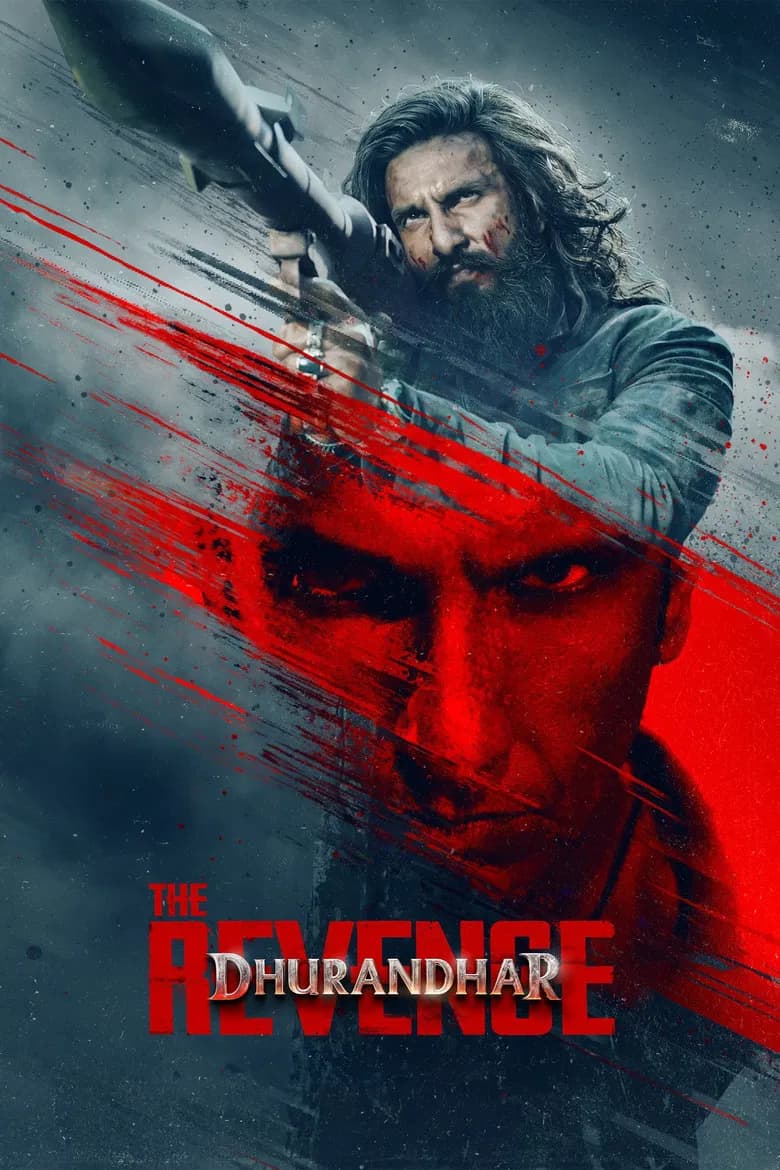
A quick clarification before anything else: the film is officially titled Dhurandhar: The Revenge, but almost every tracker, trade outlet, and casual moviegoer is calling it "Dhurandhar 2." Both refer to the same sequel to 2025's Dhurandhar, and this review uses the two names interchangeably, the way the internet already has.
The numbers first, because they're staggering
Before getting into whether the film is actually good, it's worth sitting with what it did commercially, because the scale is genuinely unusual even by Bollywood's inflated modern standards. According to Koimoi, Dhurandhar: The Revenge opened to ₹145.55 crore net in India on day one — described as the biggest opening day in Hindi film history. Paid previews alone reportedly brought in ₹47 crore, itself called a record by trade watchers.
Gulf News reported the film crossed ₹200 crore before its very first public show had even finished playing out across the country, a number that on its own would be a solid opening weekend for most films. From there the trajectory kept climbing: Gulf News put the worldwide total at roughly ₹700 crore within two weeks, India net crossing ₹1000 crore, and the global tally pushing past ₹1600 crore by day 18. Some of these reports frame the opener as having overtaken Baahubali 2 for the biggest Indian opening of all time — a claim worth attributing specifically to Gulf News rather than treating as settled industry consensus, since box-office record claims in Bollywood press tend to get contested and re-litigated for months after the fact.
By the 50-day mark, Koimoi reported a worldwide gross of approximately ₹1,829.82 crore against an India net of around ₹1,177.82 crore, on a reported budget of ₹225 crore. That works out to roughly a 423% return on investment, and Koimoi tagged the film with the verdict "Super Duper Hit" — about as unambiguous a commercial stamp as Bollywood trade language gets.
What the film is actually about
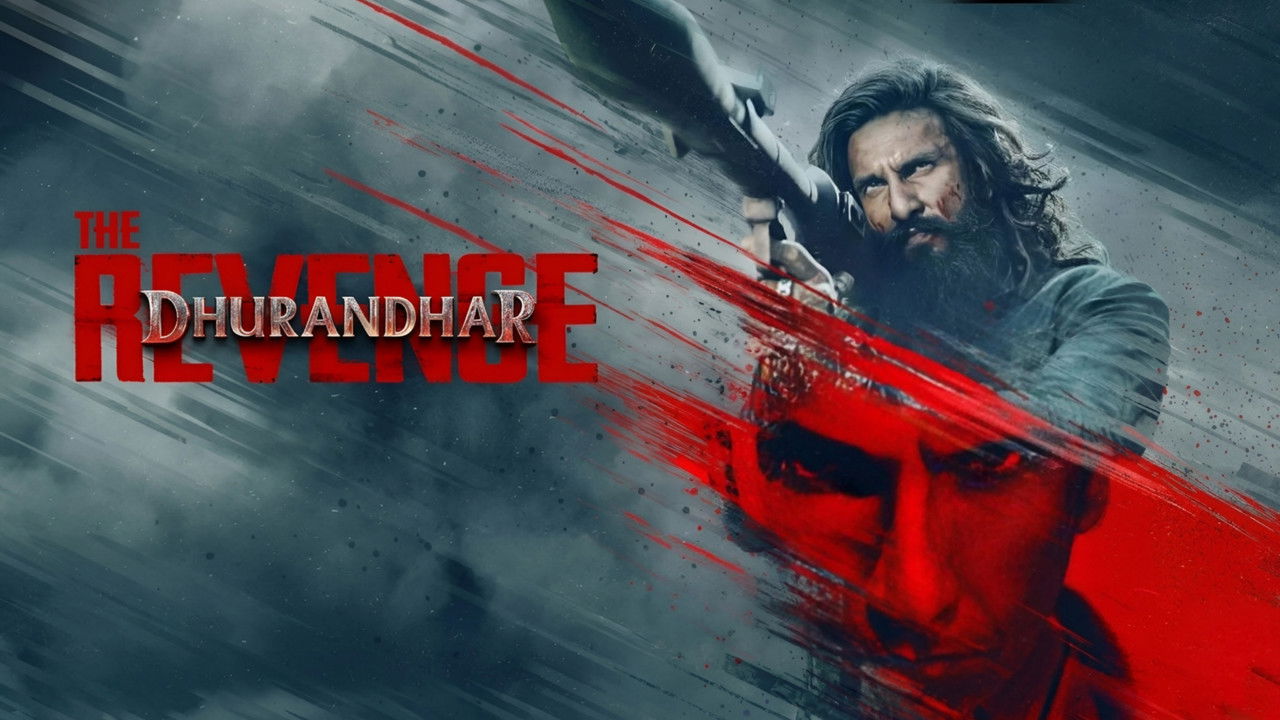
Strip away the box-office noise and Dhurandhar: The Revenge is an origin story, tracing how Ranveer Singh's character became the operative introduced in the first film. He's introduced under the name Hamza Ali Mazar, embedded deep inside Pakistan's political and terror networks, before the film reveals him as Jaskirat Singh Rangi, an undercover Indian intelligence operative. His actual assignment is to get close to and eventually take down "Bade Sahab," also referred to as Iqbal — a figure the film positions as the mastermind behind a string of attacks, including, per Zee News, the 26/11 Mumbai attacks.
The film also weaves in India's real-world 2016 demonetisation as a plot device, framing it as part of a broader effort to choke off terror financing. It's an ambitious structural choice — grounding a fictional spy narrative inside an actual, still-debated economic policy — and it's the kind of detail that will either read as clever contextualizing or as the film reaching for gravity it hasn't fully earned, depending on who you ask.
The cast Aditya Dhar assembled
Written, directed, and produced by Aditya Dhar, with Jyoti Deshpande and Lokesh Dhar co-producing, the film surrounds Ranveer Singh with a genuinely heavyweight supporting cast: R. Madhavan, Arjun Rampal, Sara Arjun, Sanjay Dutt, and Rakesh Bedi, according to both Gulf News and Zee News. On paper, that's the kind of ensemble that signals a studio betting big on prestige as much as spectacle, and the box-office numbers suggest audiences responded to exactly that signal, regardless of what the reviews ended up saying.
Runtime and the bloat problem
Here's where the film starts drawing real criticism. At 3 hours and 55 minutes, Dhurandhar: The Revenge is long even by the standards of maximalist Hindi cinema, and Gulf News flagged the runtime directly as excessive, calling the film "a bloated sequel lacking the original's subtlety and thrill." That's a notable turn of phrase, because the original Dhurandhar was specifically praised for the opposite quality — restraint. Reviewers looking back at the first film have pointed out that it worked precisely because it kept its protagonist "in the shadows," letting tension build through what wasn't shown rather than what was.
The sequel apparently inverts that entire approach. Instead of a character operating in ambiguity, the film makes him "hyper-masculine and omnipotent," according to critical consensus circling the release — a shift that removes a lot of the uncertainty that made the character interesting in the first place. When your hero is never really in doubt, and the film doesn't give him a compelling antagonist to offset that, the tension that made the original work has nowhere to go.
Where Gulf News landed
Gulf News gave the film 3 out of 5 stars, which is a fairly middling score for something breaking box-office records this decisively. Beyond the runtime and the loss of subtlety, the review specifically criticized the action as "gratuitous" and the dialogue as "blunt to the point of being on-the-nose" — the kind of writing that spells out its themes instead of trusting the audience to pick up on them. The one performance singled out for praise in that same review was Rakesh Bedi, whose work apparently stood out even inside a film otherwise accused of overreaching.
Where other critics landed
Not every review lined up with Gulf News's skepticism. Per review aggregation from Baradwaj Rangan, other critics described the film as "engaging, immersive, and ferociously intense despite the huge run-time" — essentially conceding the length is a problem while arguing the film's momentum and intensity carry it through anyway. That's a genuine split rather than a lopsided consensus, and it's worth taking seriously: this isn't a case of trade press hyping a film that critics universally panned. It's closer to a film that different audiences are experiencing in different ways depending on how much patience they bring in, and how attached they were to the first film's more withholding style.
Why the split matters more than the score
What's interesting about the critical divide here isn't just that reviewers disagree — that happens constantly. It's that the disagreement tracks almost exactly along the line of what people wanted from a sequel. If you came in hoping for more of the first film's controlled, slow-burn tension, the hyper-masculine, over-explained version on screen is going to read as a letdown, which is roughly the Gulf News position. If you came in wanting scale, spectacle, and a nearly four-hour commitment to Ranveer Singh's screen presence, the same film reads as immersive and intense, which is closer to the Baradwaj Rangan-aggregated take.
Neither camp is wrong about what's actually on screen. They're just weighing the tradeoffs differently, and that's a more honest description of this film's reception than either a flat pan or a flat rave would be.
The bigger picture: box office versus craft
There's a broader pattern worth naming here, because it's not unique to this film. A movie can be a genuine commercial phenomenon — biggest opening day ever, ₹1600 crore-plus in under three weeks, a 423% return on budget — while still drawing real criticism for basic storytelling discipline. Those two facts aren't in tension; they're just answering different questions. Box-office numbers tell you how many people wanted to see this movie, especially in its opening days when marketing and star power do most of the work. They don't tell you whether the film earned that turnout on craft, and the reviews here suggest a meaningful gap between the two.
That gap isn't necessarily a scandal. Plenty of hugely successful franchise entries — in Hollywood and Bollywood alike — trade a predecessor's tighter instincts for bigger scale once the money is available to do so. What makes this case notable is how explicitly the reviews name the original film as the more disciplined, better-constructed piece of work, which puts Dhurandhar: The Revenge in the slightly awkward position of being simultaneously the more successful film commercially and the less respected one artistically compared to its own predecessor.
The verdict
Dhurandhar: The Revenge is, by any commercial measure, one of the biggest Hindi film releases of the year, arguably the decade, if the day-one and 50-day numbers reported by Koimoi and Gulf News hold up under further scrutiny. It is not, by the more skeptical critical accounts, a film that matches that scale with equivalent discipline. The almost four-hour runtime, the loss of the original's shadowy restraint, and dialogue described as overly literal all point toward a sequel that leaned into bigger rather than better. Whether that tradeoff bothers you probably depends on whether you're watching for Ranveer Singh's spectacle and Rakesh Bedi's supporting work, or for the quieter tension that made the first Dhurandhar stand out in the first place. Either way, the numbers say most people showed up regardless.
Given the numbers involved, a third installment feels less like speculation and more like a formality once the studio finishes counting.