PVR Inox Wants to Scrap the VPF Fee That's Been Starting Fights With Producers for Years

Most people who buy a movie ticket in India have never heard of the Virtual Print Fee, and there's no reason they should have — it's a charge levied on producers and distributors, not on the person at the box office window. But VPF has quietly been one of the most contentious line items in Bollywood economics for nearly two decades, and it just resurfaced in a big way. PVR Inox, the country's largest cinema chain, has filed a formal proposal with the Competition Commission of India offering to scrap VPF entirely — across all films, not just a select few. The filing comes exactly a year after VPF blew up into a public controversy during the release of Jolly LLB 3, and it's now sitting in front of regulators as an open case that the public has been invited to weigh in on.
Here's what VPF actually is, why it keeps causing fights between theatres and producers, what PVR Inox is proposing instead, and what's still genuinely unresolved.
What VPF actually is
Virtual Print Fee dates back to India's shift from analog film reels to digital projection, a transition that mostly happened around 2007. Digitizing a cinema chain wasn't cheap — new projection equipment, servers, and infrastructure had to be installed across thousands of screens. VPF was designed as a mechanism to help theatres recoup that cost: a fee charged to producers and distributors per screen, per show, essentially treating the theatre's digital equipment as something the content itself was renting space on.
The actual size of that fee is where sourcing gets murkier than you'd expect for a charge this consequential. One framing puts it at roughly ₹500-600 per film, per screen, per show. A different account cites an average closer to ₹20,000 per screen. Those numbers aren't reconciled across reporting, and it's worth being upfront about that rather than picking one and presenting it as the definitive figure — what's consistent across sources is simply that VPF has been a real, recurring cost stacked on top of everything else a producer already pays to get a film into theatres.
The justification for VPF made some sense in 2007, when digital projectors were new and expensive. The problem is that the fee never went away once that equipment was paid off, which is roughly the entire complaint driving the current CCI case.
Why VPF keeps causing conflict
The core grievance, according to the Film and Television Producers' Guild of India, isn't just that VPF exists — it's that it's applied unevenly. The Guild's complaint pointed to a striking disparity: roughly 70% of Hollywood releases in India reportedly face no VPF charge at all, while Indian producers are routinely billed for it. Hollywood studios reportedly stopped paying VPF after their own agreements with exhibitors lapsed around 2018. Indian producers, by contrast, kept paying — years after the digital rollout the fee was originally meant to fund had long since been completed.
That disparity is the heart of the antitrust theory here. It's not simply "this fee is annoying," it's "this fee is being selectively enforced against domestic producers in a way that international studios have largely escaped," which is the kind of discriminatory pricing that competition regulators are built to scrutinize when it comes from a dominant player.
The Jolly LLB 3 flashpoint
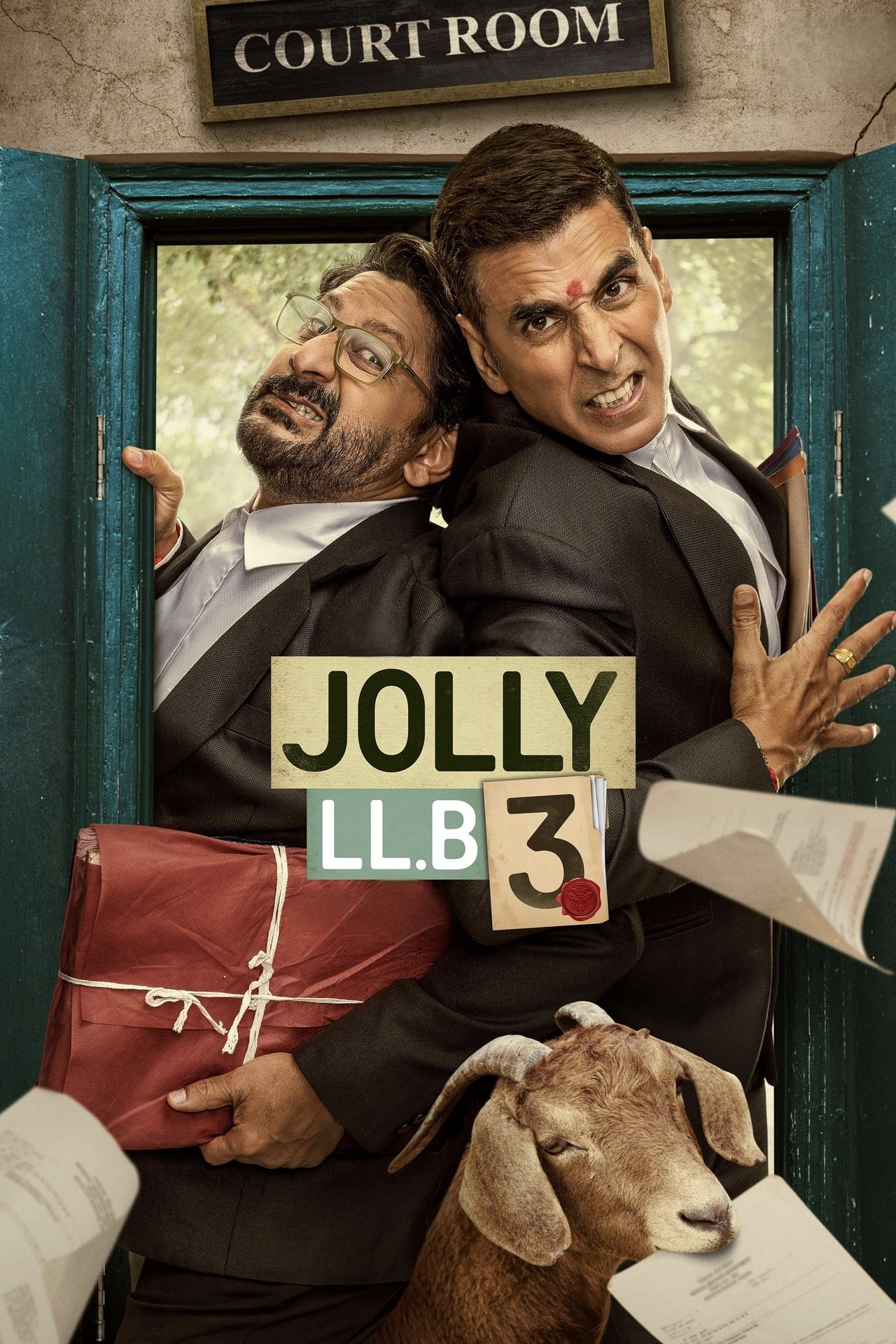
The controversy that put VPF in the news cycle rather than just trade publications happened around Jolly LLB 3's 2025 release. According to reports, PVR Inox halted advance bookings for the film — twice, with one of the halts reportedly coming the night before release — after Viacom18, the film's producer, refused to pay a demanded VPF of roughly ₹3.5 crore. Viacom18's position, per those reports, was that its existing agreement with the exhibitor only covered VPF obligations through 2024, meaning the fee being demanded for a 2025 release fell outside what had actually been agreed to.

Halting advance bookings on the eve of a release is about as blunt a piece of leverage as an exhibitor has. Advance bookings drive early buzz, help lock in opening-day numbers, and matter enormously to how a film's opening weekend gets read by trade and press. Viacom18 ultimately paid the disputed amount under protest rather than risk damaging the film's opening — a resolution that ended the immediate standoff but left the underlying dispute over who owed what, and under what agreement, completely unresolved. That unresolved dispute is what eventually became the formal case now before the CCI.
The sunset clause that came out during the investigation
One of the more revealing details to surface during the CCI's probe wasn't about Jolly LLB 3 at all — it was about private side deals PVR Inox had apparently struck with two of the biggest production houses in the country. According to reporting on the case, PVR Inox had negotiated confidential "sunset clause" agreements with Yash Raj Films and Viacom18 to phase out VPF for their films by December 2024. There was a catch, though: that phase-out was reportedly conditioned on YRF and Viacom18 also stopping VPF payments to other exhibitors, not just PVR Inox.
Had that clause actually triggered, the implication is significant — YRF's entire 2025 slate, reportedly including War 2, would have released without VPF attached. That it didn't play out that way, and that Viacom18 was still being billed ₹3.5 crore for Jolly LLB 3 months later, is part of what makes the arrangement look less like an evenhanded industry reform and more like a selectively negotiated perk extended to a couple of the most powerful production houses while smaller producers kept paying full freight. It's exactly the kind of arrangement that feeds a "restricting smaller producers' access" argument in an antitrust complaint.
The formal case: what the CCI is actually investigating
The dispute is now a real legal proceeding — Case No. 42 of 2023, Film and Television Producers' Guild of India Ltd v. PVR Inox Ltd, before the Competition Commission of India. On September 30, 2025, the CCI ordered a formal investigation under Section 26 of the Competition Act, 2002, examining whether PVR Inox abused a dominant market position under Section 4 of the Act.
The specific allegations under investigation, per the case, include discriminatory treatment of producers, restricting smaller producers' access to screens, and imposing supplementary obligations on producers that aren't actually related to the core service of exhibiting their films. Put plainly: this isn't a case about whether VPF as a concept is fair, in the abstract. It's a case about whether the country's largest exhibitor used its market power to apply that fee unevenly, extract side agreements from the biggest players, and squeeze smaller producers who had less leverage to negotiate their way out of it.
What PVR Inox is now proposing
Rather than litigate the case out fully, PVR Inox has filed what's called a commitment application, offering to fully discontinue VPF for all films — not just for the studios big enough to negotiate a sunset clause. In its place, the exhibitor is proposing two alternative pricing models, with producers able to choose between them, and no upfront payment required under either:
- Exhibition Service Charge (ESC): a flat ₹450 per show on standard screens, rising to ₹600 per show on premium formats like IMAX, 4DX, ScreenX, and Luxe. That rate drops to ₹250 (standard) or ₹350 (premium) after a film has run 60 shows, effectively lowering the per-show charge as a film's theatrical run extends.
- Revised Revenue Share (RRS): rather than a flat per-show fee, producers accept a modest reduction in their share of weekly net box office — capped at no more than 7.5% below the current split.
This is being filed under Section 48B of the Competition Act, 2002, alongside the CCI (Commitment) Regulations, 2024, as amended August 18, 2026 — a relatively new regulatory pathway that lets a company under investigation offer voluntary commitments as a way of resolving a case without going through full litigation. It's the same basic logic as a settlement: PVR Inox isn't admitting wrongdoing by filing this, but it is offering to change its practices in a way the CCI could accept as sufficient to address the concerns raised in the Guild's complaint.
Why choice-based pricing matters here
The interesting design detail in PVR Inox's proposal is that neither replacement option is mandatory — producers get to choose. That matters because it's a direct response to the kind of complaint the Guild originally raised: a flat, non-negotiable fee applied unevenly looks very different from a system where producers can pick whichever structure suits a given film's expected run. A smaller film that expects a short theatrical window might prefer the flat ESC rate. A film betting on a long run, where box office is expected to build over time, might prefer trading away a slice of revenue share instead of a fixed per-show cost that keeps accumulating.
Whether that flexibility actually resolves the discriminatory-treatment allegations at the center of the case is a separate question from whether it's a more sensible pricing structure in general. A system can be genuinely more flexible than what came before it while still not being the specific remedy the CCI decides the situation calls for.
The public comment window
Because this is a commitment filing rather than a private settlement, the CCI has opened it up for public input. The regulator has invited comments, objections, and suggestions on PVR Inox's proposal, with a deadline of October 1, 2026, submissible by email or by post to the CCI in New Delhi. That window gives producers, smaller distributors, industry bodies, and in principle anyone else with a stake in the outcome a formal channel to flag concerns before the CCI decides how to proceed.
This is worth sitting with for a second, because it's easy to read "PVR Inox proposes to scrap VPF" as a headline that settles the matter. It doesn't. The commitment process explicitly builds in a stage where the regulator collects outside input before deciding anything, which is precisely the point of opening a comment window in the first place — to surface concerns from the people the original complaint was filed on behalf of.
What isn't decided yet
It's worth stating this directly, because the temptation with a story like this is to round it up to a resolution: whether the CCI accepts PVR Inox's commitments as filed, or requires changes to them after reviewing public input, is not yet decided. This is a live, ongoing regulatory process, not a settled outcome. The underlying investigation into alleged abuse of dominant position hasn't been closed out by this filing — the commitment mechanism exists specifically as an alternative to fully litigating that investigation, and the CCI still has to determine whether what's being offered actually satisfies the concerns that triggered the Section 26 investigation in the first place.
What it means for producers and moviegoers
For producers, the proposal — if the CCI ultimately accepts something close to it — would mean the end of a decades-old fee that had drifted well past its original justification, replaced by a system that at least offers a choice rather than a flat, unilaterally set charge. For smaller producers specifically, the promise is that this closes the gap the Guild's complaint identified: no more informal arrangements where the biggest studios can negotiate their way out of a fee that everyone else still has to pay in full.
For moviegoers, the direct effect is close to invisible — VPF has never been a line item on a ticket stub, and nothing here changes what anyone pays at the box office window. The indirect effect is more about the health of the exhibition business generally: fights over VPF have already once produced a booking halt on the eve of a major release, which is the kind of disruption that actively works against audiences showing up on opening weekend. A pricing structure that doesn't produce standoffs like the one Jolly LLB 3 went through is good for the industry's stability even if nobody buying a ticket ever notices the mechanism behind it.
What happens between now and October 1 — and whatever the CCI decides after that — will end up shaping how India's biggest cinema chain charges producers for years to come. It's not a flashy story next to a trailer drop or a budget controversy, but it's the kind of dispute that determines whether films like Jolly LLB 3 keep having their bookings held hostage the night before release, or whether that specific kind of standoff becomes a thing of the past.
Watch for the CCI's response after the October 1, 2026 comment deadline — whether it accepts PVR Inox's proposal as filed, forces changes, or keeps pushing the underlying antitrust case forward.