Ghamasaan Review Roundup: Arshad Warsi's Career-Best Villain Can't Fully Save a Familiar Manhunt
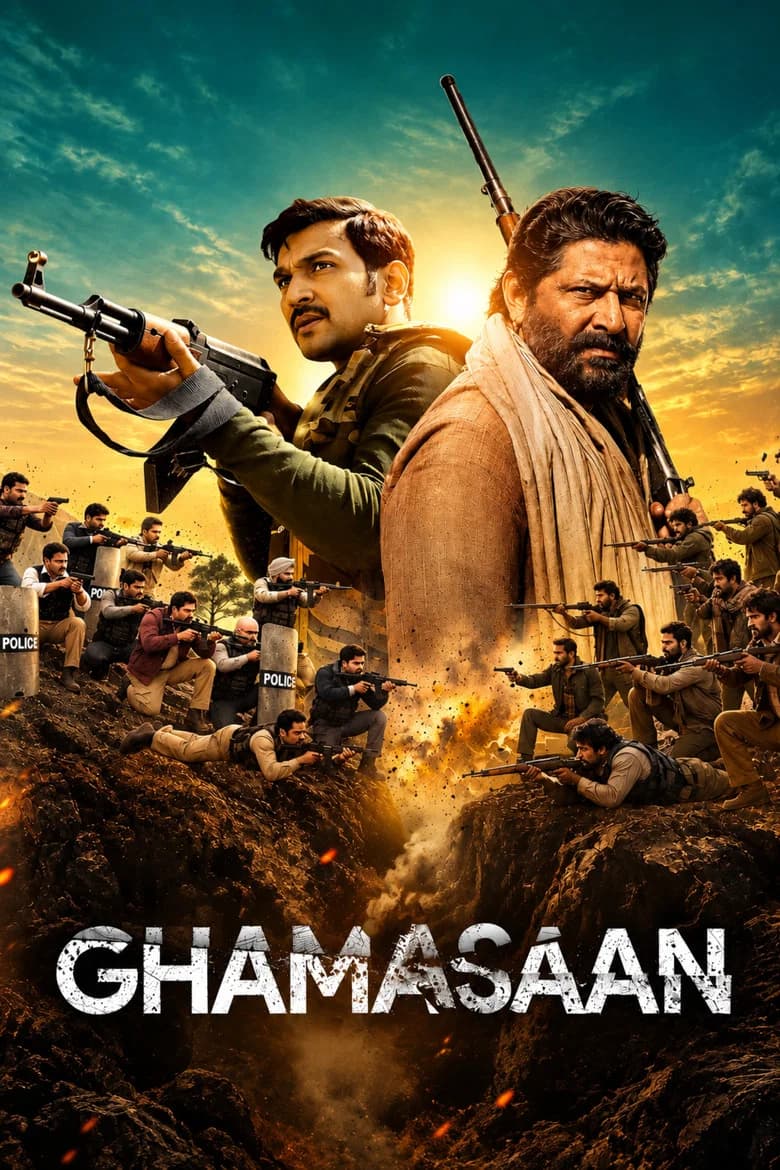
Ghamasaan finally reached audiences on September 11, 2026, roughly two years after it first showed up on anyone's radar at the MAMI Mumbai Film Festival in October 2024. That gap alone is worth sitting with before getting to the reviews — a finished film premiering at a major festival and then taking nearly two years to actually release is unusual, and it's the kind of delay that tends to either mean a film was quietly shelved and revived, or that its distributor was waiting for the right release window. Whatever the reason, the film that's now out has landed to a genuinely split critical reception, with almost every review agreeing on exactly one thing: Arshad Warsi, playing against type as a feared dacoit, is doing the best work of his career. Whether the film around him earns that performance is where critics stop agreeing.
What Ghamasaan actually is
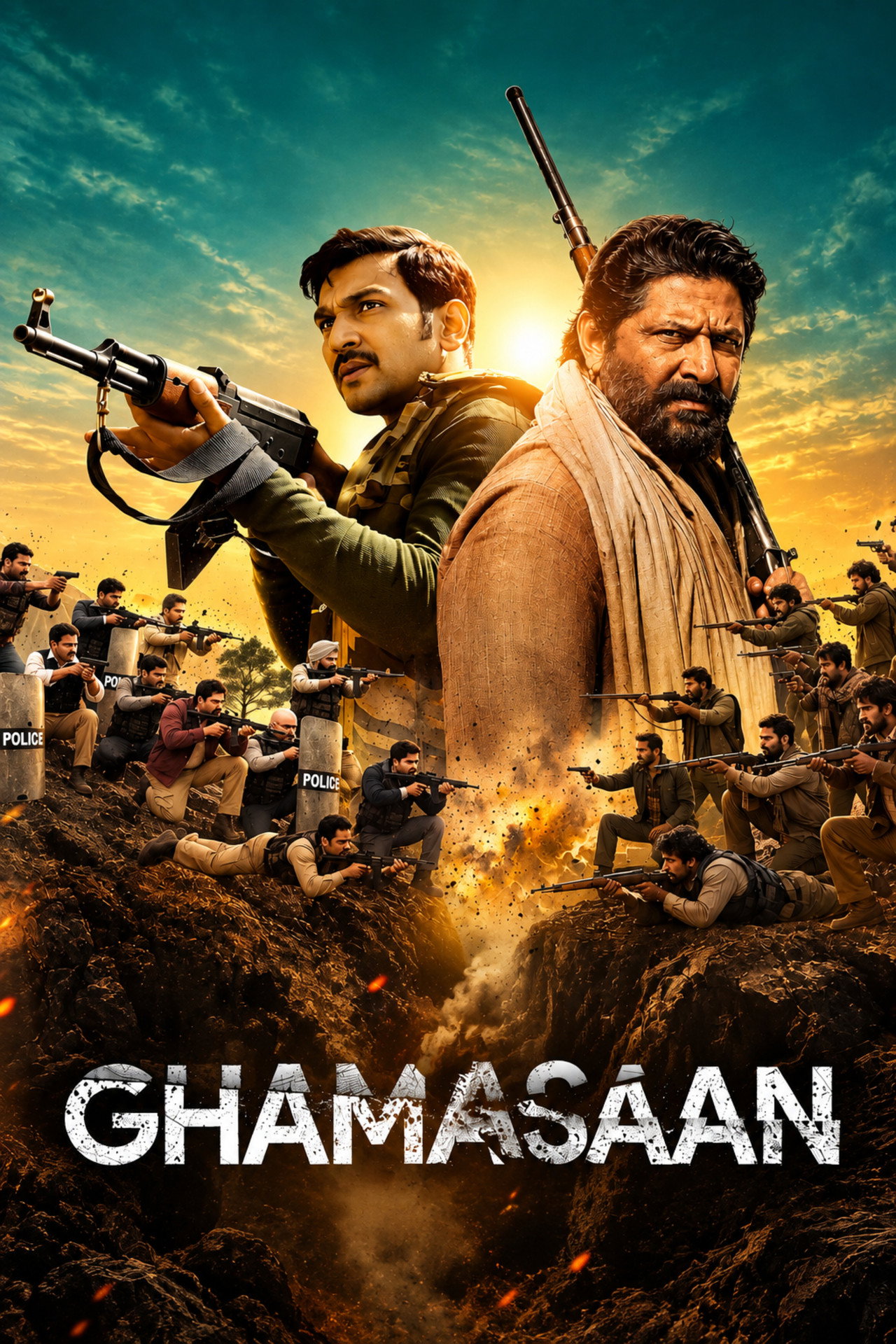
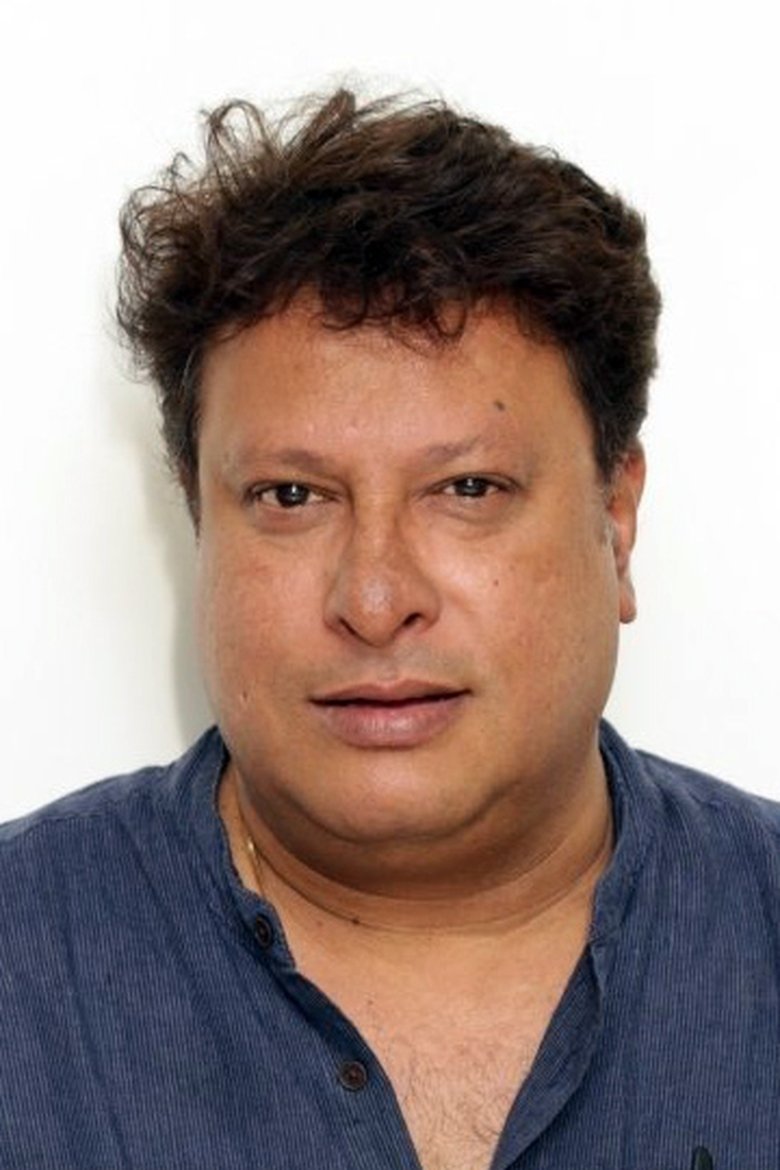
Directed by Tigmanshu Dhulia — who also wrote the screenplay, working from a story credited to Piyush Singh and Ram Yash Singh — Ghamasaan is a manhunt drama set in Bundelkhand, the ravine-cut region straddling Uttar Pradesh and Madhya Pradesh that has produced more real-life dacoit legends than perhaps anywhere else in India. Dhulia knows this territory intimately; his earlier work has circled similar ground before, and Ghamasaan leans directly into it by drawing explicit inspiration from the real hunt for Dadua, the dacoit whose decades-long reign over the Chitrakoot forests and eventual death in a 2007 police encounter became one of the defining law-and-order sagas of the region.
Arshad Warsi plays "Maharaj," a dacoit whose name alone is enough to empty villages, while Pratik Gandhi plays Aditya Singh, an honest IPS officer with the state's Special Task Force, sent in under political pressure to end Maharaj's reign before an upcoming election makes his continued freedom an embarrassment the state can't afford. Ishita Dutta plays Aparna Singh, and Rajpal Yadav — cast well outside his usual comic register — plays "Kalika," a member of Maharaj's gang. The film runs 142 minutes and was shot on location across Dholpur, Bundelkhand, and Chitrakoot in Madhya Pradesh, with cinematography by Dev Agarwal and music by Anuj Garg. It's produced by Jio Studios, Yaelstar Films, and Golden Ratio Films.
A release nobody can quite agree on
Before getting into the reviews, there's a genuinely confusing wrinkle in how Ghamasaan actually reached anyone. Wikipedia's entry for the film lists it as a direct-to-OTT release on ZEE5. Bollywood Hungama's review, on the other hand, is written and framed entirely as a theatrical release — the kind of review that assumes readers are deciding whether to buy a ticket, not whether to open an app. Those two accounts don't line up cleanly, and nothing in the available reporting resolves the discrepancy one way or the other. It's possible the film had some hybrid release — a limited theatrical run alongside or shortly before a streaming premiere, which has become common enough for mid-budget Hindi films that it wouldn't be surprising here. It's also possible one of the two sources is simply out of date or imprecise about the release format. Rather than pick a side, it's worth flagging plainly: sources disagree on how Ghamasaan actually released, and that's worth knowing before you go looking for it.
The reviews: four outlets, four different verdicts
What makes Ghamasaan's reception worth writing about isn't that it's mixed in some vague, unspecific way — it's that the reviews genuinely span the full range from strongly positive to outright dismissive, with almost no overlap in how each outlet weighs the same ingredients.
Bollywood Hungama gave the film 3 out of 5 stars, calling it "a gritty and engaging crime drama" and singling out Warsi's performance as "one of the finest performances of his career" — specific praise for an actor who has spent most of his career known for comic and lighter roles, here shedding that image entirely for something colder and more menacing. But the same review didn't extend that praise to the film's plotting, criticizing a formulaic cop-versus-criminal structure, a second half that stalls rather than escalates, and a subplot involving Adivasi children that it found underdeveloped — introduced, evidently, without being given the room to pay off.

m9.news landed in similar territory, calling the film "decent, well-made, though it could've been more gripping." That's a review that isn't dismissing the film so much as expressing a specific kind of disappointment — the sense of a movie that had the ingredients for something sharper than what it delivered. m9.news praised Pratik Gandhi for bringing relatability to the honest-cop role, described Warsi's performance as having an "earthy flamboyance," and called out Rajpal Yadav's "quirky charm" as a highlight — three different compliments for three different actors, which suggests the ensemble is doing more consistent work than the script surrounding them. The same review flagged "dry and repetitive stretches" and slow pacing as the film's core weaknesses, language that echoes almost exactly what Bollywood Hungama said about the second half stalling.
Times Of India, in a review bylined to Sreeparna Sengupta, gave the film 2.5 out of 5 and delivered what reads as the bluntest line of the entire critical spread: "Ghamasaan is not among director Tigmanshu Dhulia's best works." Worth flagging here — that quote surfaced through a search snippet rather than a fully fetched article, so treat it as reported rather than independently confirmed pending a second look at the full review. Still, a 2.5 score from a major outlet lines up with the general shape everyone else is describing, even if the exact wording needs a caveat.
Koimoi broke from the pack entirely, landing on an openly negative verdict. Its headline framing put it bluntly: not even Warsi's and Gandhi's performances, according to Koimoi, could save what it called a "routine and unwanted gangster drama." That's a meaningfully harsher take than anything else in the spread — Koimoi isn't just noting the film's flaws the way Bollywood Hungama and m9.news did, it's rejecting the entire project as unnecessary, a gangster drama that didn't need to exist regardless of who's in it.
The one thing every review agrees on
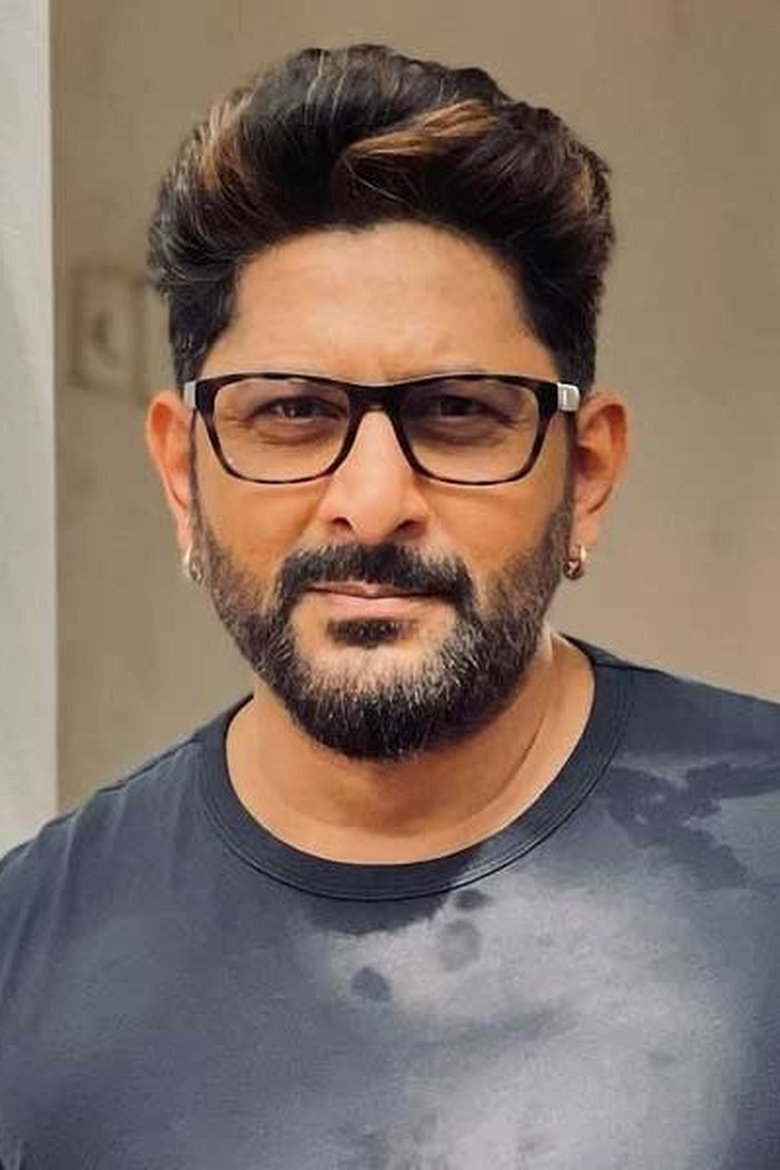
Strip away the disagreements and there's a single, remarkably consistent thread running through every review of Ghamasaan: Arshad Warsi is doing something genuinely new here, and it's working. Bollywood Hungama calls it one of the finest performances of his career. m9.news praises his "earthy flamboyance." Even Koimoi's negative review still names Warsi's performance specifically as one of the things that almost — but not quite — rescues the film. That's a rare degree of alignment for a set of reviews that otherwise can't agree on whether the movie is good, mediocre, or actively unnecessary.
It's worth pausing on why that matters beyond this one film. Warsi has spent the better part of two decades as one of Hindi cinema's most reliable comic actors — the wisecracking sidekick, the source of relief in otherwise tense films. A dacoit role built around menace rather than charm is a genuine swing away from that persona, and the fact that it's landing across outlets with wildly different overall opinions of the film suggests it's not just a critic-specific reading. Something about the performance itself is cutting through the noise of a script several reviewers found tired.
The recurring complaint: this territory has been covered before
The other thread running through the more critical reviews is a version of the same complaint, phrased slightly differently each time: formulaic, routine, repetitive, stalling. Those aren't four unrelated criticisms — they're four ways of describing the same underlying issue, which is that a manhunt drama pitting an honest cop against a legendary dacoit, set against the backdrop of Bundelkhand's ravines and election-season political pressure, is a story Hindi cinema has told many times before, and Ghamasaan doesn't appear to be doing enough with the specifics to distinguish itself from its predecessors.
That's a genuinely difficult needle for this kind of film to thread. The Dadua-inspired premise gives Ghamasaan a real, textured backdrop to draw from — a specific region, a specific kind of political cowardice around dacoit "surrenders" timed for electoral optics, a specific history of police forces being weaponized ahead of elections to manufacture quick wins. But several reviews suggest the film treats that backdrop as scenery rather than substance, falling back on the well-worn cop-versus-criminal shape rather than digging into what made the real history it's drawing from so specific in the first place. The underdeveloped Adivasi-children subplot that Bollywood Hungama flagged reads like a symptom of that same problem — a thread that could have grounded the film's politics more concretely, introduced and then left without the follow-through to matter.
Reading the split together
Laid side by side, the four reviews don't scatter randomly — they cluster in a fairly legible pattern. Bollywood Hungama and m9.news sit closest together: broadly positive, both praising the cast individually, both naming pacing and repetitiveness as the film's central drag. Times of India's 2.5 score sits a notch below that, still not a rejection, but clearly less enthusiastic about Dhulia's execution specifically. Koimoi stands alone at the negative end, unwilling to extend the same credit to the film's craft that the other three outlets gave it, even while still acknowledging the lead performances.
That's a genuinely different shape of "mixed" than a film where reviews land all over the place with no discernible pattern. Here, the disagreement is really about degree, not kind — every outlet is weighing the same two ingredients, a strong ensemble anchored by a transformed Warsi against a script that leans on genre conventions the reviewers have all seen before. Where they land depends on how much weight each critic puts on the performances carrying a familiar story versus how much patience they have for a two-and-a-half-hour manhunt that several of them describe as stalling exactly when it should be tightening.
What to watch next
A few threads are worth tracking now that Ghamasaan is actually out. First, the release-format confusion — whether ZEE5 confirms a streaming premiere, whether a theatrical run clarifies itself through box office reporting, or whether this simply stays an unresolved discrepancy between sources. Second, whether more reviews arrive that either confirm the Times of India quote in full or complicate the picture further, given that outlet's review was only available through a search snippet rather than the complete text. And third, and probably most significant for Warsi specifically, whether the near-universal praise for his performance translates into something beyond individual reviews — awards conversation, or simply a shift in how directors start casting him going forward. An actor spending decades in comic roles and then landing a performance that critics across a genuinely split reception all single out as a career highlight is the kind of story that tends to outlast the film itself, regardless of where Ghamasaan ultimately settles as a piece of genre filmmaking.
For now, the honest summary is the one nearly every review arrives at from a different direction: Ghamasaan gives Arshad Warsi the best showcase of his career, wrapped around a manhunt drama that several critics feel it has told this way before.
Watch whether the reported OTT-versus-theatrical confusion around its release gets clarified, and whether Warsi's reviews translate into awards-season conversation for a genuine image change.