Bleach TYBW Part 2 Episode 2 Recap: "Peace from Shadows" Explained
Full spoilers for Bleach: Thousand-Year Blood War Part 2 ("The Separation") Episode 2, "Peace from Shadows." If you haven't watched, stop here.
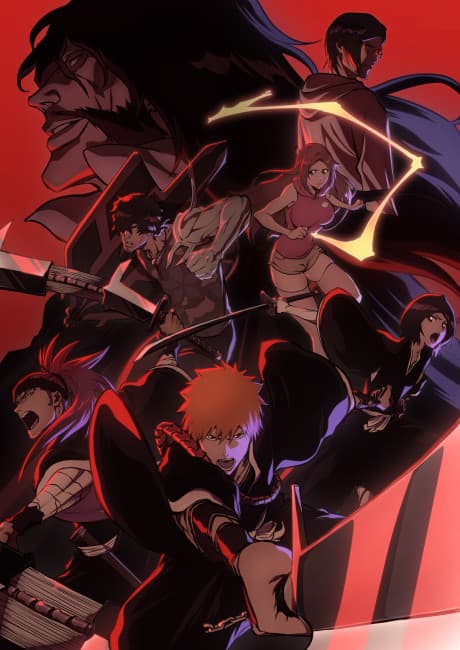
The lull after Part 2's premiere didn't last a full episode. "Peace from Shadows" opens with the Wandenreich launching a second-wave assault on the Soul Society, and this time they're doing it with weapons stolen from the very Captains they're attacking — the Bankai seized during the first invasion, now turned back against their original owners.
When and where to watch it
Bleach: Thousand-Year Blood War Part 2, subtitled "The Separation," ran from July 8 to September 30, 2023, and "Peace from Shadows" is Episode 2 in Part 2's own numbering. As with the rest of the adaptation, it's a Studio Pierrot production directed by Tomohisa Taguchi, with Masashi Kudo on character designs and Shirō Sagisu returning as composer. It streams on Hulu in the US and Disney+ internationally — not Crunchyroll, a distinction that trips up viewers used to finding seasonal anime there by default.
Yhwach's order: leave no enemy alive
The premise driving this episode is set up almost immediately: Yhwach has given his Sternritter a standing order to leave no enemy alive in this second push. That's a meaningfully colder directive than the first invasion's, which was largely framed around a show of force. This time, the Wandenreich aren't just demonstrating what they're capable of — they're being sent out with explicit instructions to finish what they started, and the episode treats that shift in tone as the thing that raises the stakes for everyone still standing.
Hitsugaya, badly wounded, and Cang Du's intent
The clearest casualty of that order is Tōshirō Hitsugaya, who's left badly wounded over the course of the episode. Cang Du, the Sternritter who stole his Bankai during the first invasion, arrives on the scene specifically to finish him off, and the episode is explicit about why it has to be Cang Du doing it: he reminds fellow Sternritter Bazz-B that Yhwach wants the Captains killed with their own stolen Bankai, not just killed by any convenient means. It's a detail that turns the stolen-Bankai plot thread from earlier in the season into something crueler and more pointed — this isn't just about disarming the Soul Society's strongest fighters, it's about making sure each Captain's death is delivered by the very power that was supposed to make them unstoppable.
That exchange between Cang Du and Bazz-B also does some quiet character work. Bazz-B isn't given an obvious reason to care about the specifics of how Hitsugaya dies, and the fact that Cang Du feels the need to remind him of Yhwach's intent suggests the Sternritter ranks aren't a fully unified front even while executing the same order — a thread that's worth watching as the season goes on.
Fighting without Bankai: Hitsugaya and Matsumoto's ice tactics
With his Bankai gone, Hitsugaya isn't left with nothing. The episode shows him and Rangiku Matsumoto working together using coordinated ice-based teamwork, leaning on tactics and timing rather than raw released power to hold their ground. It's a deliberate structural choice for this stretch of Part 2 — several of the Soul Society's strongest fighters lost their Bankai in the first invasion, and rather than skip past that loss, the show is using these early Part 2 episodes to show what those characters look like when they're forced to improvise without the ability that's defined them for most of the series.
Soi Fon's new Shunkō
The other major combat beat of the episode belongs to Soi Fon, who debuts a newly mastered form of Shunkō — the hybrid Kidō-and-Hakuda technique she originally learned from Yoruichi Shihōin. The show frames it explicitly as a callback to that mentor-student bond rather than just a new power tier: Soi Fon has spent years defining herself in relation to Yoruichi's legacy, and having her reach a new level of that specific technique in the middle of a battle the Soul Society is losing ground in gives the moment weight beyond the immediate fight. It's less "character gets stronger" and more "character finally closes a gap she's been chasing for most of the series."
Urahara's medallion breakthrough
Away from the front lines, Kisuke Urahara contacts Mayuri Kurotsuchi to report that he's finished analyzing the medallions the Wandenreich used to steal Bankai in the first invasion. The episode doesn't resolve what that analysis actually means for getting the stolen Bankai back — it's presented as a breakthrough, not a payoff — but it's the clearest setup in the episode for where the story goes next. After an episode built almost entirely around characters improvising without their strongest weapons, planting the seed that those weapons might be recoverable is a deliberate bit of table-setting for the episodes that follow.
The birthday irony
There's a small detail that's easy to miss if you're not tracking real-world air dates: "Peace from Shadows" aired in Japan on July 15, 2023, which happened to be Ichigo Kurosaki's birthday, according to GameRant. Despite that, Ichigo himself barely appears in the episode — he shows up only in a brief post-credits scene narrated by Ichibē, the head captain of the Royal Guard. For a series that's built its entire identity around Ichigo as its central figure, spending his actual birthday almost entirely without him, and instead pouring the runtime into Hitsugaya, Cang Du, Soi Fon, and Urahara, is a pointed structural choice — a reminder that Part 2 is using its early episodes to widen the cast's focus rather than keep circling back to its protagonist by default.
How it was received
Anime News Network's Nicholas Dupree reviewed this episode together with Episode 1 in a combined piece covering Episodes 14 and 15 of the overall series numbering. His read on "Peace from Shadows" specifically was mixed: he credited the episode for forcing its heroes to improvise without Bankai, which is genuinely interesting territory for a show that's leaned on Bankai as its default power escalation for years. But he criticized how quickly the Quincy opponents "brute force their way through" those new tactics, calling the whole gimmick "a cul-de-sac" — a dead end that undercuts the premise almost as soon as it's introduced. On the positive side, Dupree praised the episode's visual direction and environmental design, even where he had reservations about the writing underneath it.
InBetweenDrafts' Travis Hymas landed in a similar place, scoring the episode 6 out of 10 and describing it as "classic Bleach, for better and worse." His review frames the episode as mainly resetting the board for the next wave of fights rather than advancing anything decisively, and he raises a version of the same complaint Dupree does: the no-Bankai gimmick, in his view, "can pass itself as the other character going 'nuh uh,'" meaning the tactical stakes of fighting without a Bankai get undercut whenever the plot needs a fight to swing a certain way regardless of what tools a character has left. Hymas does credit Pierrot's modern production values with keeping the episode from feeling flat even where the writing stumbles.
GameRant's coverage of the episode skipped a numeric score and instead framed its writeup around the Ichigo-birthday irony and the Cang Du–Bazz-B–Hitsugaya beat, treating those as the more memorable elements of the episode over the broader battle mechanics.
Bottom line
"Peace from Shadows" is a transitional episode with real emotional stakes buried inside its table-setting: Hitsugaya nearly dying at the hands of his own stolen Bankai, Soi Fon finally closing the gap on Yoruichi's Shunkō, and Urahara quietly opening a door toward getting the Soul Society's lost power back. Critics were largely aligned that the episode's core gimmick — heroes forced to fight clever instead of strong — doesn't get the follow-through it deserves once the Quincy start brute-forcing their way past it, but there's enough craft in the direction and enough character-level payoff in Soi Fon's arc to keep the episode from feeling like pure filler. With Urahara's medallion breakthrough left dangling and Hitsugaya's fate still genuinely uncertain, Episode 3 has clear, specific threads to pick up rather than a blank slate to fill.
Episode 3, "The Fundamental Virulence," is set up to dig into what Urahara's medallion analysis actually means for getting the stolen Bankai back, while the Soul Society tries to regroup from a second wave it clearly wasn't braced for.