Bleach TYBW Part 2 Episode 11 Recap: "Too Early to Win, Too Late to Know" Explained
Full spoilers for Bleach: Thousand-Year Blood War Part 2, "The Separation," Episode 11, "Too Early to Win, Too Late to Know." If you haven't watched it yet, stop here.
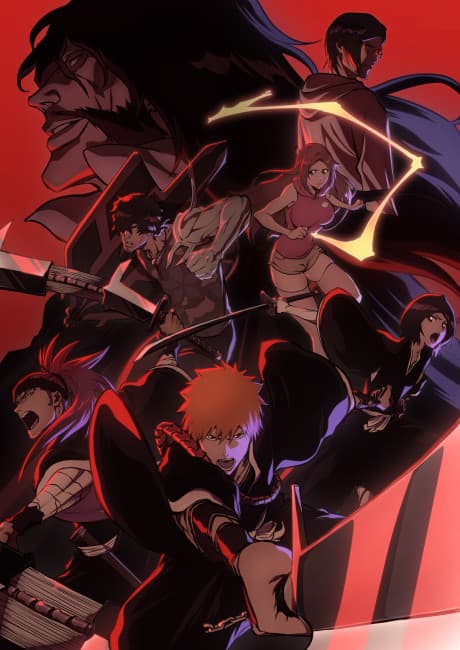
Ten episodes into "The Separation," Bleach: Thousand-Year Blood War has spent a lot of screen time showing what Yhwach wants to do without ever really explaining why he wants to do it. "Too Early to Win, Too Late to Know" finally closes that gap. It's an episode built around a single flashback — a conversation between a much younger Yhwach and Squad Zero's Ichibē Hyōsube — and that conversation reframes the entire thousand-year war as something stranger and more personal than simple conquest. The present-day plot keeps moving too, with Ichigo Kurosaki's group launching toward the Soul King Palace and Squad Zero finally stepping onto the battlefield, but it's the backstory that gives this episode its weight.
When and where to watch it
Bleach: Thousand-Year Blood War Part 2 streams on Hulu in the US and on Disney+ internationally — it has never been available on Crunchyroll, which is still worth flagging for anyone checking the wrong app out of habit. Part 2, subtitled "The Separation," aired its Japanese broadcast from July 8 through September 30, 2023, and Studio Pierrot uses its own episode count for this cour rather than continuing the numbering from earlier seasons — so "Too Early to Win, Too Late to Know" is Episode 11 of Part 2, not episode 24 of some larger unbroken run, even though some outlets label it that way. Tomohisa Taguchi is still directing, Masashi Kudo remains character designer, and Shirō Sagisu continues composing — the same production team that's been steering the adaptation since it began.
A flashback to a "tenuous peace"
The episode opens away from the present-day invasion entirely, dropping into a memory of a younger Yhwach meeting Ichibē Hyōsube, captain of Squad Zero, the elite unit that guards the Soul King. According to that flashback, it was Ichibē who brokered the fragile arrangement between the Quincy and Soul Society long before the war the show has been depicting — a "tenuous peace," not a resolution, and one that clearly didn't hold. In the scene, Yhwach curses the Soul King directly and lashes out at Ichibē, only to be shut down decisively by Ichibē's power. It's a small, contained moment on its face, but it's doing a lot of structural work: it's the first time the show has shown Yhwach as anything other than the fully formed, all-seeing threat he's been for the entire back half of the story.
What Yhwach actually wants
The real substance of the flashback is the motive it reveals, and it's a significant recontextualization of everything the war has been about. Yhwach isn't waging a thousand-year campaign purely out of vengeance or a hunger for power for its own sake — according to the flashback, his goal is to eliminate the concept of death itself. As the son of the Soul King, Yhwach describes feeling, or internalizing, the anguish of every subject whose death ultimately returns power to his father. That constant absorption of other beings' suffering is presented as the thing that drove him to rebel against the Soul King in the first place, long before Ichigo, the Gotei 13, or the Wandenreich's invasion of Soul Society ever entered the picture.
It's a meaningful shift in how the show has been asking the audience to read its villain. Up to this point, Yhwach has mostly functioned as a plot engine — a figure who always seems to be several steps ahead, engineering outcomes before anyone else in the story realizes what's happening. This flashback doesn't undo any of that, but it does attach a concrete, almost tragic internal logic to it: a being who has spent his entire existence absorbing the pain of every death tied to his father's power, and who decided the only way to stop that cycle was to end death as a concept entirely. Anime News Network's Nicholas Dupree specifically credited the reveal with giving Yhwach "believable, concrete motivations" — a notable turn for a character criticism has often described as more of a mechanism than a person.
Launching toward the Soul King Palace
Back in the present, the episode shifts to Ichigo and his allies as they launch from the rebuilt Seireitei toward the Soul King Palace, racing to meet Yhwach's forces before the invasion can fully unfold. It's a comparatively brief present-day sequence next to the flashback's runtime, functioning mostly as a bridge — setting the pieces in motion for the confrontations still to come rather than resolving anything on its own. The urgency is clear even without much dialogue: Yhwach's invasion is already underway, and Soul Society's remaining defenders are playing catch-up.
Squad Zero enters the fight
The episode's other major present-day thread is the first real look at Squad Zero in combat against the invading Quincy. Senjumaru Shutara is the first of them to encounter the enemy, and she makes short work of it, quickly defeating the Sternritter Nianzol Weizol without much difficulty. Shortly after, Ōetsu Nimaiya arrives and gets his own moment to show off exactly what makes him dangerous — both as a fighter and as the figure responsible for making zanpakutō in the first place. A standout beat has Nimaiya bringing up a "failed" zanpakutō concept, a small aside that doubles as a reminder of just how much unseen history and craft sits behind the Soul Society's weapons.
Between Shutara's efficient dispatch of her opponent and Nimaiya's showcase, the episode gives Squad Zero exactly the kind of entrance its long buildup has been promising: overwhelming competence delivered with minimal wasted motion, in sharp contrast to how much effort the Gotei 13's captains have needed to spend against similar threats earlier in the season.
How it was received
"Too Early to Win, Too Late to Know" landed as a clear improvement in the eyes of at least one major outlet after a stretch of episodes that critics had found comparatively uneventful. Anime News Network's Nicholas Dupree called it "a great rebound after weeks of wheel-spinning," praising the Yhwach backstory for humanizing him with real, grounded motivations rather than leaving him as a purely strategic threat, and singling out Squad Zero's entrance — Shutara's quick handling of Nianzol Weizol and Nimaiya's arrival — as a highlight of the episode's present-day half. The episode's community score on ANN sat at 4.1 out of 5, one of the stronger marks the season has posted.
InBetweenDrafts' Travis Hymas was considerably less convinced, scoring the episode 5/10. Hymas praised the visual choreography and action staging in the present-day sequences, but was critical of how the flashback's reveal fits into the season's broader pattern with Yhwach as a villain. The review argues that a character who consistently "knows everything beforehand" undercuts the tension of any given confrontation, and draws an unfavorable comparison to Sōsuke Aizen — a Bleach villain Hymas suggests handled the same "always ahead of the heroes" archetype more effectively.
The two takes aren't in direct conflict so much as focused on different halves of the episode. ANN's read leans on what the flashback adds — a villain whose motivations finally make emotional sense. InBetweenDrafts' read leans on what the flashback doesn't fix — a narrative structure that keeps relying on the audience learning, after the fact, just how far ahead of everyone Yhwach has been the entire time.
Why the backstory matters going into the finale
Giving Yhwach a stated goal — the end of death itself, rooted in a lifetime of absorbing other people's dying anguish — changes what's actually at stake heading into Part 2's final two episodes. It's no longer simply a matter of stopping an invading army from killing the Soul King and seizing his throne. If the show follows through on what this flashback sets up, the finale isn't just a battle over territory or power; it's a confrontation over whether Yhwach's underlying premise — that death itself is the enemy — gets any kind of answer from Ichigo and the rest of Soul Society. Whether the remaining episodes actually engage with that idea directly, or largely let it sit as texture behind the action, is one of the bigger open questions the season is carrying into its close.
Bottom line
"Too Early to Win, Too Late to Know" spends most of its runtime on a single flashback, and it's the right call — the conversation between young Yhwach and Ichibē Hyōsube finally gives the season's antagonist a motive that goes beyond conquest, tying his war to a lifetime spent absorbing the pain of every death that feeds his father's power. The present-day material is thinner by comparison, but Squad Zero's entrance, led by Senjumaru Shutara and Ōetsu Nimaiya, delivers exactly the kind of overwhelming competence the show has been teasing for this unit. ANN read the episode as a genuine rebound for the season; InBetweenDrafts saw the same reveal as one more example of a villain the show has let stay too far ahead of its heroes. Either way, Part 2 now heads into its final two episodes with its central conflict newly reframed — and considerably higher stakes than a straightforward invasion.
Part 2 heads into its finale stretch with Episode 12, "The Master," and Episode 13, "Black," as the invasion of the Soul King Palace collides with whatever Yhwach's real endgame turns out to be.