The New 'Sunrise on the Reaping' Trailer Breaks Down Haymitch's Games — and Where It Splits From the Book
This piece discusses plot details from Suzanne Collins' 2025 novel, including a moment during the tribute parade that reportedly plays out differently in the trailer than it does on the page.
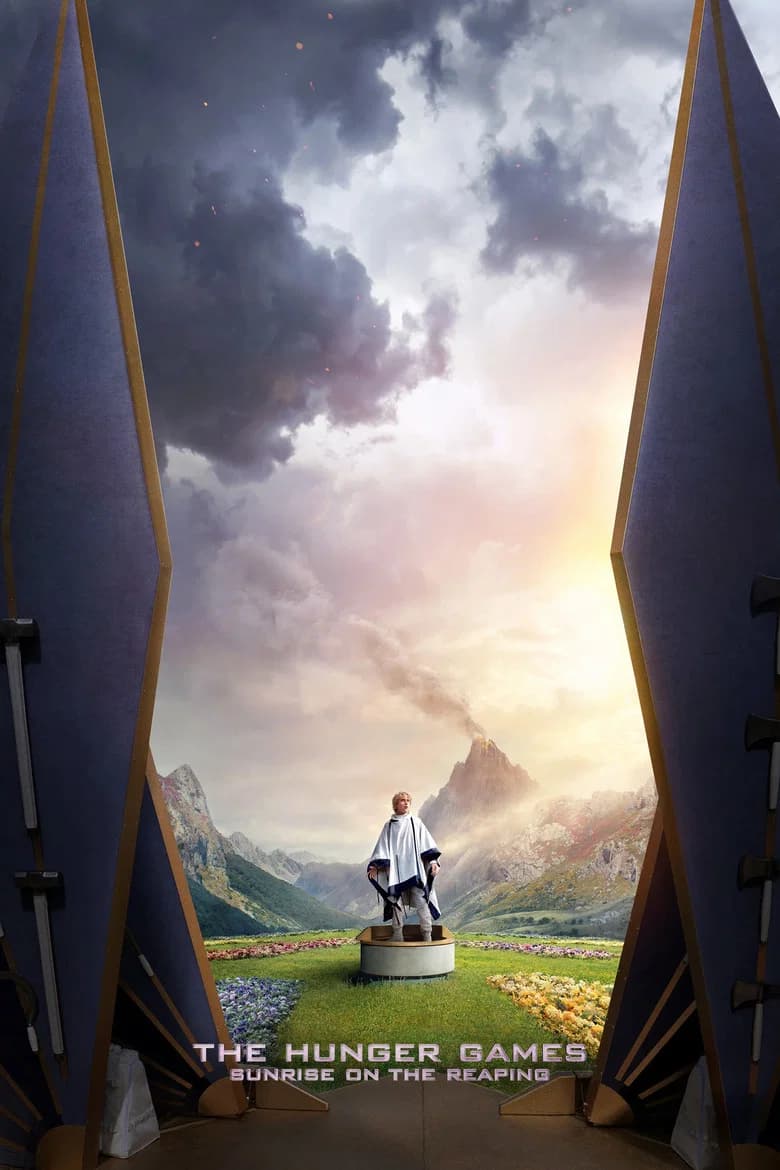
A third trailer for The Hunger Games: Sunrise on the Reaping dropped on September 16, 2026, and it's the most footage anyone outside the production has gotten of the story so far. The film arrives in theaters and IMAX on November 20, 2026, which means this trailer is doing the job most third trailers do this close to release — not teasing the premise anymore, but showing enough of the actual Games to prove the film can deliver on the darkest chapter of Suzanne Collins' Panem timeline yet.
Francis Lawrence, the director who's shepherded every Hunger Games film since Catching Fire, is back behind the camera, working from a screenplay by Billy Ray. That combination alone tells you this isn't a spinoff experiment — it's the same creative infrastructure that built the franchise's tone, pointed at a story Collins wrote specifically to explain how Haymitch Abernathy became the bitter, hard-drinking mentor Katniss Everdeen meets decades later. Here's what the trailer actually shows, what it confirms about the plot, and where one outlet's reading of a single shot has already sparked a book-versus-trailer discrepancy worth tracking.
The premise: doubling the tributes for the Second Quarter Quell
Sunrise on the Reaping is set 24 years before the original Hunger Games, centered on the 50th Hunger Games — better known in Collins' timeline as the Second Quarter Quell. Every 25 years, the Quell rules force some twist on the standard Games, and the twist here is brutal in its simplicity: instead of the usual 24 tributes, the Capitol doubles the field to nearly 50 competitors. More kids in the arena, more ways to die, less chance for any one alliance to control the outcome.
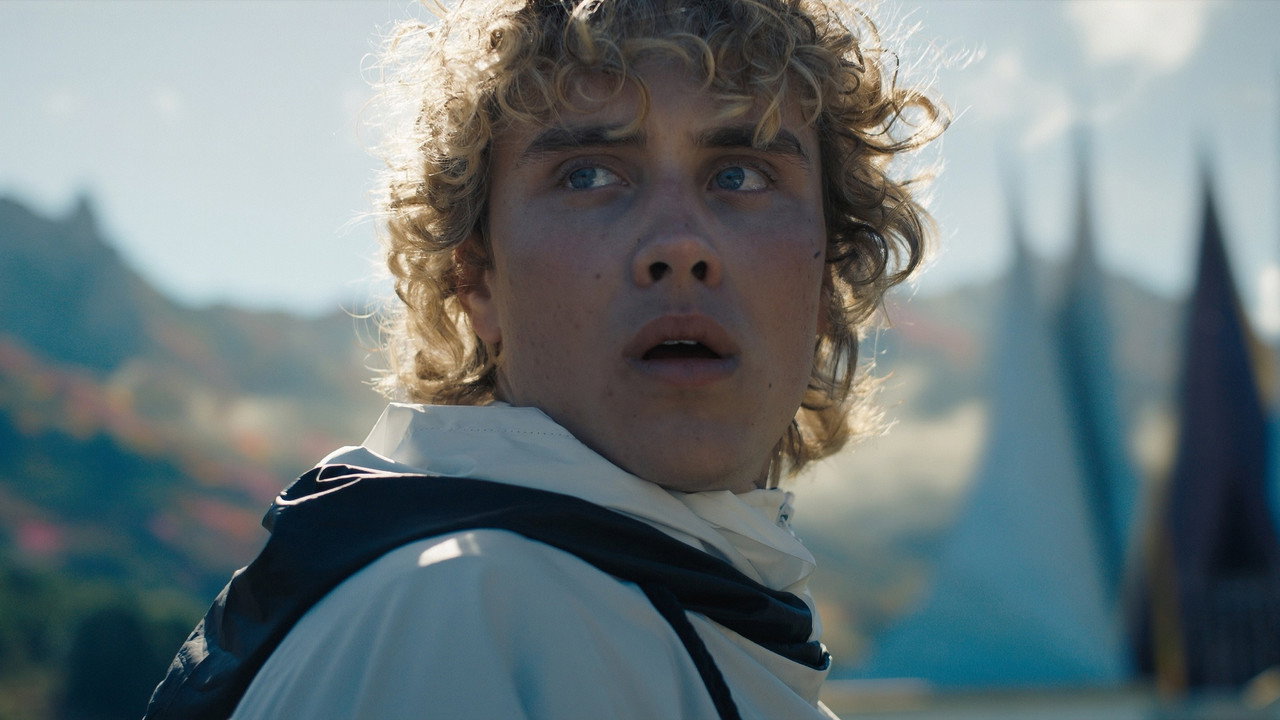
That structural choice is the entire engine of the story. A 16-year-old Haymitch Abernathy, played by Joseph Zada, is reaped into this doubled arena and ends up forming an alliance with fellow tribute Maysilee Donner, played by McKenna Grace, alongside a wider coalition of tributes working to undermine the Capitol from the inside. Longtime franchise readers already know where this eventually leads — the rebellion Katniss and Peeta inherit decades later didn't start with them, and Sunrise on the Reaping is explicitly the story of one of its earliest, least-known chapters.
The ensemble the trailer leans on
The cast list here is stacked in a way that signals real studio confidence in the material. Zada leads as Haymitch, with Whitney Peak playing Lenore Dove Baird, his girlfriend back in District 12. Ralph Fiennes returns to the franchise as a younger President Snow, a piece of casting that does a lot of work on its own — Fiennes already played an older Snow in The Ballad of Songbirds and Snakes, so his presence here threads two prequels into a single continuous performance of the character across decades.
Glenn Close plays Drusilla Sickle, McKenna Grace is Maysilee Donner, and Jesse Plemons takes on a young version of Plutarch Heavensbee, a role Philip Seymour Hoffman originated in the original trilogy's later films. Kieran Culkin steps into Caesar Flickerman, the Games' longtime television host, while Elle Fanning plays a young Effie Trinket. Maya Hawke and Kelvin Harrison Jr. round out the tribute side as Wiress and Beetee Latier — two names that carry weight for anyone who remembers how their older counterparts factored into the Third Quarter Quell in Catching Fire. Seeing them as teenagers, decades before that arena, is exactly the kind of long-game casting this franchise's prequels have leaned on.

The tribute parade, and the moment Deadline is calling attention to
The trailer's most visually striking sequence is the tribute parade — the traditional Capitol procession where tributes are paraded through the city on chariots ahead of the Games. This version renders it with purple and yellow smoke pouring from drone-like airships hovering above the procession, a production choice that pushes the parade's usual pageantry into something closer to a military display. It's a loud, unsettling image, and it's clearly meant to be one of the trailer's centerpiece moments.
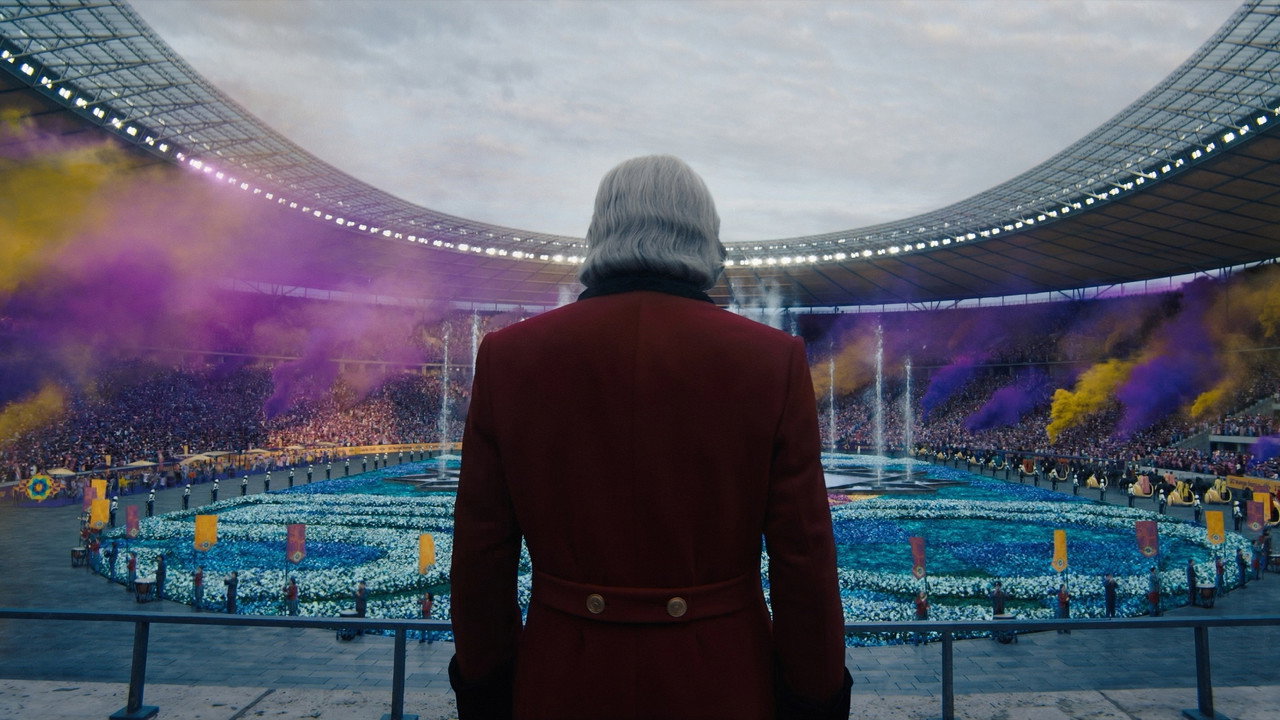
It's also the site of the trailer's most debated beat. During the parade, a rogue flare hits Haymitch's carriage — the same carriage carrying Louella, played by Molly McCann. According to Deadline's analysis of the footage, this moment reportedly plays out differently in the trailer than it does in Collins' source novel. Deadline doesn't spell out every detail of how the two versions diverge, but the outlet's framing is clear that this is a deliberate adaptation choice rather than a trailer editing artifact, and it's worth treating as one outlet's read on the footage rather than a confirmed statement from the production about how the finished scene will play. Readers who've read the novel and are tracking fidelity to the book should watch this specific beat closely once the film is out.
Why multiple outlets are calling this the franchise's darkest entry
Both Gizmodo and ComicBook, covering the trailer independently, characterized Sunrise on the Reaping as the bloodiest or most disturbing Hunger Games film yet based on what's in this footage. ComicBook's framing leans toward "darkest Hunger Games yet," while Gizmodo's coverage focuses more on what the trailer reveals about Haymitch's specific arc heading into the Games. It's worth being precise about what this characterization actually is: press reaction to roughly two and a half minutes of marketing footage, not a studio-issued content rating, an MPA classification, or a quote from Lawrence or anyone else attached to the production. Doubling the tribute count to nearly 50 competitors is, on its face, a structural reason to expect more on-screen violence than prior entries simply because there are more kids in the arena and more ways for the Games to turn lethal. Whether the finished film actually earns "darkest yet" as a descriptor is something nobody outside the production can confirm until it's actually in theaters.
The book behind it, and why this one's different from prior prequels
Sunrise on the Reaping is based on Collins' 2025 novel of the same name, her most recent entry in the Hunger Games literary universe following The Ballad of Songbirds and Snakes. Where Songbirds and Snakes followed a young Coriolanus Snow from the winning side of the Games' brutal calculus, Sunrise on the Reaping flips the perspective entirely — it's a tribute's story, told from inside an arena that's been deliberately overloaded by the Capitol to make survival even less likely than usual. That's a meaningful tonal pivot for the franchise. The Snow prequel let audiences understand how a future dictator justified himself to himself. This one is squarely about the human cost on the other side of that ideology, filtered through a character audiences already know survives — Haymitch's fate isn't a mystery to anyone who's read or watched the original trilogy, which changes how tension works here compared to a story where any character could plausibly die.
Francis Lawrence's returning fingerprint
Lawrence directing this film specifically matters for consistency. He wasn't behind The Hunger Games or Songbirds and Snakes — Gary Ross directed the first film, and Songbirds and Snakes had Lawrence, so the timeline is a bit more tangled than a clean "every film" claim, but Lawrence has directed the majority of the franchise's installments, including Catching Fire, both Mockingjay films, and The Ballad of Songbirds and Snakes. That's the person the studio keeps returning to when it wants a Hunger Games film to feel connected to the ones before it, tonally and visually, rather than reading as a break from house style. Billy Ray's screenplay credit is worth flagging too — he's the writer who adapted The Hunger Games itself back in 2012, alongside Suzanne Collins and Ross, which puts him in a small group of people who've now had a direct hand in shaping how this world reads on screen across more than a decade.
What's confirmed versus what's still marketing
Stripped down to what's actually locked in: the release date is November 20, 2026, in theaters and IMAX. Lawrence is directing, Ray wrote the screenplay, and the ensemble cast is fully confirmed across the roles listed above. The Second Quarter Quell's doubled-tribute structure is confirmed plot, straight from Collins' novel. What's still interpretation is how exactly the flare-on-the-carriage moment resolves relative to the book, which is Deadline's read of the footage rather than a studio confirmation, and whether "darkest Hunger Games yet" holds up as a fair description once critics and audiences see the whole film rather than a trailer's worth of curated highlights. Two months out from release, that's a reasonable amount of confirmed information for a franchise entry this anticipated, and it's more than most trailers of this kind offer this far ahead of a premiere.
What to watch for next
With the release now nine weeks out, expect the marketing cycle to accelerate rather than slow down. A fourth trailer or a more targeted character-focused spot wouldn't be unusual for a franchise entry this stacked with returning IP value, and if early reactions from press screenings start leaking before the embargo lifts, that's typically the next real signal of how the film is actually landing. The more interesting thing to track, though, is whether that tribute-parade flare sequence plays out on screen the way Deadline's analysis suggests or hews closer to the novel — it's a small detail in a two-and-a-half-minute trailer, but it's exactly the kind of adaptation choice that tends to matter a lot more once fans of the book actually see the finished scene.
Watch for whether the tribute-parade flare sequence resolves the way the trailer implies or the way the novel does, and expect at least one more trailer before the November 20 release.