Haiwaan Trailer Breakdown: Akshay Kumar and Saif Ali Khan's Long-Awaited Reunion Turns Dark
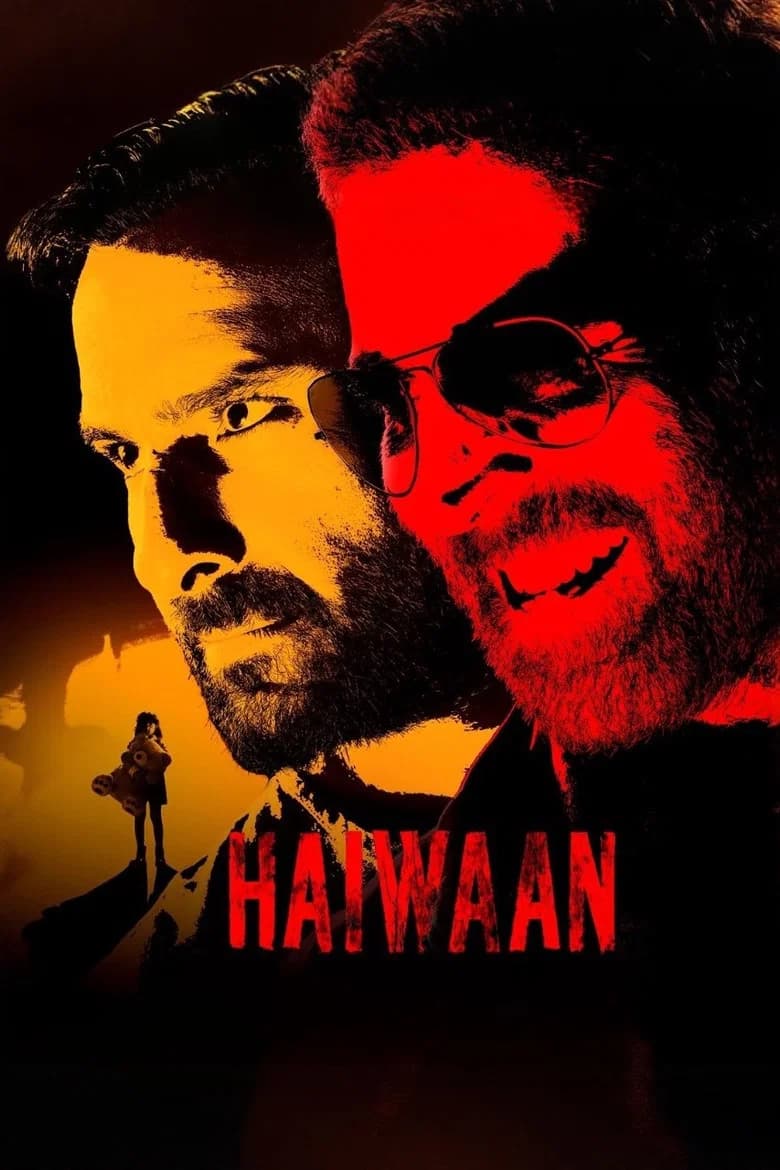
The trailer for Haiwaan dropped digitally on August 25, 2026, and ran for 2 minutes and 34 seconds, according to Sacnilk and BusinessToday. That's a fairly ordinary length for a mainstream Hindi trailer. What isn't ordinary is what's actually being sold in those 154 seconds: Akshay Kumar and Saif Ali Khan sharing screen space again, a decade-old Malayalam thriller getting rebuilt in Hindi with its two central roles deliberately swapped, and Priyadarshan returning to remake one of his own films. There's a lot going on here, and most of it is worth unpacking before the film actually opens in theatres worldwide on September 11, 2026, per Sacnilk, Hollywood Reporter India, BusinessToday, and Onmanorama, all of whom agree on that release date.
What Haiwaan actually is

Haiwaan is a Hindi remake of Priyadarshan's own 2016 Malayalam film Oppam, according to Hollywood Reporter India, BusinessToday, and Sacnilk. That's the first thing worth sitting with, because it's not a common move even in an industry as remake-happy as Bollywood — directors remaking other people's hits is routine, but a director going back a decade to rebuild his own film, in a different language, is a much rarer decision. Oppam starred Mohanlal as a visually impaired man with an unusually heightened sense of smell, who becomes the only person capable of identifying a killer after witnessing — or rather, hearing and smelling — a murder he can't see. P. Samuthirakani played the antagonist, a man named Vasu, opposite him. The original was well-regarded in Malayalam cinema for turning a disability into an active plot engine rather than a passive character trait, and for giving its villain enough weight that the cat-and-mouse structure actually had tension in both directions.
Priyadarshan directing the remake himself means this isn't a case of a studio buying remake rights and handing them to someone with no connection to the source material. He knows exactly what worked in Oppam and exactly where the tension lived, which raises the obvious question of what he's changing this time around — and the biggest answer to that is the casting.
The role swap: Saif Ali Khan as the blind man, Akshay Kumar as the villain
Here's the structural choice that's driving most of the trailer's marketing. In the Hindi version, Saif Ali Khan takes over Mohanlal's original role — the visually impaired man whose other senses become his only weapon against a killer who knows he can't be identified by sight. Akshay Kumar, meanwhile, steps into the antagonist role that Samuthirakani played in the original, according to both Sacnilk and BusinessToday.
That's a genuine inversion of expectation. Akshay Kumar has spent a large chunk of his recent filmography as the reliable protagonist — the cop, the soldier, the reformer — and putting him on the other side of the moral line is, at minimum, a way of signaling that Haiwaan wants to be read as a departure rather than a comfort watch. Priyadarshan has described the antagonist as "menacing, complex," per Sacnilk, which suggests the film isn't interested in a cartoonish heavy but someone whose logic the audience can at least partially follow, even while rooting against him. Khan, for his part, has been quoted describing his own character as "a sharp, high-stakes adversary" — language that frames Saif Ali Khan's role less as a passive victim waiting to be rescued and more as someone actively working out how to outmaneuver a killer despite an obvious sensory disadvantage.
Whether that framing survives contact with the actual film is impossible to say from a trailer alone. But the swap itself is the smartest marketing decision Haiwaan has made, because it turns "we remade a good film" into "we remade a good film and inverted its two biggest stars' usual on-screen personas" — a much more interesting pitch.
Mohanlal's cameo and what Saif Ali Khan said about him
According to Hollywood Reporter India, Mohanlal reportedly makes a cameo appearance in the Hindi version — a nice bit of continuity for a remake that's otherwise handing his signature role to someone else entirely. It's the kind of gesture that tends to read as respectful rather than gimmicky, provided the film doesn't lean on it as a substitute for actually earning its own version of the story.
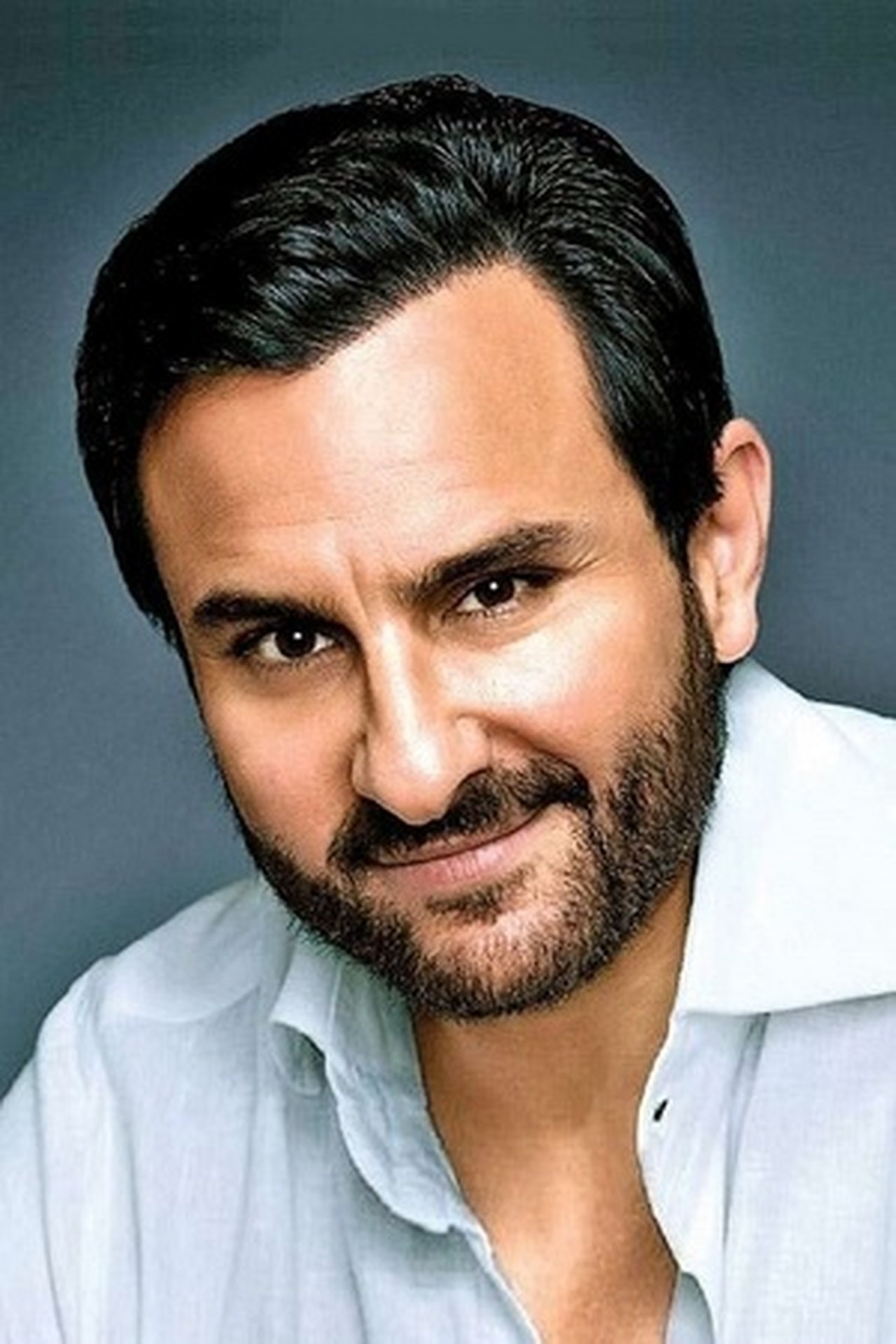
Saif Ali Khan, asked about stepping into a role so strongly associated with Mohanlal, offered a fairly direct answer, quoted by Hollywood Reporter India: "There was an aura around him... what struck me most was his meticulous performance." It's a short quote, but it's telling in what it emphasizes — not charisma or star power, but precision. That tracks with what made the original performance work: a visually impaired character has to be built almost entirely out of small physical choices, since the usual toolkit of eye contact and reactive glances is off the table. If Khan is approaching the role with that same attention to detail in mind, it's at least a sign he understands what he's being asked to replicate.
The supporting cast is doing a lot of heavy lifting
Beyond the two leads, Haiwaan's trailer and press materials point to a genuinely deep supporting cast, one that all the available sources agree on: Boman Irani plays a judge, Saiyami Kher plays a cop, and the roster rounds out with Shriya Pilgaonkar, Sharib Hashmi, Rajpal Yadav, Rajesh Sharma, and Manoj Joshi.

That's a lot of recognizable character-actor firepower for a film that, on paper, is a two-hander between its leads. Boman Irani as a judge suggests the courtroom or legal-process side of the story — likely tied to how the killer is eventually confronted or convicted — carries real narrative weight rather than being a formality. Saiyami Kher as the investigating cop puts law enforcement's procedural angle alongside Khan's more personal, sensory-driven pursuit of the truth, not unlike how Oppam balanced its protagonist's private investigation against the machinery of the police working the same case from outside. Rajpal Yadav and Sharib Hashmi, both actors who tend to get cast for comic relief or grounded everyman energy depending on the film, hint that Haiwaan isn't going to be wall-to-wall grimness even with a "menacing, complex" antagonist at its center.
Who's actually making this film
Haiwaan is produced by Venkat K. Narayana and Shailaja Desai Fenn under the KVN Productions and Thespian Films banners, according to both Sacnilk and Hollywood Reporter India. Neither outlet has published detailed budget figures at this stage, which isn't unusual this close to a trailer drop rather than a release — those numbers tend to surface closer to opening weekend, once trade trackers start estimating recovery targets against the first few days of ticket sales.
How the trailer is actually landing
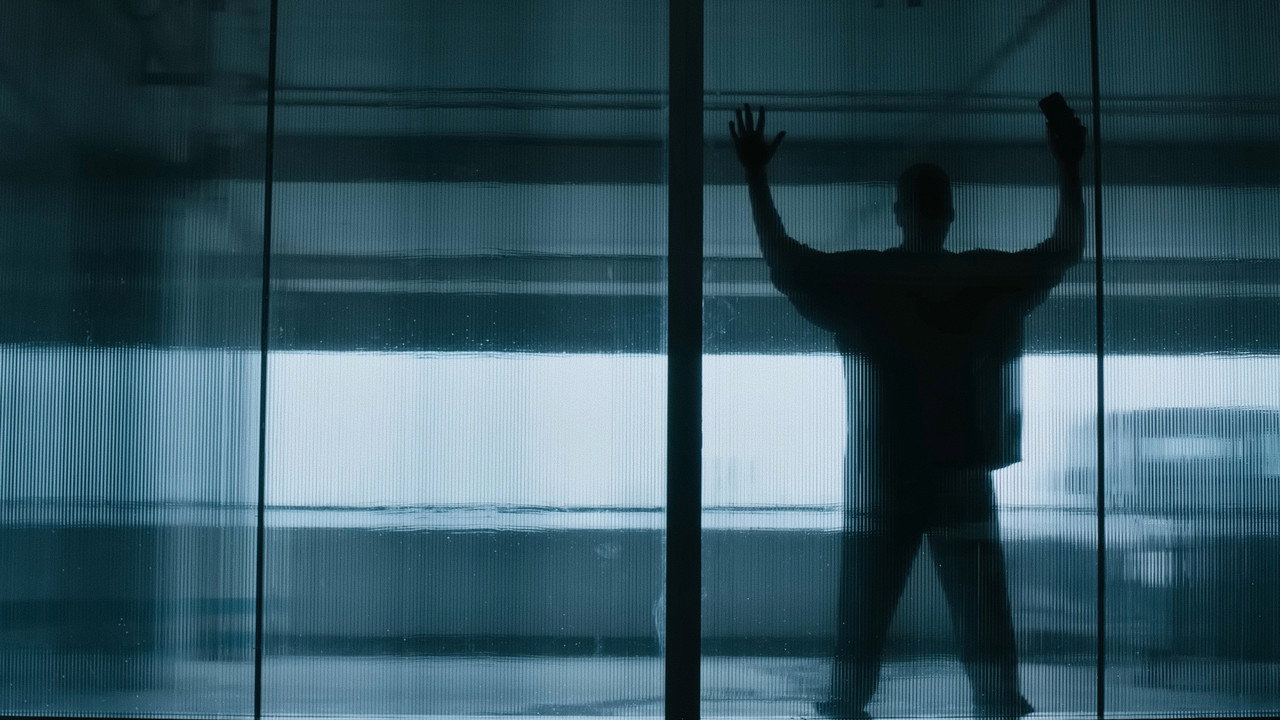
Per BusinessToday's roundup of social media reactions, viewers have been responding specifically to the trailer's "dark and moody colour palette" and its "brooding atmosphere" — which lines up with the tonal shift implied by putting Akshay Kumar on the antagonist side of the story. A colour grade built around shadow and muted tones is a reasonably standard way of signaling "this isn't a comedy" to an audience, but it's also a sensible choice specifically for this material, given that so much of Oppam's original tension came from a character who has to navigate the world without relying on sight. A visually darker, more atmospheric palette puts the audience in a slightly uneasy position too — straining to read a scene the way Khan's character has to strain to read a room.
It's worth being honest that trailer-reaction roundups are a fairly soft form of evidence — they're curated by the outlet doing the roundup and don't necessarily represent broad consensus. But the specific language being repeated — dark, moody, brooding — is consistent enough across the coverage that it's probably a fair read of how the marketing is landing so far, even before any actual reviews exist.
The reunion, and why the exact number of years is murky
The single biggest promotional hook around Haiwaan isn't the Oppam connection or the role swap — it's the framing of Akshay Kumar and Saif Ali Khan sharing a film again after a long gap. Exactly how long that gap is depends on which outlet you read. Hollywood Reporter India describes this as the pair's first reunion in 17 years, pointing to Tashan (2008) and Main Khiladi Tu Anari (1994) as their prior collaborations. BusinessToday and Onmanorama instead put the gap at 18 years, and cite a different set of prior films — Main Khiladi Tu Anari, Yeh Dillagi, and Aarzoo — as the pair's shared history.
Rather than pick a side in that discrepancy, it's more honest to say the two are reuniting after roughly 17-18 years, per various outlets, without pretending either publication has definitively nailed down the exact math. What both counts agree on, regardless of the discrepancy, is the underlying fact that actually matters for marketing purposes: it has been the better part of two decades since Kumar and Khan last shared a major film together, and neither of the two actors' careers in the intervening years overlapped much in shared projects. That's a long enough gap that the reunion angle works on its own terms even without a precisely agreed-upon number attached to it.
What to watch for on September 11
A few specific things are worth tracking once Haiwaan actually opens. First, whether the role swap holds up as more than a marketing hook — does Akshay Kumar's antagonist genuinely feel "menacing, complex," or does the film soften him the way mainstream Hindi cinema often does with big-name villains, letting star wattage undercut the threat. Second, whether Saif Ali Khan's performance in the Mohanlal role earns comparisons on its own merits rather than getting permanently measured against the original — a real risk any time a remake keeps the same director and clearly wants audiences aware of the connection. Third, how the courtroom and procedural elements, carried by Boman Irani and Saiyami Kher respectively, integrate with the more sensory, intimate thriller mechanics at the story's center, since Oppam worked partly because it never let the procedural half of its plot overwhelm the more personal one.
And there's the simple question of whether the reunion itself delivers anything beyond nostalgia. Kumar and Khan built their earlier on-screen chemistry in a very different era of Hindi cinema, working in lighter, more comedic registers than what Haiwaan's trailer is promising. Putting them on opposite sides of a "dark and moody" thriller, one as the pursued and one as the pursuer, is a genuinely different test of whether that chemistry still exists in a form that suits 2026 audiences rather than just trading on 1990s and 2000s goodwill. September 11 isn't far off, and it won't take long to find out.
Haiwaan releases in theatres worldwide on September 11, 2026 — watch for whether the role swap actually deepens the Oppam story or just repackages it, and how critics respond to Priyadarshan remaking his own film a decade later.