Persona 4 Revival Hands-On: TGS 2026's Demo and the Naoto Trailer That Completed the Party
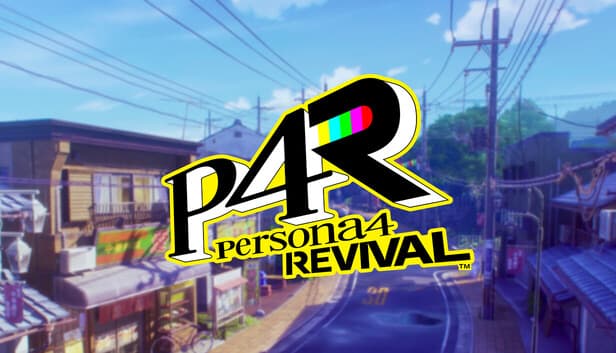
Persona 4 has been remade before, reissued before, and ported to nearly everything with a screen. Persona 4 Golden turned a 2008 PS2 game into arguably the definitive way to play it, and it's still selling on Steam more than a decade later. So the pitch for Persona 4 Revival was always going to face a specific kind of skepticism: what does a full remake actually add when the Golden version already fixed most of the original's rough edges? Tokyo Game Show 2026 gave the first real answer, in the form of a playable demo on the show floor and a trailer that closed out the game's eight-person party reveal. Neither fully settles the question. Both are worth digging into.
What was actually playable at TGS 2026
Atlus set up two separate demo modes at the Sega/Atlus booth inside Makuhari Messe during TGS 2026, which ran September 17-21. The first was a 15-20 minute playable slice of the story, built around the game's April 15th beat — the point where the protagonist first steps into the Midnight Channel, Yosuke Hanamura's Persona (Jiraiya) awakens, and the sequence closes with a boss fight against Yosuke's own shadow. That's a deliberate choice of scene to show off. It's the moment Persona 4's entire hook clicks into place — the game stops being a slice-of-life mystery and reveals its TV-world dungeon-crawling half — and it's also one of the most emotionally loaded fights in the whole story, since it's built around Yosuke confronting a distorted version of his own insecurities. Handing press and attendees that specific slice rather than a generic early-game tutorial section says Atlus wants first impressions built around the game's best-known beat, not its opening hour.
The second demo mode skipped story entirely and focused on dungeon exploration inside Yukiko's Castle, the game's first real dungeon. That split makes sense as a demo strategy — one mode sells the narrative hook, the other lets attendees actually poke at traversal and combat without needing story context. According to RPG Site's advance coverage of the show, both builds were confirmed ahead of TGS as part of Atlus's playable-demo plans for the event.
The cutscenes look like MAPPA, because they are
A big part of why those two demo scenes read as more than just "Persona 4 again" comes down to presentation. Persona 4 Revival's anime cutscenes are being produced by MAPPA — the studio behind Jujutsu Kaisen, Chainsaw Man, and the final season of Attack on Titan. That detail isn't new out of TGS 2026; it was first announced back at Anime Expo 2026. What TGS did was let people actually watch it in motion for the first time, inside a playable build rather than a marketing trailer, which is a different kind of proof than a press release.
It's worth understanding how unusual this collaboration is. MAPPA has only done this once before, animating the full cutscene work for 2025's Inazuma Eleven: Victory Road. A studio that busy — juggling some of the biggest ongoing anime properties in the industry — taking on a second full video game cutscene job in as many years is a real vote of confidence in the project, or at minimum a sign Atlus was willing to pay for it. Persona games have always leaned on stylized anime cutscenes to punctuate key story beats, going back to the original Persona 4's opening and ending sequences, so plugging in a studio with MAPPA's current reputation for kinetic, hard-hitting action direction is a meaningful upgrade in a way that a generic "remastered graphics" bullet point wouldn't be.
RPGFan's hands-on: what actually changed, and what didn't
RPGFan got hands-on time with the TGS build and published detailed impressions, and the picture they paint is a genuine mix of upgrade and restraint. The clearest improvement is in the 3D character models — during regular dialogue scenes, not just cutscenes, the models now reportedly match the expressiveness of the new anime-cutscene work. That's a specific and meaningful claim: Persona 4 Golden's overworld models were serviceable but static-faced compared to its 2D portrait art, so closing that gap changes how every normal conversation actually reads, not just the highlight-reel moments MAPPA is handling directly. The 2D character portraits are still present and still react during conversations, so Atlus hasn't ditched the visual-novel-style portrait system that's been part of Persona's identity for two decades — it's layering the improved 3D work on top of that existing structure rather than replacing it outright.
Combat is where RPGFan's impressions get more measured. They describe it as having "punchy vibrancy," which reads as a presentation and feel upgrade — hit reactions, animation weight, that kind of thing — but they're clear there's no major mechanical overhaul from Persona 4 Golden's turn-based system. If you've played Golden, the actual decision-making in a fight — exploiting elemental weaknesses, chaining All-Out Attacks, managing SP — sounds like it will feel familiar rather than reinvented. That's a defensible choice for a remake of a game whose combat was never really the thing people complained about, but it does mean Persona 4 Revival isn't positioning itself as a systems-driven reimagining the way, say, Final Fantasy VII Remake was for its source material.
Dungeon design and traversal got a more tempered assessment. RPGFan calls the improvements to Yukiko's Castle only mild, describing the space as still "boxy, flat" by their own read of the demo. That's a notable admission for a preview built specifically to show off a dungeon — if the outlet handling that demo mode isn't coming away impressed with the level design itself, it suggests Atlus's priorities for this remake sit more with presentation and character work than with reworking how the TV-world dungeons are actually built and navigated. Persona 4's dungeons were never the series' strongest asset to begin with — they're generally considered a step down from Persona 5's more distinct, thematically tailored Palaces — so a remake that doesn't meaningfully address that is leaving one of the original's most commonly cited weak points mostly intact.
The soundtrack: rerecorded, not reimagined
Persona 4 Revival's music has been rerecorded with a new vocalist, a change that will be immediately audible to anyone who's spent hundreds of hours with the original soundtrack's very distinct vocal performances. But RPGFan's assessment is that the new arrangements don't substantially deviate from the originals — this sounds like a re-recording in the way a remastered album re-tracks vocals and instrumentation without touching the songwriting, rather than a reinterpretation the way, say, a full genre-shifted cover would be. For a soundtrack as beloved and specifically tied to Persona 4's identity as Shoji Meguro's original compositions, that's probably the safer call. Persona fans have strong, vocal opinions about music changes — see the reaction to vocal swaps across various Persona 3 rereleases — and a faithful re-recording avoids picking that fight while still giving Atlus a marketing hook ("new vocals") to point to.
Naoto Shirogane completes the party
Alongside the demo, TGS 2026 brought a new trailer that introduced Naoto Shirogane as the final confirmed playable member of the Investigation Team, closing out the reveal of all eight party members. For anyone who played the original, Naoto's introduction is one of Persona 4's more memorable character arcs — a young detective whose case work pulls the party's mystery-solving and the supernatural Midnight Channel plot together. Amber Lee Connors, known for voicing I-No in Guilty Gear Strive and Remielle in Zenless Zone Zero, takes over the English voice role, while Romi Park returns as the Japanese voice actor, carrying over from the original release.
Siliconera's coverage of the trailer draws a specific comparison worth flagging as outlet analysis rather than anything Atlus has stated directly: they describe Naoto's role — a detective whose personal case ties into the broader supernatural plot — as functionally similar to Goro Akechi's role in Persona 5. It's an interesting parallel if you buy it. Both characters enter their respective games as outside investigators circling the same mystery the protagonist's group is chasing, both get folded into the party once their personal stakes and the main plot turn out to be entangled, and both carry a colder, more guarded demeanor than the rest of their casts at first. Whether that comparison holds up once the full remake is in front of players is a different question, and it's worth treating Siliconera's framing as one outlet's read on the character rather than something Atlus itself has drawn a line under.
With Naoto now confirmed, the full eight-person Investigation Team reveal is complete heading into February. That's a fairly standard marketing cadence for a Persona game — Atlus has historically staggered character reveals across a remake or sequel's promotional cycle rather than dumping the full cast at once, and closing out the roster with Naoto specifically, roughly five months before launch, tracks with how the original game structured her introduction relatively late into its first arc.
How much new content is actually here
This is the question that matters most for anyone deciding whether to pick up a remake of a game they've already played through Golden, and it's also the one with the least concrete answer right now. RPGFan's overall assessment, based on their hands-on time, is that the remake appears to include all of Persona 4 Golden's content, and that fans shouldn't expect many more additions in terms of story beats. It's important to be precise about what that is: a critic's inference drawn from playing a demo slice, not an official statement from Atlus about the final game's scope. Atlus hasn't put out a definitive statement confirming or denying additional story content beyond what Golden already added to the original PS2 release.
If that read holds, Persona 4 Revival's pitch becomes less about "new story" and more about "the same story, meaningfully rebuilt" — better 3D models, MAPPA-animated cutscenes at key moments, rerecorded music, and presumably other under-the-hood improvements Atlus hasn't detailed yet, wrapped around content that's fundamentally the Golden experience players already know. That's not automatically a bad pitch. Plenty of remakes succeed purely on presentation and quality-of-life improvements without needing new story content to justify themselves — Resident Evil's remake series has largely worked that way, restructuring and re-presenting known stories rather than rewriting them. But it does mean the ceiling for how differently Persona 4 Revival can hit compared to the original is somewhat capped, at least based on what's been shown so far.
Release plans and what's still unconfirmed
Persona 4 Revival is set to release February 18, 2027, on PS5, Xbox Series X|S, and PC via Steam. A Nintendo Switch 2 version follows a few months later, on May 20, 2027 — a staggered release pattern that's become fairly common for big Atlus RPGs, letting the studio and platform holders manage certification and optimization separately rather than shipping everything day one across four platforms.
A lot remains genuinely unconfirmed. The exact final voice cast beyond Naoto hasn't been fully detailed publicly, nor has the complete scope of what, if anything, is new relative to Golden. Atlus also reportedly unveiled a Persona 4 Revival-branded custom gaming PC at TGS 2026, made in collaboration with Japanese PC brand Thirdwave — a fun bit of merchandising color, though it's worth flagging that detail comes from limited, single-outlet coverage and should be treated as unconfirmed rather than a verified TGS centerpiece.
The bigger picture
What TGS 2026 actually accomplished for Persona 4 Revival wasn't a reveal in the traditional sense — most of the broad strokes (the MAPPA cutscenes, the release window, the existence of a remake at all) were already public. What it did was let outlets and attendees put hands on a real build and measure the marketing promises against actual play time, and the answer that came back is a mixed one: genuinely improved character presentation and animation work, a soundtrack faithfully rerecorded rather than reinvented, combat and dungeon design that are recognizably Persona 4 Golden with modest polish rather than an overhaul, and a story that — based on one outlet's inference, not confirmation — probably isn't getting substantial new content. For a fanbase that's spent over a decade with Golden as the gold standard, that's either a comforting continuity or a missed opportunity to go further, depending on how much a given player wanted this remake to reinvent rather than restore. Either way, the wait is now measured in months rather than years: February 18, 2027 is the date that will settle it.
Persona 4 Revival launches February 18, 2027 on PS5, Xbox Series X|S, and PC, with a Nintendo Switch 2 version following May 20, 2027.