Tensura Season 1 Episode 1 Explained: Reincarnation, Great Sage, and the Storm Dragon Veldora
Full spoilers for That Time I Got Reincarnated as a Slime Season 1 Episode 1, "The Storm Dragon, Veldora." If you haven't watched, stop here.
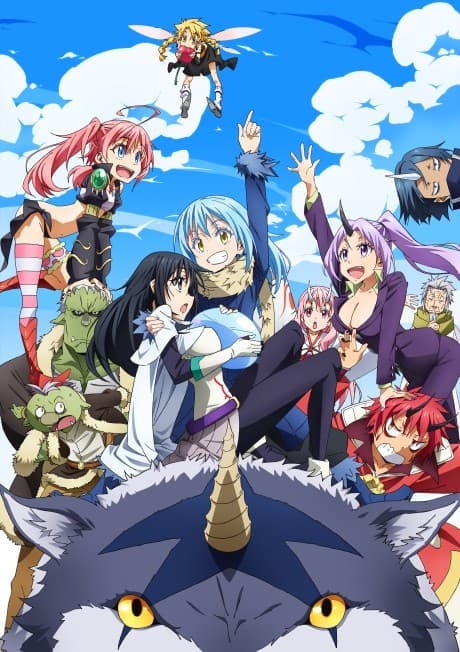
Before this blog gets to any more Season 4 episode breakdowns, it's worth going back to where the whole thing started. This is the first entry in a new backfill series working through That Time I Got Reincarnated as a Slime from Season 1, Episode 1 onward — the goal being to eventually have full coverage connecting the dots between the premiere and the Chronoa arc this blog has already covered in Season 4. So: no Rimuru Tempest empire, no Demon Lords, no harem of monster generals yet. Just a stabbed office worker, a cave, and a dragon.
When and where it aired
"The Storm Dragon, Veldora" (Japanese: "Bōfū Ryū Verudora") premiered as part of Tokyo MX's late-night broadcast block. Because the slot in question airs at 24:00 — technically the first hour of the following calendar day — sources land on slightly different dates for the same broadcast: Wikipedia's episode listing for the season records it as October 2, 2018, while Anime News Network's encyclopedia entry lists October 1, 2018. That's not a real contradiction, just two reasonable ways of labeling a single late-night airing that straddles midnight. Either way, this is the episode that opened the franchise for Japanese television audiences in the fall 2018 season.
Who made it
The premiere was produced by Eight Bit (also styled 8-Bit), the studio that would go on to handle every subsequent Tensura season, including the Season 4 episodes this blog has already covered. Yasuhito Kikuchi served as series director, a role he'd continue in across the franchise's run. Kazuyuki Fudeyasu handled series composition, responsible for shaping how the source material gets broken into episodes and arcs, and Ryōma Ebata did character designs, translating the original illustration style into something workable for ongoing animation. No single director credit specific to this individual episode is being asserted here beyond Kikuchi's series-director role — a claim naming a separate episode director for this installment couldn't be corroborated across sources, so it's left out entirely rather than repeated on shaky footing.
The series is based on the light novels by Fuse, illustrated by Mitz Vah, which originally began life as a web novel before getting a print light novel release and, eventually, a manga adaptation by Taiki Kawakami. That web-novel-to-light-novel-to-manga-to-anime pipeline is a familiar shape for isekai franchises of this era, and Tensura is one of the more successful examples of it actually paying off across every format.
A very ordinary death
The episode opens far from any fantasy setting at all. Satoru Mikami is a 37-year-old Japanese office worker — unremarkable by his own account, the kind of protagonist archetype isekai stories lean on specifically because he's easy for an audience to project onto. He's fatally stabbed on a Tokyo street. It's abrupt and mundane in exactly the way that makes it effective: no epic final battle, no grand sacrifice, just violent bad luck on an ordinary day.
What makes the scene land as more than a generic isekai-inciting-incident is the small, human detail the episode holds onto before Satoru dies: he asks a coworker and friend to destroy his computer. It's a strange, oddly specific final request — not "avenge me" or "tell my family I loved them," but a request about erasing his personal data. According to the episode's own framing, that request is later honored. It's a small beat, but it does real work establishing who Satoru was before any of the reincarnation plot kicks in — a private, slightly awkward, deeply ordinary man whose last coherent thought on Earth was about protecting his own embarrassing secrets rather than anything more conventionally dramatic. That specific kind of understated characterization is part of why this premiere doesn't feel like just another isekai truck-kun retread, even though the broad shape of "modern guy dies and wakes up somewhere else" is one of the most well-worn setups in the genre.
Waking up as a slime
Satoru doesn't wake up as a hero, a nobleman, or even a human. He wakes up in a cave in another world, reincarnated as a slime — about as unglamorous a starting form as an isekai protagonist can get. There's a dry, self-aware comedy to the setup: a genre built on power fantasies opens its most enduring modern entry by turning its lead into one of the weakest, most disposable enemy types in any RPG's bestiary.
That weakness turns out to be misleading almost immediately. While adjusting to his new body and surroundings, Satoru discovers he's acquired two Unique Skills: "Great Sage" and "Predator." Great Sage functions as a hyper-fast analytical and information-processing ability — think of it as an internal, near-instantaneous calculator and advisor that lets him parse threats, abilities, and situations far faster than his slime body's modest combat stats would otherwise allow. Predator lets him absorb or consume things and, in doing so, copy or master their properties and abilities. Between the two, a physically unimpressive slime suddenly has access to information-processing speed and an acquisition mechanic that can, in principle, scale indefinitely depending on what he's able to consume. (These ability descriptions reflect general series lore as documented by the Tensura Fandom wiki's community reference material, not a claim sourced from journalistic coverage — treat them as background context on how the power system works rather than an outlet's reporting.)

The Storm Dragon in the cave
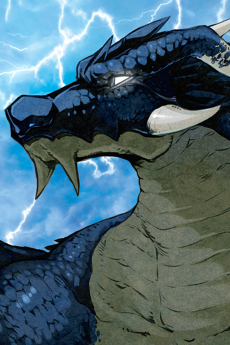
The episode's central event, and the one that gives it its title, is Satoru's encounter with Veldora. While exploring the cave he's found himself in, he comes across an ancient, immensely powerful being known as the Storm Dragon — sealed inside that same cave for centuries by a magic seal. Veldora isn't framed as a monster to be defeated; the two begin talking almost immediately, and what follows is less a boss encounter than the start of a genuine relationship. For a dragon that's apparently been trapped and alone for hundreds of years, a newly arrived, oddly conversational slime with human memories is novel enough to be worth engaging with rather than simply devouring.
That conversation matters well beyond this single episode. Veldora becomes a pivotal ally and mentor figure to Satoru going forward — one of the defining relationships of the entire franchise, arguably as central to the story's identity as the protagonist himself. An ancient, catastrophically powerful dragon sealed away by forces greater than himself, choosing to talk to and eventually trust a slime rather than simply ignore or destroy him, sets the tone for a series that's less interested in conventional power-scaling drama than in how its protagonist builds relationships, alliances, and eventually a whole society out of unlikely starting materials.
Why the slime body is the point, not a joke
It would be easy to read "protagonist gets reincarnated as literally the weakest RPG enemy" as pure comedic setup, and there's certainly humor in it. But the premiere plays it fairly straight, treating Satoru's new form as a genuine constraint he has to think his way around rather than a costume he'll shed the moment the plot allows. Combined with Great Sage's analytical support, the slime body becomes a kind of narrative disguise — something the world underestimates on sight, which gives Satoru room to observe, gather information, and make decisions before anyone realizes what he's actually capable of. That's a meaningfully different power fantasy from the more common isekai template of instant, visible overwhelming strength. Here, the strength is initially invisible, filtered through a body nobody would think twice about ignoring or stepping on.
Setting up everything that follows
For anyone coming to this only after following Season 4's Chronoa arc, it's worth sitting with how far removed this premiere is from where the story eventually goes. There's no Rimuru Tempest by that name yet in this episode — no Jura Tempest Federation, no Demon Lord politics, no Hinata Sakaguchi or Sariel or any of the sprawling cast this blog's Season 4 coverage has been tracking. There's just a dead office worker, a slime body, two strange new abilities, and a sealed dragon willing to talk. Everything the franchise eventually becomes — the nation-building, the escalating power struggles, the enormous ensemble cast — grows out of the choices this premiere sets in motion: an unassuming protagonist who processes the world analytically rather than through raw instinct, and a first ally who happens to be one of the most dangerous beings in the setting, met by accident in a cave neither of them chose to be in.
What this episode confirms and doesn't
To be clear about sourcing: the broadcast date (recorded as October 1 or October 2, 2018 depending on the source), the episode's English and Japanese titles, the Eight Bit production, Yasuhito Kikuchi's series director role, Kazuyuki Fudeyasu's series composition credit, and Ryōma Ebata's character design credit are drawn from Wikipedia's episode list and season page alongside Anime News Network's encyclopedia entry and MyAnimeList's series listing. The core plot beats — Satoru's death and final request, his reincarnation as a slime, the acquisition of Great Sage and Predator, and the encounter with Veldora — reflect the episode's own events as covered by those same outlets. The specific functional descriptions of Great Sage and Predator draw on general series lore as catalogued by the Tensura Fandom wiki, presented here as background context rather than as an outlet's original reporting. No manga chapter or light novel volume correspondence is being asserted for this episode, since nothing in the available sourcing confirmed one.
Where to watch
That Time I Got Reincarnated as a Slime Season 1 has been available on Crunchyroll since its original 2018 broadcast, and the premiere remains accessible there for anyone starting the series from the beginning today.
What's next
The next episode should keep building on the foundation this premiere lays: more of Satoru adjusting to slime life and testing what Great Sage and Predator can actually do, and further development of his newly struck alliance with Veldora. This blog's backfill coverage will keep moving forward episode by episode from here, working toward the point where the story eventually connects up with the Season 4 material already covered.
Expect the newly reincarnated slime to keep exploring the cave, start putting his Great Sage and Predator abilities to practical use, and build on the alliance he's just struck with Veldora before the story pushes him out into the wider world.