Bleach TYBW Episode 10 Recap: "The Battle" Ends Zaraki vs. Unohana
Full spoilers for Bleach: Thousand-Year Blood War Part 1, Episode 10, "The Battle." If you haven't watched, stop here.
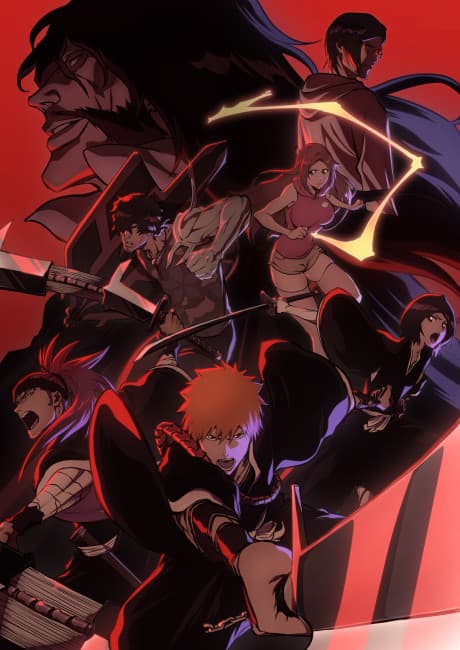
Episode 10 of Bleach: Thousand-Year Blood War Part 1, "The Battle," closes out one of the season's most anticipated fights and opens a new chapter of the story almost in the same breath. Kenpachi Zaraki and Retsu Unohana's duel reaches its conclusion here, and the episode barely pauses for breath before shifting into an entirely different register — Zanpakuto lore, training montages, and a twist ending that sends Ichigo Kurosaki somewhere nobody expected this early in the Soul King Palace arc.
When and where to watch it
"The Battle" aired in Japan on December 13, 2022, according to AnimeFillerList's episode listing, a date corroborated by Anime News Network's review coverage of the episode. As with the rest of Part 1, the show comes from Studio Pierrot under director Tomohisa Taguchi. In the US, it streams on Hulu, with Disney+ handling the international release — it is not available on Crunchyroll, a point worth repeating for anyone still defaulting to that platform out of habit from earlier Bleach seasons.
The Zaraki-Unohana fight reaches its end
The episode's first half is devoted entirely to finishing what earlier episodes started: the duel between Kenpachi Zaraki and Retsu Unohana. According to Anime News Network's coverage, the episode uses flashback and narration to reveal the actual shape of what's been happening between these two across their fight — Unohana has been killing and resurrecting Zaraki, repeatedly, specifically to force him to grow as a fighter. The reveal recontextualizes Zaraki's entire arc in the series: he's been subconsciously holding himself back the whole time, and Unohana's brutal method has been designed to strip that self-imposed limit away.
It's a heavy piece of backstory to drop mid-fight, and the episode doesn't let it sit as pure exposition. Unohana responds by releasing her Bankai, and the show turns the remainder of the fight into what ANN's Nicholas Dupree described as easily the visual standout of the season so far — a blood-soaked, viscerally staged sequence that abandons any pretense of dignified swordsmanship. Dupree's framing is worth sitting with directly: this isn't a clash between two noble warriors trading honorable blows. It's a fight between what he called "two battle junkies," people who want this violence for its own sake, and the animation leans fully into that framing rather than softening it.
That distinction matters for how the sequence reads. Bleach has plenty of fights built around restraint, technique, and strategy. This one isn't that. It's staged as raw, almost feral combat between two characters whose entire identities are wrapped up in the pursuit of a worthy opponent, and the episode treats that pursuit as something closer to addiction than to honor.
Ōetsu and the Asauchi
Once the fight resolves, "The Battle" pivots hard into an entirely different mode. The story introduces Ōetsu, a member of the Zero Squad and the Soul King Palace's resident Zanpakuto creator — the figure responsible for making the blades every Soul Reaper in the series carries. Ōetsu's introduction comes with a chunk of worldbuilding the show hasn't spelled out this explicitly before: Zanpakuto don't start out as the distinct, personality-driven weapons viewers have come to know. They begin as Asauchi, personality-less blank forms, and only take on identity and character once they bond with an individual Soul Reaper.
It's a detail that reframes a lot of what longtime viewers have taken for granted about how Zanpakuto work in this universe — the idea that a sword's spirit isn't inherent to the blade itself, but something that forms through the relationship between blade and wielder. Dupree's review specifically credited this stretch of the episode for its worldbuilding, even while criticizing other parts of the segment more harshly (more on that below).
With that groundwork laid, Ōetsu puts Ichigo through a training regimen built around this same Asauchi concept — the implication being that Ichigo, having lost his original Zanpakuto to Jugram Haschwalth's blade back in episode 7, now has to go through something closer to the process of forming a Zanpakuto bond from scratch.
The post-credits twist
Rather than end on Ichigo settling into his new training, the episode saves its sharpest turn for a post-credits scene. It reveals that Ichigo has already failed the training Ōetsu put him through — and as a direct consequence, he's sent back to Earth. The episode closes with him arriving, unexpectedly and without much explanation given on-screen, at his family home.
It's an abrupt note to end on, and deliberately so. After an entire episode spent inside the Soul King Palace building toward Ichigo's next stage of growth, cutting straight to failure and an unplanned return home resets the audience's expectations for where the story goes next. It's also a clear structural pivot toward Ichigo's backstory — a thread the show hasn't spent much time on directly during Part 1's Soul Society-focused run so far.
How the episode was received
Anime News Network's community score for "The Battle" landed at 4.6 out of 5, a strong number for the season. Dupree's written review was more split in its assessment than that score alone would suggest, though, and the episode's two halves earned genuinely different reactions from him.
The Zaraki-Unohana conclusion drew some of his strongest praise of the season. Beyond calling it the visual standout so far, he singled out the choice to frame the two fighters as battle junkies rather than dignified warriors as a meaningful, deliberate characterization decision rather than just an aesthetic one — it's consistent with who both characters have been established to be across the franchise, and the fight's brutality reflects that rather than contradicting it.
The Ōetsu segment fared considerably worse in his assessment. Dupree called it easily the most conventional part of the season, and frankly tired, criticizing the training-arc exposition as repetitive and formulaic — the kind of setup viewers have seen in countless other shonen series before. That said, he didn't dismiss the segment entirely; he specifically credited the Zanpakuto and Asauchi worldbuilding details as a genuine strength, even while wishing the delivery around them had been less by-the-numbers. He also expressed real optimism about where the episode's closing twist is heading, anticipating the Ichigo-origin material the post-credits scene is clearly setting up.
A fight defined by its brutality, not its choreography
It's worth dwelling a bit longer on why the Zaraki-Unohana conclusion lands as hard as it does, because the choice to reveal Unohana's method — repeatedly killing and reviving Zaraki to force growth — is a genuinely dark twist for a franchise that's mostly kept its Soul Reaper cast on the side of clear-cut heroism. Unohana has spent the series up to this point as the Gotei 13's healer, a figure associated with mercy and restraint. Recontextualizing her as someone willing to kill a subordinate over and over, on purpose, to unlock his full potential, is a significant swing for the character, and the episode plays it completely straight rather than softening the implications.
That's part of why the Bankai release sequence hits as hard as it does. It's not just a power escalation for its own sake — it's the show following through on the darker version of Unohana the flashback just revealed, and letting the fight's visual intensity match the moral weight of what viewers just learned about her.
Why this episode matters going forward
"The Battle" is doing two very different jobs in a single runtime, and it mostly succeeds at both, even if the seams between them show. It closes out a fight that's been building since earlier in Part 1, resolving Zaraki and Unohana's story with a conclusion that reframes both characters rather than just picking a winner. And it uses the back half of the episode to set up the season's next stretch — Zanpakuto lore that's going to matter for Ichigo specifically, a training arc that ends in failure rather than triumph, and a cliffhanger that sends the story in a direction the Soul King Palace arc hadn't signaled up to this point.
Whether the Ōetsu material picks up once the show gets into Ichigo's origin story is the open question heading into the next episode, and based on Dupree's review, that's exactly the direction the show appears to be setting up next.
Ichigo's failed training and his abrupt return to the human world set up the next episode's dive into his origin story — expect the show to explain exactly how and why he ended up back home instead of finishing his Zanpakuto training at the Soul King Palace.