Kodansha India Announces Its First Five Manga Titles, Led by Attack on Titan and Blue Lock
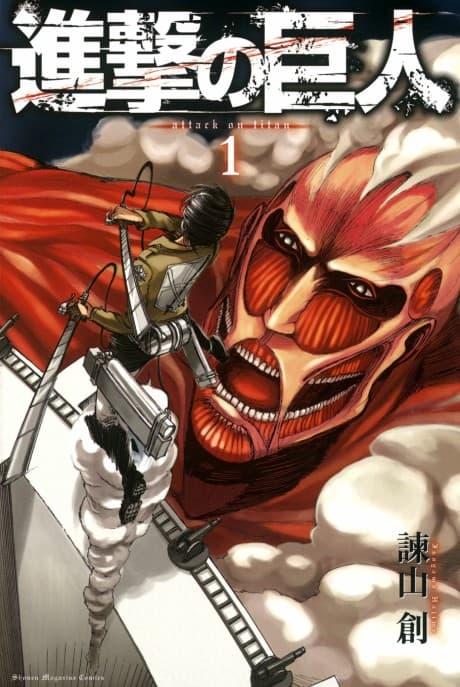
According to Anime News Network, Penguin Random House distributes Kodansha's manga in India and has so far only imported the United States editions. That is the backdrop for the latest step in Kodansha's plan to print manga locally. On Monday, September 28, 2026, Kodansha's English-language X account announced the first five manga titles that Kodansha India will launch, and the company also opened an official Instagram account, per Anime News Network (ANN) reporter Adriana Hazra.
This post sticks to what that report and one second source say. Where I step beyond them, the text is labelled as analysis. A lot of practical detail is still missing, and I would rather flag that than fill the gap with guesses.
The five titles
According to ANN, the first five titles, with creators as ANN lists them, are:
- Attack on Titan by Hajime Isayama
- Blue Lock by Muneyuki Kaneshiro and Yūsuke Nomura
- Gachiakuta by Kei Urana
- Witch Hat Atelier by Kamome Shirahama
- A Silent Voice by Yoshitoki Ōima


Attack on Titan sits at the front of the list, as it does in ANN's own headline. Neither ANN nor, in the sources I checked, Kodansha has explained how these five were chosen, so I am not going to guess at the reasoning.
Three of the five have already been covered on this site, and if you want a recent look at them, these are the places to start:
What Kodansha India is meant to be
The announcement did not come out of nowhere. ANN says Kodansha announced its plans to print manga locally in India back in June. As ANN describes it, the company is aiming to publish about 200 manga and other titles a year, in Hindi and English.
ANN adds several more details about the plan:
- Kodansha India plans to physically publish popular manga and children's books.
- It will not publish e-books.
- It will also sell merchandise and organize events related to the intellectual properties it publishes in India.
In other words, this is described as a print-first business with a wider brand footprint, not a digital storefront. The decision to skip e-books is a notable one, and ANN's report does not explain the reasoning. I will not guess at it here.
Who owns it
ANN reports the ownership split: Kodansha will contribute 81 percent of the company's capital, Dai Nippon Printing (DNP) 14 percent, and IJ Kakehashi 5 percent. Those are the only figures this post will repeat, and the capital totals are left out entirely.
Why local printing instead of imports
Here is where ANN's report has the most to say about the current situation. According to ANN, Penguin Random House distributes Kodansha's manga titles in India, and so far it has only imported the United States editions of the books.
That detail is the heart of the story. The following paragraph is analysis, not reporting. An imported edition is a product made for another market and brought across a border. A locally printed edition is, at least in principle, made for the market where it is sold. A company that prints in India controls its own production in the country it is selling to, which is a different proposition from relying on shipments of books produced elsewhere. What that difference means for price, availability or print quality is not stated in any source I checked, so I am not going to claim any outcome.
What ANN's report does not say is what happens to the existing import arrangement now that a local company exists, and it does not describe Penguin Random House's role going forward. Both are open questions.
The piracy angle
ANN also says, citing a report from Nikkei Asia in June, that Kodansha India hopes to bypass piracy with the new venture. According to the same ANN passage, small e-commerce stores and street vendors in India often sell bootleg copies of popular manga titles.
Whether a local print operation can actually compete with bootleg copies is something that sales and sell-through, not announcements, will eventually show. My own view is that the stated hope here is clear, but there is no reported evidence yet of how it will play out, and I do not want to suggest otherwise. Any claim about how large the problem is, or how a legitimate edition will be priced against it, would need numbers that these sources do not provide.
An early signal from New Delhi
There is a second thread worth pulling on, and it comes from a separate source. The Jiji Press wire, carried by nippon.com on October 3, 2026, reports that a two-day anime exhibition event titled "Mela! Mela! Anime Japan!!" kicked off in New Delhi on Saturday, October 3. It is being held in the Indian capital for the third time. The Hindi word "mela" means "festival" or "fair." The event is held at a shopping mall, with booths from many anime-related companies, including Kodansha.
Yae Sahashi, deputy manager of Kodansha's global business management department, was quoted by Jiji Press saying, "I hope people will get to know not only the anime but also the original manga." The report also paraphrases her as saying that the strong interest and enthusiasm shown by visitors gave her confidence in the publishing business in India.
Two cautions apply. The first is that this is a company representative's impression at a fan event, and not a sales figure. The second is that the Jiji report does not tie the event to the five-title announcement beyond Kodansha's presence there. Still, her remark about moving readers from anime to manga lines up with the kind of events ANN says Kodansha India plans to organize, which makes it a useful, if small, data point about how the company thinks about the audience.
What we know and what we don't
The ledger, as reported:
- Kodansha's English X account announced the first five titles on Monday, September 28, and an official Instagram account has launched (ANN).
- The five are Attack on Titan, Blue Lock, Gachiakuta, Witch Hat Atelier and A Silent Voice (ANN).
- The plan, announced in June, covers local printing, a target of about 200 titles a year in Hindi and English, no e-books, and merchandise and events (ANN).
- Kodansha holds 81 percent, DNP 14 percent and IJ Kakehashi 5 percent (ANN).
- Until now, Penguin Random House has distributed Kodansha manga in India by importing United States editions (ANN).
- Kodansha was at "Mela! Mela! Anime Japan!!" in New Delhi on October 3 (Jiji Press via nippon.com).
And what has not been reported in the sources checked: a release date for the first book, prices for the Indian editions, which titles will be published in Hindi versus English, print runs, and any confirmation that these five are the complete lineup. No first-book release date has been published in the sources I checked. The Jiji Press report says only that Kodansha aims to start publishing locally by the end of the year, which is a loose target and not a date, and I am not going to infer one.
That last point is worth stating plainly. ANN's headline and report describe the announcement as the first five titles, but nothing I read says whether more will follow soon or what the cadence will be. I am not treating the five as a final list in either direction.
What this means for readers
For readers in India, the practical takeaway is modest for now: there is a defined starting lineup, a social presence to follow, and a company that says it wants print copies in the hands of readers. There is no date to put on a calendar and no price to budget against. Keep an eye on Kodansha's official accounts, since that is where the first five titles were revealed.
For everyone else, this is a case study in how a publisher expands into a market that it has so far served through imports. Whether the approach changes the picture, with locally produced editions replacing or sitting alongside imports, depends on details that have not been announced. That is an analytical point and I am deliberately keeping it open-ended. Kodansha India has named its first five titles, but the harder questions, when, how much and in which language, are still ahead of it.
Watch for the first release date, the retail price of the Indian editions, and which of the five titles arrive in Hindi and which in English. None of those details appeared in the sources checked for this post (Jiji Press gives only a loose end-of-year target for local publishing), so treat all three as open questions until Kodansha says more.