Tensura Season 1 Episode 3 Explained: Battle at the Goblin Village
Full spoilers for That Time I Got Reincarnated as a Slime Season 1 Episode 3, "Battle at the Goblin Village." If you haven't watched, stop here.
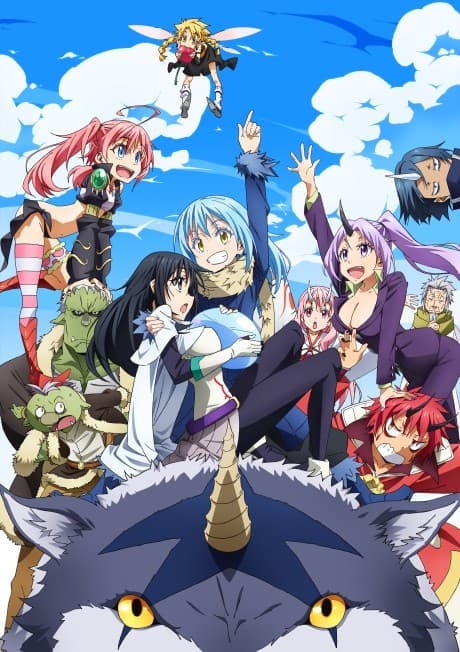
This is the third entry in this blog's backfill series working through That Time I Got Reincarnated as a Slime from the beginning. Episode 2 ended with Rimuru freshly named, out of the cave for the first time, and face to face with a goblin village asking for help against an encroaching pack of Direwolves. Episode 3 picks that conflict up directly, and it's the episode where Rimuru stops being a curious bystander in this world and starts actively shaping it — first through a fight, and then through the far stranger power of simply giving things names.
When and where it aired
"Battle at the Goblin Village" (Japanese: "Goburin Mura de no Tatakai") aired October 16, 2018, the third week of the show's original Tokyo MX broadcast run. Per Wikipedia's episode list for the season, this installment directly follows "Meeting the Goblins" and continues the same conflict that episode set up.
Who made it
According to Wikipedia's episode-list and season 1 pages, this episode was directed by Shin Tosaka, with Takaomi Kanasaki handling the storyboard and Junichi Takaoka credited as chief animation director. That's a different combination of names than either of the previous two episodes, which is typical for a weekly television production spreading direction and animation duties across a rotating team rather than having one person handle every installment. Eight Bit remained the studio behind the production.
The fight the last episode set up
Episode 2 left off with the goblin village's guardian deity gone, a Direwolf pack closing in, and the village chief asking Rimuru for help. Episode 3 delivers on that setup: Rimuru works with the goblins to fight off the Direwolves rather than simply overpowering them alone. According to Wikipedia's synopsis for the season, Rimuru defeats the pack's leader in the process, and — notably — the resolution isn't a straightforward extermination. Instead, Rimuru brokers peace between the goblins and the surviving wolves, turning what could have been a one-sided slaughter into something closer to a merger between two communities that had been enemies moments earlier.
That's a meaningfully different outcome than the "defeat the monster horde" framing the setup might suggest, and it's consistent with the pattern this backfill series has already flagged in Rimuru's short time in this world: even when he has clear power advantages, the instinct running through these early episodes is toward alliance-building rather than domination. Anime News Network's combined review covering Episodes 1 through 3 picks up on that same tendency, observing that across the three episodes "the focus is more on making peace and less on defeating the presumptive bad guys" — a framing that applies just as much to this episode's Direwolf resolution as to the goblins' introduction the episode before.
ANN's review does note that this episode carries more weight than the two before it, pointing to Rimuru's actual confrontation with the Direwolf leader as one of the rare moments in the run so far where "things get serious." It's worth being precise about what that review covers, though — it's a combined assessment of Episodes 1 through 3 together, not commentary written about this episode in isolation, so the "serious" framing should be read as ANN's take on the confrontation specifically rather than a verdict on the whole episode's tone.
Naming everyone, and paying for it

The fight itself isn't actually the episode's biggest swing. What follows it is. Having brought the goblins and the Direwolves together, Rimuru does what he'd already done once before with Veldora back in the cave: he starts handing out names. This time, though, it isn't one dragon — it's every creature involved in the fight, goblins and wolves alike, all at once.
The cost is immediate and severe. Per Wikipedia's synopsis, the sheer scale of that mass-naming leaves Rimuru magically exhausted to the point of collapse, and he loses consciousness for three full days as a result. It's a sharp contrast to how casually the Veldora naming played out in the previous episode — a quiet, almost sentimental exchange between two characters who'd been talking for episodes. Naming an entire village's worth of goblins and an entire pack of wolves in one go is evidently a different order of magnitude of cost, and the show doesn't gloss over that; it puts Rimuru flat on his back for three days to make the point.
What waking up reveals
When Rimuru comes to, the consequences of that mass-naming have already played out without him watching. According to Wikipedia's synopsis, the naming triggered evolutions across both groups: the goblins have become hobgoblins, and the Direwolves have become Tempest Star Wolves — both visibly and mechanically more powerful forms than what either group started the episode as. It's the clearest demonstration yet of the idea introduced with Veldora, that names in this world aren't just labels but something closer to catalysts, capable of reshaping whatever receives them.
The wolves' side of that transformation comes with an emotional beat attached to it as well. Wikipedia's synopsis confirms that the son of the Direwolves' former leader — the one Rimuru defeated in the fight — pledges his loyalty to Rimuru upon waking. That's a notable detail: this isn't framed as a conquered enemy grudgingly submitting, but as a direct successor choosing to follow the person who killed his father, which tracks with the episode's broader "peace over conquest" throughline that ANN's review also picked up on.
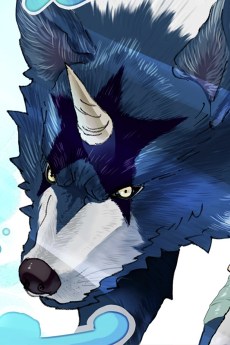
Between the newly evolved hobgoblins and the newly loyal Tempest Star Wolves, Rimuru wakes up from that three-day collapse to find he's gone from "wandering slime who helped out a village" to the de facto center of a combined community of two formerly hostile groups, both now considerably stronger than they were a day earlier.
The turn toward Dwargon
The episode doesn't linger on the aftermath for long before setting up its next move. Per Wikipedia's synopsis, Rimuru recognizes that this growing settlement is going to need more than fighters — it needs craftspeople capable of actually building the place out. That realization sends him, along with companions, setting out for Dwargon to recruit dwarf artisans, and that departure functions as the episode's closing beat, explicitly pointed forward at whatever the next arc has in store.
It's a practical, almost mundane pivot after two episodes built around naming and combat, but it's also a meaningful structural shift. Episodes 1 and 2 were about survival and identity — waking up in a new body, getting a name, finding a place in the world. Episode 3 closes out that opening stretch and immediately starts the show's next real project: actual nation-building, starting with the unglamorous but necessary step of finding people who know how to build things.
Why this episode matters structurally
Taken as a set, these first three episodes trace a clean arc. Episode 1 is about waking up and discovering power. Episode 2 is about getting an identity and finding a community that needs help. Episode 3 is about using that power decisively — first in a fight, then in the stranger and more consequential act of naming — and then immediately using the resulting community as the foundation for something bigger. The goblins-and-wolves alliance formed here, small as it is, is a direct preview in miniature of the Jura Tempest Federation this blog has already covered extensively in its Season 4 coverage. The dwarf-artisan recruitment closing out this episode is the first concrete step toward that federation actually being built, rather than just imagined.
It's also worth noting how consistent the show's instincts are staying across these three episodes. Rimuru had every opportunity here to simply wipe out the Direwolves and claim an unambiguous, uncomplicated victory. Instead, per Wikipedia's own synopsis, the result is peace and alliance — mirroring the same instinct that led Rimuru to give Veldora a name and a shared family in Episode 2, rather than just study or exploit him. This isn't a story about a reincarnated protagonist accumulating power for its own sake. It's shaping up, three episodes in, to be a story about building relationships and communities almost as a side effect of that power.
What this episode confirms and doesn't
To be clear about sourcing: the broadcast date of October 16, 2018, the episode's English and Japanese titles, and the Shin Tosaka, Takaomi Kanasaki, and Junichi Takaoka credits are drawn from Wikipedia's episode list and season 1 pages, and were not independently cross-verified against a second primary source, though they're presented here with ordinary confidence as Wikipedia-sourced facts. The plot beats — the fight against the Direwolves and the peace brokered afterward, the mass-naming and the resulting three-day collapse, the goblins evolving into hobgoblins and the Direwolves into Tempest Star Wolves, the former Direwolf leader's son pledging loyalty, and the departure for Dwargon to recruit dwarf artisans — all come directly from Wikipedia's own synopsis for the season and are presented with full confidence. The Anime News Network commentary is drawn from its combined review of Episodes 1 through 3 and is scoped accordingly, not treated as episode-3-specific criticism. No manga chapter or light novel volume correspondence is being asserted for this episode, since nothing in the available sourcing confirmed one, and MyAnimeList's episode numbering wasn't used as a sourcing basis here.
Where to watch
That Time I Got Reincarnated as a Slime Season 1 remains available on Crunchyroll, with this episode accessible as the third installment of the original 2018 broadcast run.
What's next
With the goblin village and the Direwolf pack now unified under Rimuru and evolved into stronger forms, and with Rimuru already en route to Dwargon in search of dwarf artisans, the next episode should pick up that journey and start introducing the wider world beyond the Jura Forest. This backfill series will keep moving forward episode by episode from here, continuing to build the throughline toward the Season 4 material this blog has already covered.
Expect the trip to Dwargon to introduce dwarf artisans and start expanding Rimuru's growing settlement beyond the goblin village, with the newly evolved hobgoblins and Tempest Star Wolves forming the core of whatever community comes next.